
Crankshaft pin grinding is a precision machine-grinding process used for automotive crankshafts, where rod journal geometry, thermal stability, roundness, and surface finish all need to stay under control. For buyers evaluating grinding wheels for this application, the practical question is not just abrasive type. The better question is which wheel route can support stable cutting, predictable dressing behavior, good form retention, and acceptable total production cost on the actual crankshaft grinding machine.
In real production, crankshaft pin grinding differs from ordinary cylindrical grinding because the journal path is eccentric and quality requirements are strict. That is why wheel selection should be linked to machine conditions, coolant delivery, wheel dressing strategy, and the final productivity target.
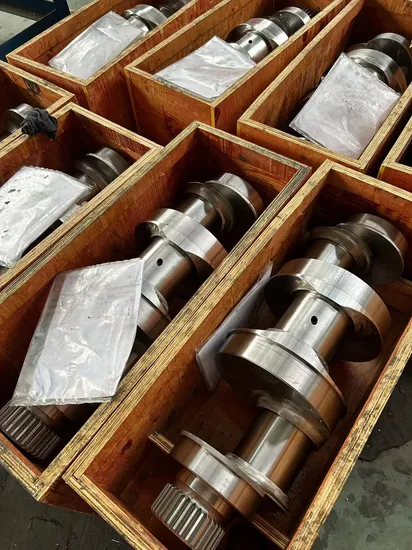
What makes crankshaft pin grinding different from ordinary cylindrical grinding?
Crankshaft pin grinding works on offset journals rather than a simple concentric outer diameter. This eccentric geometry increases process difficulty and makes it harder to maintain stable contact conditions through the full grinding cycle. Buyers usually care about journal size accuracy, roundness, surface consistency, and the risk of grinding burn because these factors directly affect the downstream performance of the crankshaft.
Another challenge is thermal control. If the wheel becomes dull, coolant access is weak, or dressing quality is inconsistent, the result may be grinding burn, chatter marks, unstable size control, or poor journal finish. In other words, the wheel must support a controlled process, not just material removal.
What is the typical crankshaft pin grinding process?
A typical process starts with workpiece preparation and machine setup. The operator checks crankshaft material, heat-treatment condition, stock allowance, and machine stability before selecting a wheel specification that matches the grinding target.
After wheel mounting, dressing and truing are used to prepare the wheel for consistent cutting behavior. Rough grinding focuses on stock removal, while finish grinding focuses on final size, roundness, and surface quality. After grinding, the journal should be inspected for dimensional accuracy, burn risk, and surface condition.
Route 1: Why choose a vitrified WA + A grinding wheel?
For many crankshaft pin grinding jobs, a vitrified-bond wheel using a mixed abrasive of white aluminum oxide (WA) and brown aluminum oxide (A) is a practical conventional route. In this direction, M grade or N grade is the recommended hardness range.
White aluminum oxide helps provide relatively sharp cutting action, while brown aluminum oxide contributes toughness and usable wheel life. Combined with a vitrified bond, this route gives buyers a balanced option with workable dressing response, stable grinding behavior, and practical operating cost.
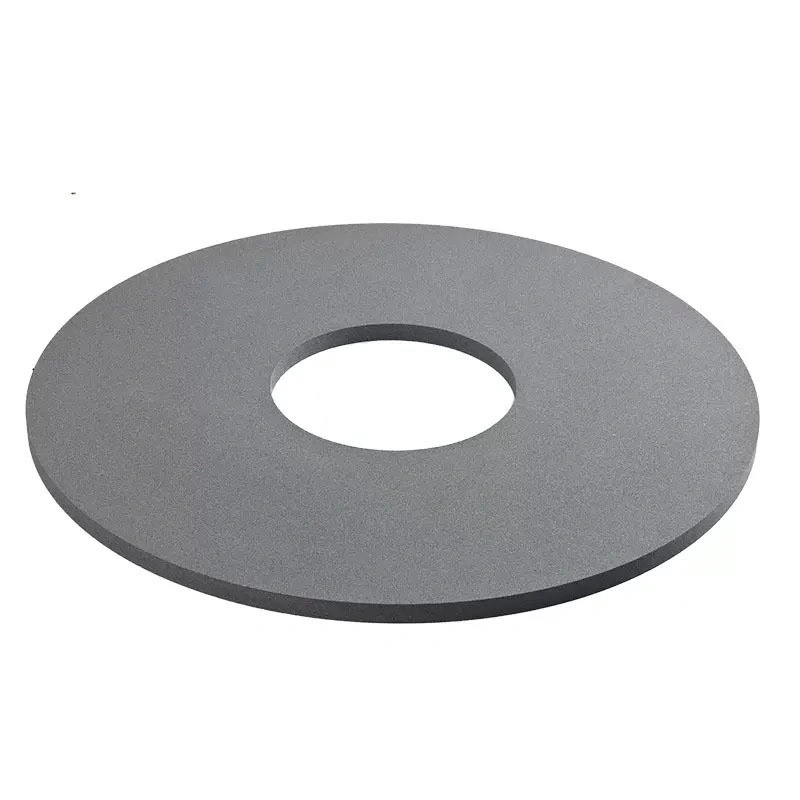
Where this route fits in production
This route is suitable when the plant wants reliable crankshaft pin or journal grinding without over-positioning the process as a premium upgrade. It fits buyers who want a stable, machine-friendly wheel route that can support precision results with sensible economy.
Route 2: When does a premium wheel route make sense?
For buyers focused on durability, higher line efficiency, and reduced wheel replacement frequency, a premium route deserves attention. In this task, the higher-performance direction is a resin-bond or vitrified-bond diamond wheel with a recommended concentration of 120%.
The commercial value of this route is stronger continuity in production, better support for higher linear speed conditions, and a better productivity message for buyers who evaluate total grinding cost instead of only unit wheel price. Final suitability still depends on machine capability, coolant condition, dressing approach, and quality targets.
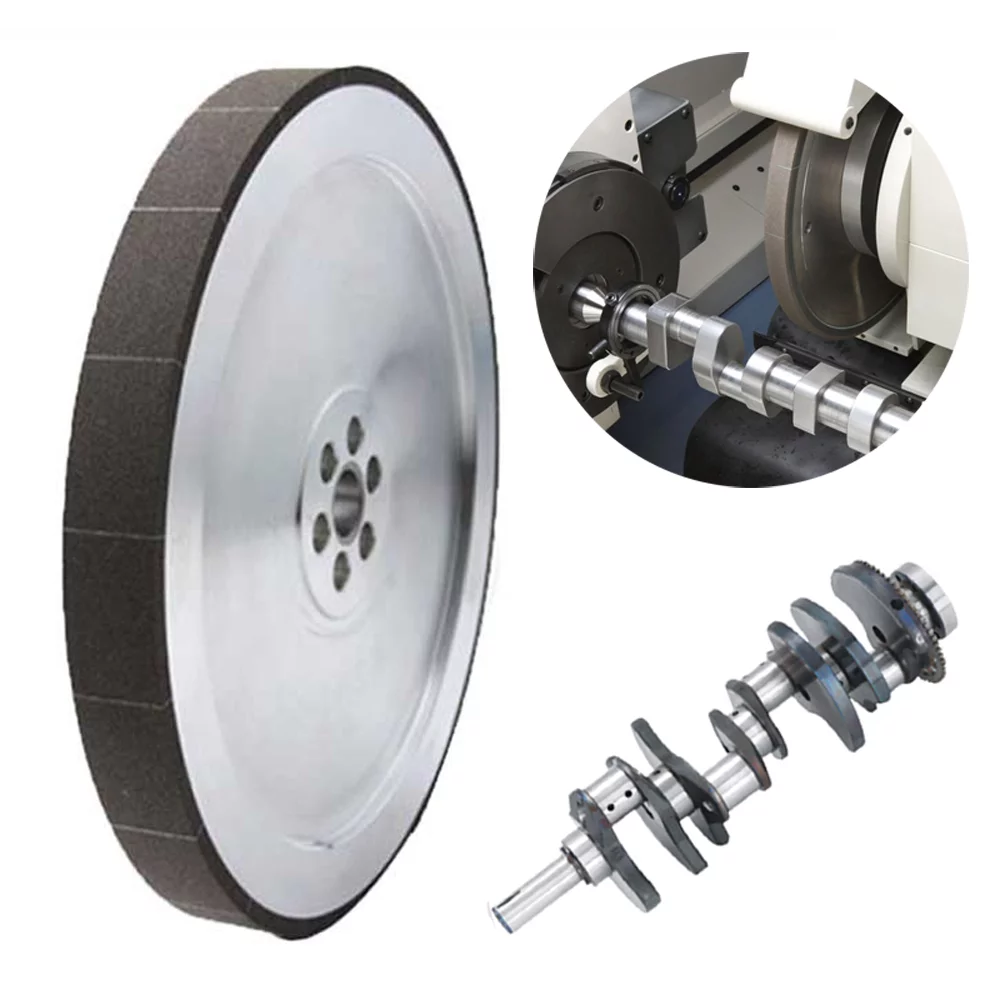
Resin bond vs vitrified bond for premium routes
Resin bond and vitrified bond can both be discussed in the premium route section, but the article should keep the wording application-based. The right choice depends on the machine environment and the way the user balances surface quality, form control, wheel life, and productivity.
How do the two crankshaft grinding wheel routes compare?
The vitrified WA + A route is easier to position as a conventional precision solution. It supports a practical balance between cutting action, dressing response, and process economy. The premium route is more suitable when the buyer wants stronger durability and efficiency gains in a more demanding production line.
For export-oriented communication, this comparison is useful because it helps buyers understand that wheel selection is not a one-size-fits-all decision. One route emphasizes balanced performance and cost control, while the other emphasizes premium productivity.
Why application-based wheel recommendation matters
The best grinding wheel for crankshaft pin grinding should be selected according to real application conditions. Important inputs include crankshaft material, machine type, coolant delivery, dressing method, stock removal needs, and the expected finish quality.
Zhongxin can support crankshaft grinding projects more effectively when buyers provide these production details in advance. That allows the recommendation to focus on the actual grinding problem instead of a generic abrasive label.
Conclusion
Choosing grinding wheels for crankshaft pin grinding starts with understanding the production goal. If the target is a reliable conventional route, a vitrified WA + A wheel with M or N grade is a practical direction. If the target is durability, higher linear speed capability, and stronger efficiency performance, a premium resin-bond or vitrified-bond route with 120% concentration is the better discussion point.
In real production, the final wheel choice should always be validated against machine conditions, coolant delivery, dressing quality, and journal accuracy targets. That application-based approach is the most practical way to improve crankshaft pin grinding consistency and overall process value.
发表回复