


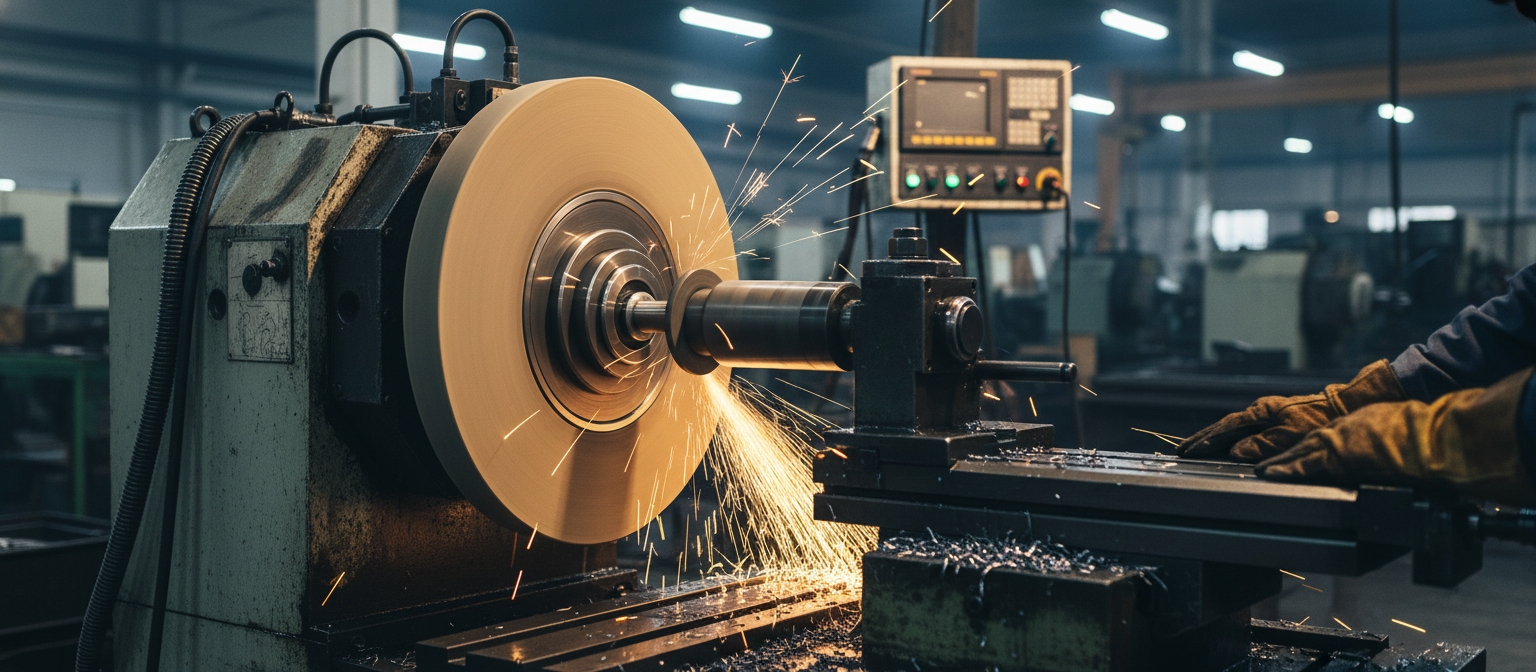
Technical ceramics have revolutionized modern engineering. Materials such as alumina (Al2O3), zirconia (ZrO2), silicon carbide (SiC), and silicon nitride (Si3N4) are prized for their exceptional hardness, wear resistance, thermal stability, and chemical inertness. However, these same properties make them notoriously difficult to machine. Precision grinding is the primary manufacturing process used to achieve the tight dimensional tolerances and ultra-smooth surface finishes required for aerospace, semiconductor, medical, and defense applications.
Because technical ceramics are highly brittle and possess low thermal conductivity, conventional grinding methods often lead to catastrophic failures, including surface cracking, chipping, sub-surface damage, and thermal degradation. To overcome these challenges, industrial manufacturers must utilize specialized open-structure (highly porous) grinding wheels. This comprehensive guide details the technical nuances of selecting the optimal open-structure grinding wheels to maximize material removal rates, minimize cycle times, and preserve the structural integrity of advanced ceramics.
The Physics of Ceramic Grinding and Thermal Distress
Unlike metals, which undergo plastic deformation and form continuous chips during grinding, technical ceramics material removal occurs primarily through brittle fracture and micro-cleaving. The high force required to initiate these fractures generates localized, intense friction at the contact zone. Temperatures at the grinding interface can easily exceed 1,000°C if not properly managed.
When a standard, dense grinding wheel is used, the lack of chip clearance space (pores) causes the wheel to load quickly with fine ceramic swarf. This loaded wheel no longer cuts efficiently; instead, it rubs against the workpiece, escalating friction and heat generation. Since ceramics cannot rapidly conduct this heat away, the thermal shock induces localized expansion, leading to micro-cracking (commonly known as grinding cracks or thermal shock cracks) and tensile residual stresses that compromise the component’s mechanical strength.
Furthermore, high rotational speeds create an aerodynamic “air barrier” around the perimeter of the wheel, preventing liquid coolant from entering the grinding zone. To understand the physical mechanics behind this issue, engineers can study the fluid dynamics of the boundary layer. Highly porous wheels address this head-on: the open pores act as mechanical conduits that disrupt this air boundary, drawing coolant into the wheel structure and releasing it directly at the point of contact. This dynamic is explained in depth in our technical article, Breaking the Air Barrier: How Open-Structure Grinding Wheels Prevent Coolant Starvation.
Key Selection Parameters for Porous Grinding Wheels
Selecting the correct open-structure grinding wheel requires balancing several interconnected variables. A failure in one parameter can lead to premature wheel wear, poor surface finish, or workpiece damage. Below, we break down the critical parameters that engineers and procurement specialists must evaluate.
1. Abrasive Material Selection
For technical ceramics, superabrasives are the industry standard. Conventional abrasives like aluminum oxide or silicon carbide dull too quickly, leading to high grinding forces and frequent dressing cycles. The two primary superabrasives used are:
- Diamond (Synthetic): This is the premier abrasive for grinding non-ferrous materials, including almost all technical ceramics. Diamond’s extreme hardness (Knoop hardness of ~8000 kg/mm²) allows it to cleave through hard ceramic matrices easily. For technical ceramics, resin or vitrified bonded diamond wheels are typically selected.
- Cubic Boron Nitride (CBN): While CBN is excellent for hardened ferrous steels and nickel-based superalloys, it is rarely used for pure technical ceramics unless processing specific metal-matrix ceramic composites or unique iron-containing ceramic formulations, due to its lower hardness compared to diamond.
When choosing synthetic diamond, the crystal friability (the tendency of the diamond crystal to fragment under pressure) must be considered. Highly friable diamonds self-sharpen under lower loads, which is ideal for delicate ceramic components, while tough, micro-crystalline diamonds are preferred for heavy stock removal on robust ceramic blocks.
2. Bond Systems and Their Role in Porosity
The bond holds the abrasive grains in place. The choice of bond directly dictates how easily an open, highly porous structure can be manufactured and maintained during operation:
- Vitrified Bond: This is the absolute benchmark for open-structure wheels used in ceramic grinding. Vitrified bonds are glass-like, rigid, and naturally brittle. They can be engineered with highly controlled, induced porosity (ranging from 30% to over 60% pore volume) without losing structural integrity. Vitrified wheels hold their shape exceptionally well, can be dressed with high precision, and resist chemical degradation from aggressive synthetic coolants.
- Resin Bond: Resin bonds offer excellent elasticity and provide superb surface finishes. While they can be manufactured with some porosity, they cannot match the structural stability of vitrified bonds at very high pore volumes. Resin-bonded open-structure wheels are typically reserved for fine finishing or polishing operations where high material removal is not the primary goal.
- Metal Bond: Metal-bonded wheels are incredibly durable and are used for heavy profiling. However, creating a highly porous, open structure in a sintered metal bond is extremely difficult and thermally restrictive. Thus, they are rarely used in highly porous configurations for thermal-sensitive ceramic grinding.
3. Porosity: Volume, Pore Size, and Distribution
The term “open-structure” refers to wheels where the spacing between abrasive grains is intentionally enlarged and filled with interconnected voids (pores). This is achieved during manufacturing by mixing temporary pore-forming agents (such as naphthalene, organic beads, or specialized ceramic spheres) into the abrasive and bond mixture, which are then burned out during the high-temperature sintering process.
When specifying porosity, three aspects must be quantified:
- Pore Volume Percentage: For standard technical ceramic grinding, a pore volume of 40% to 55% is highly effective. If grinding extremely gummy or thermal-sensitive materials, ultra-porous wheels with up to 65% porosity can be engineered.
- Pore Size: The physical size of the pores must match the expected chip size of the ceramic workpiece. If the pores are too small, they will instantly clog with fine ceramic dust. If they are too large, the mechanical strength of the wheel is compromised, leading to rapid wheel breakdown (shedding).
- Interconnectivity: A truly functional open-structure wheel requires interconnected pores. This allows coolant to flow continuously through the wheel body, using centrifugal force to pump coolant directly through the wheel’s grinding face into the cutting zone.
4. Grit Size and Concentration
The grit size determines both the material removal rate (MRR) and the final surface finish (Ra value). Technical ceramics require careful scaling of grit size:
- Coarse Grits (D126 to D181): Used for heavy roughing, calibration, and bulk stock removal. They require highly open structures to carry away the substantial volume of ceramic chips generated.
- Medium Grits (D46 to D91): The workhorse range for general-purpose ceramic grinding, offering a balanced trade-off between speed and surface finish.
- Fine/Ultra-fine Grits (D15 to D35 / Microns): Used for final finishing. High porosity is still required in fine grit wheels to prevent the very fine ceramic dust from loading the wheel and causing micro-scratches.
Diamond Concentration: This refers to the weight of diamond carats per cubic centimeter of the abrasive layer. In vitrified open-structure wheels, a lower to medium concentration (50 to 75 concentration) is often preferred. This allows more room for the pore structure and ensures that each individual diamond particle has enough bonding matrix around it to prevent premature pull-out, while maintaining open passages for coolant.
Matching Grinding Wheels to Ceramic Material Types
Different technical ceramics exhibit distinct mechanical behaviors. The table below serves as a reference guide for pairing specific technical ceramics with recommended wheel specifications:
| Ceramic Material | Mechanical Characteristics | Recommended Abrasive Type | Recommended Bond & Porosity | Grit Size Range |
|---|---|---|---|---|
| Alumina (Al2O3) | High hardness, moderate brittleness, highly abrasive. | Synthetic Diamond (Medium Friability) | Vitrified Bond; 45% – 50% Porosity | D91 to D126 (Rough), D46 (Finish) |
| Zirconia (ZrO2) | High fracture toughness, transformation toughening, highly susceptible to thermal phase transformation. | Synthetic Diamond (Low Friability, Tough) | Vitrified Bond; 50% – 55% High Porosity to manage thermal load | D64 to D91 |
| Silicon Carbide (SiC) | Extreme hardness, highly brittle, low thermal expansion. | Synthetic Diamond (High Friability) | Vitrified Bond; 40% – 45% Porosity | D126 (Rough), D46 (Finish) |
| Silicon Nitride (Si3N4) | High strength, high thermal shock resistance, excellent wear properties. | Premium Blocky Diamond (Tough) | Vitrified/Resin Bond hybrid; 45% – 50% Porosity | D64 to D107 |
How Open-Structure Wheels Overcome Coolant Starvation
In high-speed grinding, conventional solid grinding wheels behave like solid cylinders rotating at high velocities. This rotation drags the surrounding air with it, creating a high-pressure air envelope (the air boundary layer) around the wheel. When a nozzle shoots coolant at this barrier, the liquid is deflected away from the grinding contact zone, causing “coolant starvation.” Without coolant, the contact zone experiences dry grinding conditions, leading to immediate thermal damage to the ceramic.
Open-structure grinding wheels, particularly those utilizing vitrified bonds with interconnected pore networks, eliminate this problem. The centrifugal force generated by the spinning wheel acts as a natural pump. Coolant applied to the sides or pores of the wheel is drawn into the internal matrix and forced outward through the perimeter pores by centrifugal pressure. This completely disrupts the boundary air layer, ensuring a continuous, pressurized supply of coolant directly at the interface where the diamond grit engages the ceramic workpiece. This fluid dynamic cooling path significantly lowers temperatures, permits higher feed rates, and extends wheel life.
Operational Parameters and Best Practices
Selecting the perfect wheel is only half the battle; operating it correctly is vital to achieving maximum performance. Below are critical operating parameters and system requirements for grinding technical ceramics with open-structure wheels:
Wheel Speed (Vs)
For vitrified diamond open-structure wheels, typical operating speeds range from 30 m/s to 60 m/s. High-speed grinding (above 80 m/s) is possible but requires specialized high-strength vitrified cores to withstand the massive centrifugal forces. It is critical never to exceed the maximum rated speed printed on the wheel, as porous wheels have lower tensile strength than dense wheels.
Feed Rates and Depth of Cut
To avoid surface cracking, creep-feed grinding is highly recommended over surface grinding with multiple shallow passes. A deep depth of cut combined with a slow table speed (feed rate) allows the grinding forces to remain stable, and the open-structure wheel’s pores can carry the large volume of coolant required to absorb the heat of the single, deep pass.
Dressing and Truing
Open-structure vitrified wheels must be dressed and trued with extreme precision. Truing corrects the wheel’s concentricity and profile geometry, while dressing exposes the diamond grains and clears out any loaded swarf from the pores.
- Rotary Diamond Dressers: These are highly recommended for automated production lines. They ensure precise geometry and can dress the wheel without closing or smearing the delicate open pore structures.
- Dressing Sticks (Al2O3): For manual or simple setups, soft aluminum oxide dressing sticks can be used to erode the vitrified bond gently, exposing fresh diamond grits and restoring the open structure.
Coolant Management
The coolant delivery system must match the high performance of the open-structure wheel. Use a dedicated filtration system to remove fine ceramic swarf from the coolant reservoir; otherwise, recirculating micro-particles will clog the wheel pores and scratch the ceramic surface. Coherent jet nozzles should be positioned to deliver coolant at a velocity that matches the peripheral speed of the grinding wheel, ensuring optimal penetration of the boundary layer.
Troubleshooting Common Issues in Ceramic Grinding
Even with advanced open-structure wheels, production variables can drift. Here is how to diagnose and solve common issues:
Issue 1: Workpiece Chipping and Micro-Cracks
- Cause: High grinding temperature or excessive mechanical force.
- Solution: Increase coolant flow rate, adjust nozzle alignment to target the contact zone better, choose a wheel with higher porosity (e.g., move from 45% to 55%), or use a finer grit diamond wheel to decrease individual grain chip load.
Issue 2: Rapid Wheel Wear (Shedding)
- Cause: The bond is too soft, or the pore volume is too high for the mechanical load.
- Solution: Select a wheel with a harder bond grade, decrease the depth of cut, or reduce the porosity percentage slightly to increase mechanical grain retention.
Issue 3: Wheel Loading (Swarf Clogging)
- Cause: Inadequate pore size or insufficient coolant pressure.
- Solution: Increase coolant filtration to prevent swarf recycling, use a wheel with larger induced pores, or perform more frequent dressing cycles.
Conclusion
Successfully grinding technical ceramics requires a shift away from dense, conventional abrasive wheels toward highly engineered, open-structure superabrasive systems. By selecting a vitrified-bonded diamond wheel with carefully calculated porosity, manufacturers can completely eliminate coolant starvation, control grinding temperatures, and achieve flawless surface integrity on even the most delicate ceramic components.
Investing in the correct open-structure wheel directly translates to shorter cycle times, zero-defect production runs, and a significant decrease in overall manufacturing costs. Partnering with an experienced abrasive manufacturer ensures that your wheel geometry, bond formulation, and pore volume are perfectly tailored to your specific application requirements.
Get Professional Technical Support
Are you facing thermal cracking, slow production cycles, or high wheel wear when grinding technical ceramics? Our engineering team at Zhengzhou Zhongxin Grinding Wheel Co., Ltd. specializes in custom-formulating high-performance vitrified diamond open-structure wheels tailored to your exact manufacturing needs. Contact us today for technical consultations, product catalogs, or customized trial orders.
Contact Details:
– Company: Zhengzhou Zhongxin Grinding Wheel Co., Ltd.
– Email: root@shalun.net
– Phone/WhatsApp: +86 15538050608
– Tel: +86-371-62513386
– Address: No. 1111-1, Kexue Avenue, Shangjie District, Zhengzhou, Henan, China