


Grinding wheel loading happens when chips from the workpiece smear, pack, or weld onto the wheel surface instead of breaking away cleanly. Once loading starts, the wheel cuts less efficiently, heat rises fast, and defects such as burn, chatter, poor finish, and unstable size control become much more likely.
For overseas buyers and production engineers, wheel loading is not just a wheel-life issue. It also affects part quality, dressing frequency, machine uptime, and total grinding cost.
What Does It Mean When a Grinding Wheel Loads Up?
A loaded wheel has workpiece material trapped between abrasive grains or spread across the wheel face. Instead of presenting sharp cutting points, the wheel surface becomes partially blocked. That reduces chip space, restricts coolant access, and increases friction.
In practice, wheel loading is most common when grinding ductile or gummy materials, when the wheel structure is too dense, or when dressing and coolant conditions are not matched to the application.
Typical Causes of Grinding Wheel Loading
1. The workpiece material is prone to smearing
Materials such as stainless steel, soft alloys, and some non-ferrous metals are more likely to adhere to the wheel surface. Instead of forming small brittle chips, they can deform plastically and stick to the abrasive layer.
2. The wheel specification is too hard or too dense
If the bond, grade, or structure does not provide enough chip clearance, debris remains trapped near the cutting zone. A dense wheel can hold form well, but in the wrong application it may load quickly.
3. Dressing is not opening the wheel properly
A wheel that is dull or insufficiently dressed cannot expose fresh sharp grain. Once the cutting points become blunt, rubbing increases and loading accelerates.
4. Coolant delivery is weak or misdirected
Even a good wheel can load when coolant cannot reach the grinding zone effectively. Poor flow, low pressure, or bad nozzle positioning can reduce heat removal and chip evacuation.
5. Grinding parameters are too aggressive for the setup
Excessive infeed, unsuitable wheel speed, or unstable process settings can cause more heat and chip adhesion. The result is often a wheel face that stops cutting cleanly.
Warning Signs on the Shop Floor
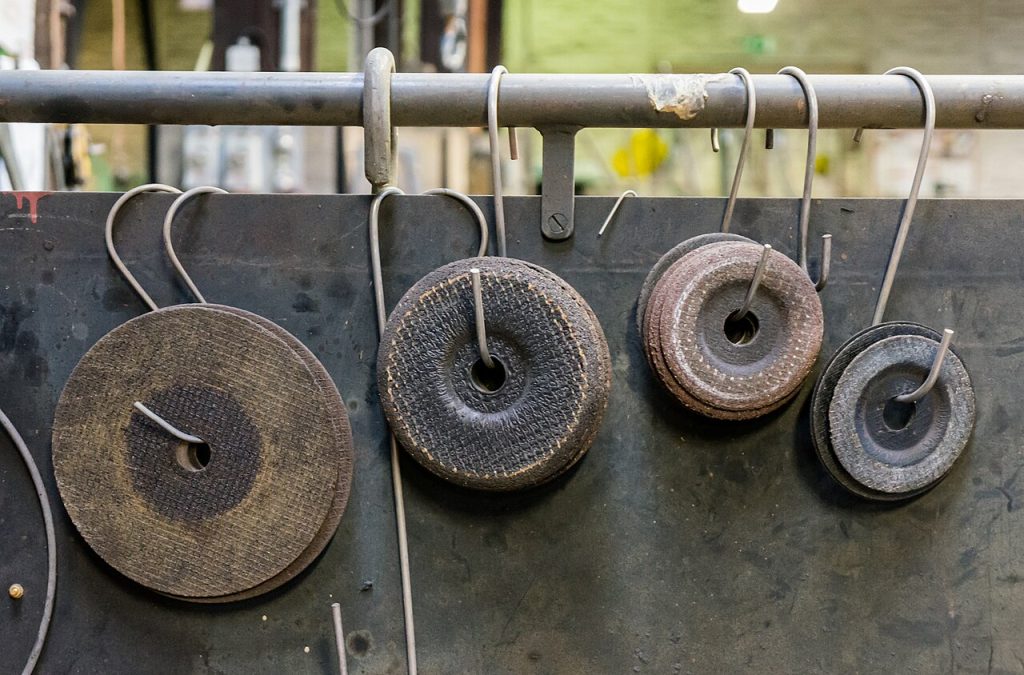
If a wheel is loading up, operators usually notice several changes quickly:
- Higher grinding temperature
- Surface burn or discoloration on the part
- Poorer surface finish
- More sparks and rubbing behavior instead of free cutting
- Increased power draw or process noise
- More frequent dressing intervals
- Dimensional inconsistency over longer production runs
Why Loading Matters for Product Quality
A loaded grinding wheel does not only shorten wheel life. It can also create production risk: burn damage, loss of profile accuracy, unstable size control, surface defects that trigger rework, and lower machine utilization because dressing must be done more often.
Practical Ways to Reduce Wheel Loading
Select a more open wheel structure
A wheel with better porosity gives chips more space and improves coolant penetration. This is especially important when grinding stainless steel or other loading-prone materials.
Match bond type to the application
Different materials and machines need different bond behavior. Vitrified bonds are often preferred where porosity and profile retention are important, while other bond systems may be chosen for special finishes or machine conditions.
Use proper dressing conditions
Dressing should restore sharp cutting points and reopen chip space. If loading appears too early, check dressing depth, frequency, and dresser condition.
Improve coolant delivery
Coolant should enter the real contact zone, not just flood the general work area. Better nozzle alignment often helps reduce loading without changing the entire wheel specification.
Review process parameters
If wheel loading is persistent, review infeed, work speed, wheel speed, and stock removal rate together instead of changing only one variable.
How Zhongxin Supports Buyers Facing Wheel Loading Problems
At Zhongxin, we help customers review wheel specification, workpiece material, grinding method, and machine condition together. For production lines struggling with wheel loading, we can support selection across vitrified grinding wheels, CBN grinding wheels, diamond grinding wheels, and customized abrasive solutions for specific applications.
If you share your material, grinding machine type, part drawing, and current wheel code, we can help recommend a more suitable grinding wheel route for lower loading risk and more stable performance.
Conclusion
Grinding wheel loading is usually a sign that the wheel, dressing condition, coolant delivery, and process parameters are not working together efficiently. The earlier it is identified, the easier it is to correct before burn, finish problems, or unstable size control affect production.
If your team is dealing with wheel loading in cylindrical grinding, surface grinding, or precision grinding applications, contact Zhongxin for application support and wheel selection advice.
Need a grinding wheel recommendation?
- Website: https://shalun.net
- Email: root@shalun.net
- WhatsApp / Phone: +86 15538050608