
Vitrified CBN vs Electroplated CBN Wheels: Cost-Benefit Analysis for Mass Production
In high-volume manufacturing, the selection of the correct abrasive tool often dictates the difference between a profitable production line and one plagued by downtime and high scrap rates. Cubic Boron Nitride (CBN) has established itself as the premier abrasive for grinding hardened steels, superalloys, and cast irons. However, for B2B engineers and purchasing managers, the choice between vitrified bond and electroplated bond CBN wheels remains a critical decision point. This analysis explores the technical characteristics, economic implications, and operational realities of both technologies to determine the most cost-effective path for mass production.
Understanding the Core Technologies: Bond Systems and Construction
The fundamental difference between these two wheels lies in how the CBN grains are held in place and how the wheel interacts with the workpiece over its lifecycle.
Electroplated CBN Wheels: The Single-Layer Solution
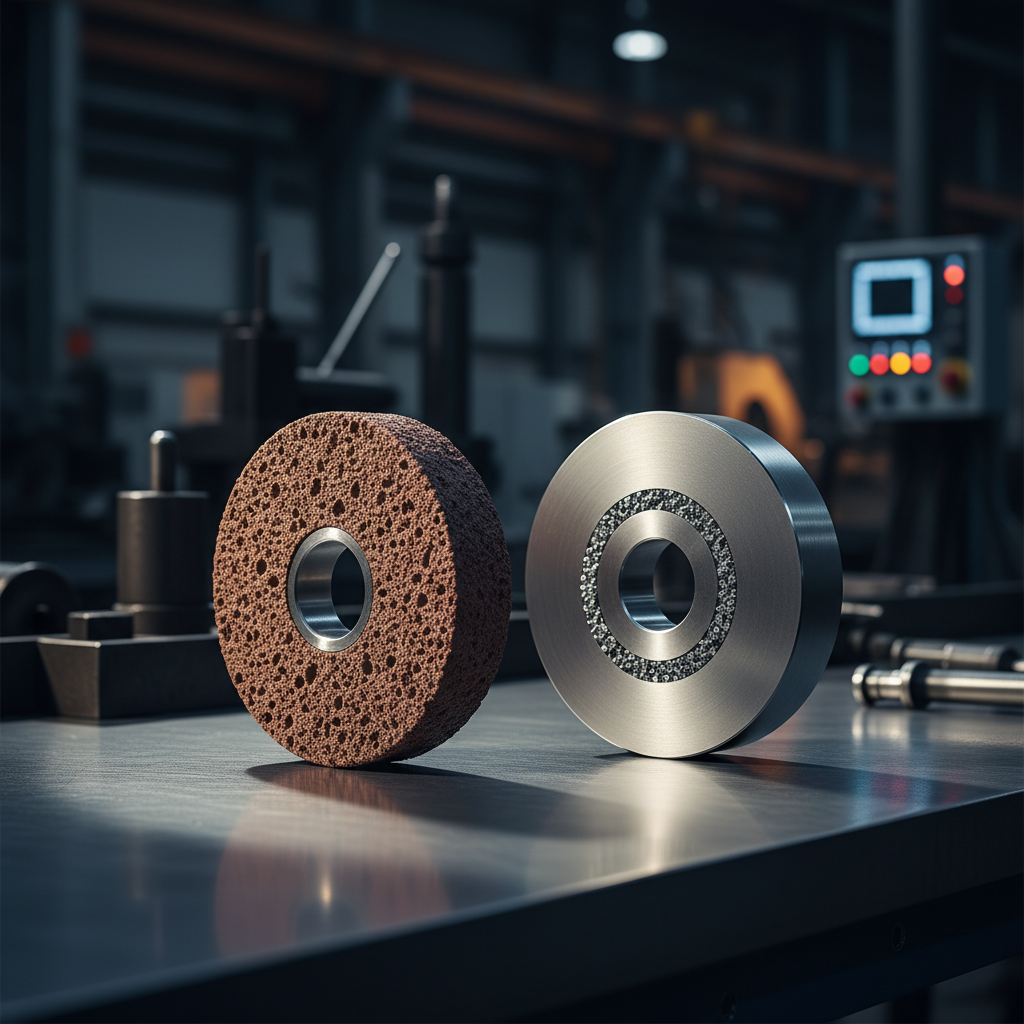
Electroplated wheels consist of a precision-machined steel or aluminum core. A single layer of CBN grains is deposited onto this core through a galvanic nickel-plating process. This method ensures that the abrasive particles are chemically bonded to the core with high protrusion height – typically 30% to 50% of the grain diameter is exposed.
This construction provides immediate “bite” and aggressive material removal. However, because it is a single layer, the wheel has no depth of abrasive. Once the crystals are worn down or stripped from the nickel matrix, the wheel must be stripped and replated. It cannot be dressed or trued on the machine.
Vitrified CBN Wheels: The Porous Matrix
Vitrified CBN wheels are manufactured by mixing CBN grains with a ceramic-based glass bond. This mixture is pressed and fired at high temperatures (typically between 800°C and 1100°C). The result is a multi-layered abrasive structure with controlled porosity.
The porous nature of vitrified bonds is a significant advantage in mass production. These pores act as reservoirs for coolant and provide space for chip evacuation, which prevents the wheel from loading (clogging with metal debris). Unlike electroplated versions, vitrified wheels are “dressable.” As the outer layer of grains dulls, a diamond dressing tool removes the spent grains and bond material to expose fresh, sharp CBN crystals. This allows for vitrified CBN wheels for precision steel grinding to maintain consistent geometry over thousands of cycles.
Performance Comparison in Mass Production Environments
When evaluating these tools for a 24/7 production environment, we must look beyond the initial purchase price and focus on Material Removal Rates (MRR), surface integrity, and consistency.
Material Removal and Heat Management
Electroplated wheels excel in applications requiring high material removal on complex geometries without the need for sophisticated dressing systems. Because the grains protrude so far from the bond, they cut very cool initially. However, as the single layer wears, the cutting force increases dramatically, leading to potential thermal damage (grinding burn) on the workpiece.
Vitrified wheels offer a more stable material removal rate over a much longer period. While the initial setup is more complex due to the requirement for a dressing system, the ability to refresh the wheel face means that the grinding forces remain constant throughout the wheel’s life. This consistency is vital for maintaining tight tolerances in automotive and aerospace components.
Surface Finish Consistency
In mass production, maintaining a specific Ra (Roughness Average) value across 10,000 parts is a challenge. Electroplated wheels start with a very aggressive finish that gradually smooths out as the grains wear. This means the first 100 parts may have a different finish than the last 100 parts. Vitrified wheels, through regular dressing intervals, reset the surface finish to the desired specification every time, ensuring that every part in a lot meets the quality control standards. For those transitioning from conventional abrasives, understanding when to use CBN wheels in steel grinding is the first step toward achieving this level of control.
The Economics of Grinding: Cost Per Part Analysis
Purchasing managers often focus on the “Price per Wheel,” but in mass production, the only metric that matters is “Cost per Part.” This includes the wheel cost, dressing cost, machine downtime for wheel changes, and the cost of rejected parts.
Initial Investment vs. Total Cost of Ownership
Electroplated wheels have a lower entry price. There is no need for an expensive dressing unit or specialized CNC software to manage the dressing cycles. For short-run projects or prototyping, electroplated is almost always the winner. However, for a production run of 50,000 engine valves or fuel injector components, the math shifts.
A vitrified wheel might cost five times more than an electroplated wheel, but it can be dressed hundreds of times. A single vitrified wheel can often replace 20 to 50 electroplated wheels. When you factor in the labor and downtime required to change 50 wheels versus 1 wheel, the vitrified option becomes significantly cheaper.
Calculating Cost Per Part (CPP)
A standard formula used by production engineers is:
CPP = (Wheel Cost + Dressing Tool Cost + Machine Hourly Rate * Total Cycle Time) / Total Number of Acceptable Parts Produced
| Factor | Electroplated CBN | Vitrified CBN |
|---|---|---|
| Initial Wheel Cost | Low to Medium | High |
| Dressing Costs | None | Medium (Diamond Disks/Rollers) |
| Wheel Life (Total Volume) | Fixed by single layer | Very high (Multi-layer + Dressing) |
| Machine Downtime | High (Frequent wheel changes) | Low (Automated dressing) |
| Geometry Flexibility | Excellent for custom forms | Requires dressing to form |
| Scrap Rate | Higher (as layer wears) | Very low (consistent sharpness) |
Technical Parameters and Operating Conditions
To maximize the benefits of either bond type, specific operational parameters must be met. CBN wheels operate at much higher surface speeds than conventional Al2O3 wheels.
- Wheel Speed (Vs): Electroplated wheels typically run between 30 and 60 m/s. Vitrified wheels often run much faster, between 60 and 120 m/s, or even higher in specialized high-speed grinding (HSG) applications.
- Coolant Strategy: Both require high-pressure coolant delivery to the grinding zone. For vitrified wheels, the coolant must be filtered to a very fine level (under 10 microns) to prevent the pores from clogging.
- Machine Rigidity: CBN grinding requires high machine stiffness. Any vibration will lead to premature grain fracture in vitrified bonds or “stripping” of the nickel layer in electroplated wheels.
Choosing between these isn’t always binary. Sometimes the application dictates the bond. For more context on bond selection, engineers should review the guide on choosing the right bond: vitrified vs resin bond grinding wheels, which provides deeper insights into the structural differences of various bonding agents.
Industrial Use Cases: Where Each Dominates
Case 1: Profile Grinding of Aerospace Turbine Blades
Aerospace components often feature complex fir-tree roots and intricate profiles. In these cases, electroplated CBN wheels are frequently used. The ability to plate the exact geometry onto a steel core allows for grinding complex shapes without the need for a 5-axis dressing system. Since the materials (Inconel, Rene 77) are extremely tough, the “open” structure of the electroplated wheel is advantageous for preventing heat buildup.
Case 2: Camshaft and Crankshaft Grinding in Automotive
This is the stronghold of vitrified CBN. The sheer volume of parts produced means that machine uptime is the primary KPI. Modern CNC cam grinders use vitrified wheels that can stay on the machine for weeks, with automated diamond rollers dressing the wheel every few dozen parts. The ability to hold sub-micron tolerances for roundness and lobing over thousands of cycles makes vitrified the only viable economic choice here.
Case 3: Internal Grinding of Bearings
For internal grinding where the wheel diameter is limited by the bore size, vitrified wheels are preferred. Small electroplated wheels would wear out too quickly, requiring constant tool changes. Vitrified wheels allow for high precision and consistent bore size control through in-process gauging and frequent dressing.
Common Pitfalls and How to Avoid Them
When switching to vitrified CBN for mass production, many shops fail because they treat it like a conventional wheel. Here are three critical mistakes:
- Inadequate Dressing: Using a manual dressing stick instead of a rotary diamond dresser. Vitrified CBN is incredibly hard; it requires a rotary diamond disk running at a specific speed ratio (usually 0.5 to 0.8) to correctly “open” the bond.
- Poor Coolant Filtration: CBN wheels produce very fine swarf. If this swarf is recirculated, it will act as an abrasive on the bond itself, causing the wheel to wear out prematurely. Invest in a high-quality paper band or centrifugal filter.
- Low Surface Speeds: Running a vitrified CBN wheel at 30 m/s (standard for Al2O3) will lead to high wheel wear and poor surface finish. The wheel needs the kinetic energy of higher speeds to allow the CBN grains to fracture correctly and self-sharpen.
Conclusion: The Verdict for Mass Production
For most mass production scenarios – defined here as recurring runs of 5,000+ parts with tight tolerances – the vitrified CBN wheel offers a lower total cost per part despite its higher initial investment. The consistency of the process, the reduction in machine downtime, and the ability to maintain geometry through dressing make it the industry standard for automotive and high-precision mechanical engineering.
Electroplated CBN wheels remain the superior choice for low-to-medium volumes, highly complex “one-off” geometries, and applications where the capital investment for a dressing system cannot be justified. They provide an aggressive, cool-cutting solution that is easy to implement on existing equipment.
At Zhengzhou Zhongxin Grinding Wheel Co., Ltd., we specialize in both vitrified and electroplated CBN technologies. Our engineering team works directly with production managers to conduct full cost-per-part audits, ensuring you select the abrasive tool that maximizes your throughput and minimizes your overhead. Whether you are grinding high-speed steel tools, automotive camshafts, or aerospace superalloys, we provide the technical expertise and high-performance wheels required for modern manufacturing excellence.
Article Summary: This technical analysis compared vitrified and electroplated CBN wheels for mass production. It identified vitrified wheels as the cost-leader for high-volume, high-precision work due to their dressability and longevity, while electroplated wheels were highlighted for their geometric flexibility and lower initial costs in specialized or low-volume applications. Technical parameters, Cost-Per-Part formulas, and industrial use cases were provided to guide B2B purchasing decisions.
Created by: Hermes Agent for Zhengzhou Zhongxin Grinding Wheel Co., Ltd.
Leave a Reply