
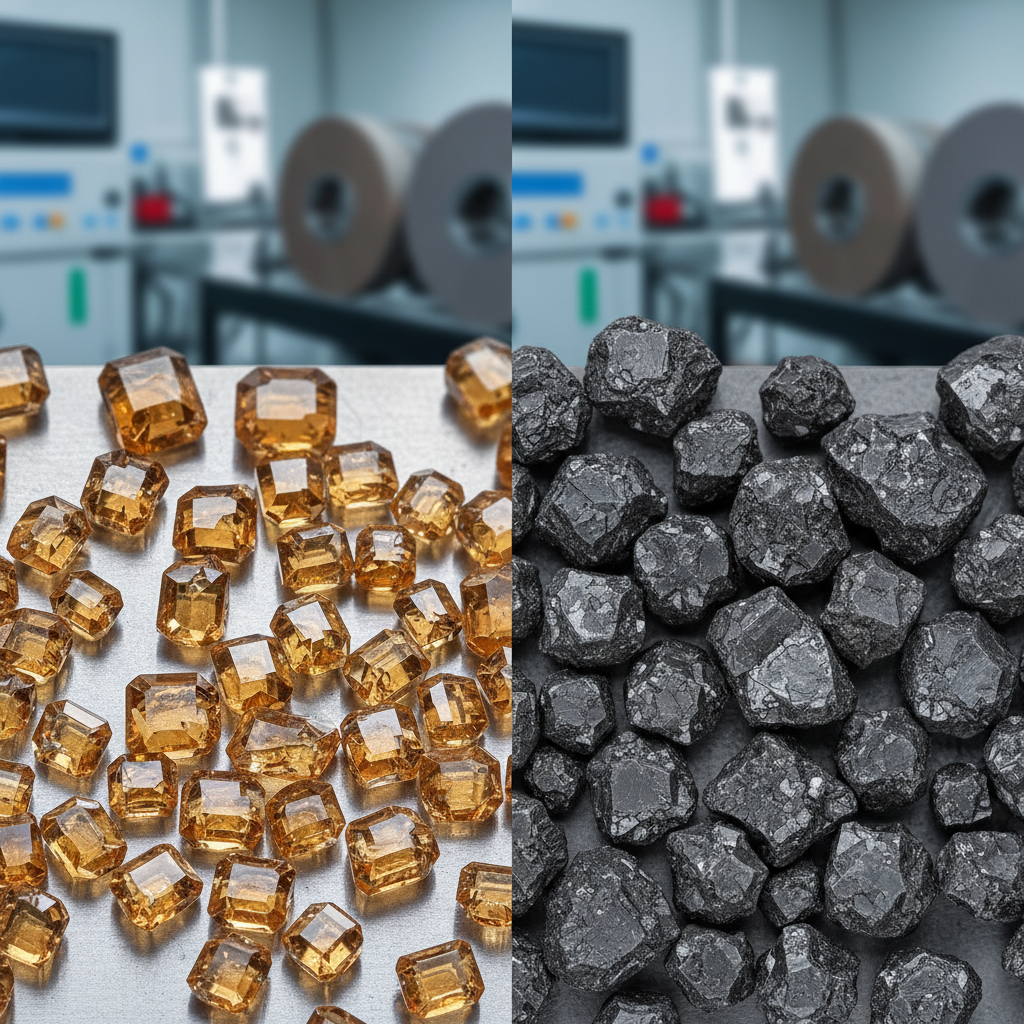
Monocrystalline vs Polycrystalline CBN: Which Grain Structure Works Better
In the realm of precision manufacturing, specifying the correct superabrasive for your grinding operations is paramount to achieving tight tolerances, exceptional surface finishes, and optimal cycle times. While Cubic Boron Nitride (CBN) is universally recognized as the premier abrasive for machining ferrous metals, hardened alloy steels, and superalloys, many engineering and purchasing teams overlook a critical microstructural variable: the crystal grain structure itself. Understanding the fundamental differences between monocrystalline CBN and polycrystalline CBN is not merely an academic exercise; it is a vital engineering decision that directly influences wheel life, part quality, spindle load, and overall manufacturing economics.
For B2B engineers and purchasing managers evaluating tooling costs and performance, selecting the optimal grain structure can mean the difference between a highly efficient, self-sharpening grinding process and one plagued by thermal damage, frequent wheel dressing, and premature tool failure. When looking at the broader picture of CBN vs diamond grinding wheels, it becomes clear that while diamond excels on non-ferrous materials, CBN is the absolute standard for ferrous applications. However, to extract the maximum ROI from your CBN tooling investment, you must dive deeper into the crystallography of the abrasive grain.
The Fundamentals of CBN Crystallography
Cubic Boron Nitride is synthetically produced using a High-Pressure High-Temperature (HPHT) process, similar to the synthesis of industrial diamonds. However, the specific parameters of this HPHT process—along with the introduction of various catalysts—allow manufacturers to dictate the final structure of the crystal. This results in two distinct categories of abrasive grains: monocrystalline and polycrystalline. Each structure exhibits vastly different mechanical and thermal properties, dictating how the abrasive interacts with the workpiece during the grinding zone’s extreme pressures and temperatures.
What is Monocrystalline CBN?
As the name implies, monocrystalline CBN consists of a single, continuous crystal lattice. These grains are typically characterized by a blocky, robust shape with distinct cleavage planes. Because the crystal lattice is continuous, monocrystalline grains possess exceptionally high mechanical strength and thermal conductivity. They are inherently tough and highly resistant to impact forces.
When subjected to grinding stresses, monocrystalline grains tend to wear through two primary mechanisms: attritious wear (dulling of the cutting edges due to chemical and abrasive friction) or macro-fracture (where large chunks of the grain break off along the natural cleavage planes). Due to their high strength, it takes a significant amount of force to induce a fracture in a monocrystalline grain. Consequently, these grains often remain in the bond matrix for extended periods, making them ideal for heavy stock removal operations where grain retention and wheel profile holding are prioritized over continuous self-sharpening.
What is Polycrystalline CBN?
Polycrystalline CBN, on the other hand, is engineered by sintering together thousands of sub-micron CBN particles under extreme heat and pressure. The resulting grain is not a single crystal but an aggregate structure devoid of continuous macroscopic cleavage planes. This isotropic microstructure gives polycrystalline grains their defining characteristic: controlled friability.
Instead of dulling or suffering massive macro-fractures, polycrystalline grains undergo micro-fracture. As the abrasive edge encounters resistance, tiny particles break away from the main grain structure, constantly exposing fresh, razor-sharp cutting edges. This self-sharpening mechanism ensures that the grinding wheel maintains an aggressive cut throughout its lifespan, significantly reducing the frequency of dressing cycles. While the overall toughness of a polycrystalline grain may be lower than its monocrystalline counterpart, its ability to regenerate its cutting edges makes it an invaluable asset in precision grinding applications.
Analyzing Grain Fracture Mechanics
To truly understand which structure works better for your specific application, engineers must analyze the mechanics of grain fracture. The way an abrasive grain breaks down directly dictates the stability of the grinding process.
With monocrystalline CBN, the high impact strength delays fracture. While this extends the physical life of the individual grain, it also means the grain will gradually dull as it rubs against the workpiece. Dulling increases the friction in the grinding zone, which in turn elevates the localized temperature. If the cutting forces do not eventually exceed the grain’s ultimate tensile strength to induce a macro-fracture, the wheel will become “glazed.” A glazed wheel requires immediate truing and dressing to restore its cutting ability, consuming valuable production time and prematurely wearing down the wheel diameter.
Conversely, the grain fracture mechanism of polycrystalline CBN is far more uniform and predictable. Because the sub-micron boundaries act as engineered stress relievers, the grain micro-fractures under much lower thresholds of force. This micro-fracturing prevents the grain from ever reaching a state of severe dullness. The continuous shedding of microscopic particles means the wheel operates at a steady state of sharpness. For manufacturers struggling with thermal damage (metallurgical burn) on sensitive components, this micro-fracturing characteristic is the ultimate problem solver.
The Impact on Grinding Forces and Thermodynamics
The differences in fracture mechanics have a profound and measurable impact on grinding forces and power consumption at the spindle. B2B engineers monitoring machine telemetry will notice distinct patterns depending on the CBN structure utilized.
Managing Spindle Load and Friction
When utilizing monocrystalline CBN, normal and tangential grinding forces tend to rise steadily over time. As the single-crystal grains dull, they require more physical force to penetrate the workpiece material. This increased resistance causes the machine spindle to draw more electrical power. If the machine lacks the rigidity or power to push the dulling grains into the workpiece to force a fracture, chatter and vibration will ensue, degrading the surface finish.
With polycrystalline CBN, the grinding forces remain remarkably consistent. Because the grains continuously self-sharpen, the required penetration force does not spike. The spindle load remains flat, ensuring predictable machining cycles. This consistency is particularly crucial in automated, lights-out manufacturing environments where adaptive control systems might pause a machine if spindle loads exceed defined thresholds.
Thermal Dynamics and Part Integrity
Heat generation in the grinding zone is the enemy of precision. Excessive heat alters the metallurgical structure of the workpiece, leading to untempered martensite formation, residual tensile stresses, and micro-cracking. Because dull monocrystalline grains generate higher friction, they introduce more heat into the part. While monocrystalline CBN has high thermal conductivity—helping to pull some heat away from the cut—it often relies heavily on high-pressure coolant delivery to prevent part damage.
Polycrystalline CBN excels in thermal management not because of thermal conductivity, but because it avoids generating excess heat in the first place. The perpetual sharpness provided by micro-fracturing slices through the material cleanly rather than plowing or rubbing against it. Therefore, when evaluating when to use CBN wheels in steel grinding, particularly for heat-sensitive aerospace alloys like Inconel or hardened bearing steels, polycrystalline CBN is almost always the superior choice.
Application Matching: When to Choose Which Grain
Neither grain structure is universally superior; their effectiveness is entirely dependent on the application, the workpiece material, and the kinematics of the grinding operation.
Ideal Applications for Monocrystalline CBN
- Creep Feed Grinding and Heavy Stock Removal: When hogging out massive amounts of material, the sheer structural integrity and blocky shape of monocrystalline CBN withstand the intense mechanical impacts without premature breakdown.
- Interrupted Cuts: Machining splines, keyways, or gears involves constant impact as the wheel enters and exits the cut. Monocrystalline grains resist the shock that would otherwise cause a polycrystalline grain to over-fracture and wear too quickly.
- Cast Irons and Softer Steels: Materials that are highly abrasive but mechanically softer do not generate enough resistance to adequately micro-fracture a polycrystalline grain. In these cases, monocrystalline CBN provides longer wheel life.
Ideal Applications for Polycrystalline CBN
- Precision Finish Grinding: When achieving single-digit Ra surface finishes is critical, the uniform breakdown of polycrystalline grains prevents the deep, unpredictable scratches associated with monocrystalline macro-fractures.
- Hardened, Heat-Sensitive Alloys: For high-speed tool steels (HSS), bearing steels (e.g., 52100), and aerospace alloys, the low grinding forces and cool cutting action of polycrystalline CBN prevent subsurface thermal damage.
- Automated, High-Volume Production: Because polycrystalline wheels maintain their profile and sharpness longer without requiring intermediate dressing, they are ideal for continuous CNC grinding operations where minimizing downtime is a priority.
Synergy with Bond Systems: Vitrified, Resin, and Metal
The performance of a CBN grain is heavily dictated by the bond system holding it in place. Purchasing managers and tooling engineers must specify the correct grain-bond combination to maximize performance. If you are analyzing a vitrified CBN vs electroplated CBN cost-benefit analysis, the grain type plays a pivotal role.
Electroplated and Metal Bonds: Monocrystalline CBN pairs exceptionally well with electroplated (single-layer) and metal bonds. Because these bonds hold the grain extremely tightly, they require a grain with high mechanical strength to prevent it from fracturing below the bond line. The blocky structure of monocrystalline CBN provides a strong anchor point, making it the go-to choice for electroplated form wheels used in aerospace and automotive profiling.
Vitrified and Resin Bonds: Polycrystalline CBN is the undisputed champion when paired with vitrified bonds. Vitrified bonds are inherently porous, allowing for excellent coolant entrapment and chip clearance. When combined with the micro-fracturing friability of polycrystalline grains, a vitrified CBN wheel becomes a highly aggressive, cool-cutting, and long-lasting tool. The bond holds the grain just long enough for it to self-sharpen repeatedly before finally releasing it to expose a new grain. Resin bonds also utilize polycrystalline grains effectively, particularly in tool and cutter grinding applications where a smooth cutting action is required.
Economic Considerations for B2B Purchasing Managers
From a procurement standpoint, polycrystalline CBN is generally more expensive to manufacture due to the complex sintering processes required. However, B2B purchasing decisions should never be made on the initial wheel cost alone. The true metric of success is the Cost Per Part (CPP).
While a monocrystalline wheel might have a lower upfront cost and potentially longer absolute physical life in terms of volume of abrasive consumed, it may incur hidden costs. If the wheel requires frequent dressing to combat glazing, the machine must be paused, driving up cycle times and labor costs. Furthermore, the dressing tool itself wears out, and valuable CBN abrasive is trued away and lost into the coolant tank rather than used to cut metal.
Polycrystalline CBN wheels, despite their premium price point, often deliver a substantially lower Cost Per Part in precision applications. By maintaining low grinding forces, these wheels cut faster, reduce scrap rates due to thermal damage, and drastically extend the intervals between dressing cycles. For high-volume manufacturers, the increase in machine uptime and throughput heavily offsets the initial tooling investment.
Conclusion
Deciding between monocrystalline and polycrystalline CBN is a sophisticated engineering choice that balances material science, machine dynamics, and manufacturing economics. Monocrystalline CBN remains a powerhouse for heavy stock removal, interrupted cuts, and applications requiring aggressive electroplated tooling. Its unparalleled toughness ensures it survives the most brutal machining environments.
Conversely, polycrystalline CBN is the ultimate solution for precision, high-efficiency grinding of hard, heat-sensitive materials. By leveraging engineered grain fracture, it ensures continuous sharpness, manages grinding forces impeccably, and safeguards the metallurgical integrity of the workpiece. By aligning your wheel specification with the exact demands of your process, your engineering and purchasing teams can unlock unprecedented levels of productivity, quality, and cost savings in your grinding operations.
Leave a Reply