
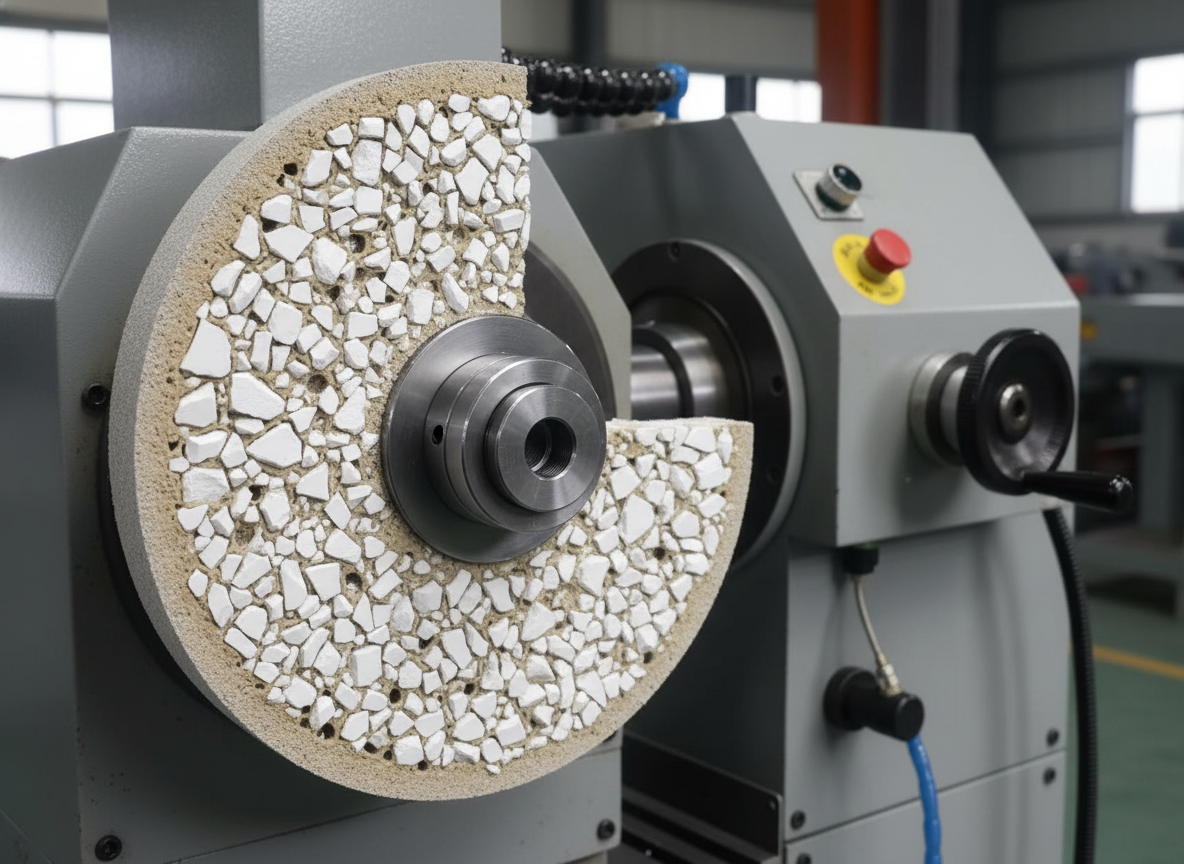
Understanding Grinding Wheel Basics: A Complete Guide for Metalworking Professionals
Figure 1: Grinding wheel storage in an industrial manufacturing warehouse — real product photo from Wikimedia Commons.
Grinding wheels are essential tools in metalworking and manufacturing, providing precision material removal and surface finishing capabilities. Whether you’re working with hardened steel, aluminum, or exotic alloys, understanding the fundamentals of grinding wheel selection and operation is crucial for achieving optimal results.
The Five Key Characteristics of Grinding Wheels
Every grinding wheel is defined by five critical characteristics that determine its performance and application:
1. Abrasive Material
The abrasive material is the cutting component of the wheel. Common types include:
- Aluminum Oxide (A) – General-purpose abrasive for steel and ferrous metals
- Silicon Carbide (S) – Harder than aluminum oxide, ideal for non-ferrous metals and cast iron
- Ceramic Alumina (C) – High-performance abrasive for precision grinding
- Diamond (D) – Superabrasive for extremely hard materials like carbide and ceramics
- Cubic Boron Nitride (CBN) – Superabrasive for hardened steel and high-speed steel
2. Grain Size
Grain size ranges from 10 (coarsest) to 600 (finest) and determines the surface finish quality:
- 10-24 grit – Coarse, for rapid material removal
- 30-60 grit – Medium, for general grinding applications
- 80-200 grit – Fine, for finishing operations
- 220-600 grit – Very fine, for precision finishing
3. Wheel Grade
Wheel grade indicates how tightly the bond holds the abrasive grains, ranging from A (soft) to Z (hard):
- A-H – Soft structure for hard materials
- I-P – Medium structure for general applications
- Q-Z – Hard structure for soft materials
4. Wheel Structure
Structure refers to the spacing between abrasive grains, rated from 1 (dense) to 17 (open):
- Dense structure (1-8) – For precision finishing and hard materials
- Open structure (9-17) – For rapid material removal and soft materials
5. Bond Type
The bond holds the abrasive grains together and affects wheel performance:
- Vitrified (V) – Glass-based bond for precision grinding
- Resinoid (B) – Resin-based bond for high-speed grinding
- Rubber (R) – Flexible bond for polishing and finishing
- Metal (M) – Metal bond for superabrasive wheels
Common Types of Grinding Wheels
Figure 2: Ceramic grinding wheels being manufactured in a specialized workshop — real production photo from Wikimedia Commons.
Different wheel shapes serve specific applications:
Straight Wheels (Type 1)
The most common wheel type, used for cylindrical, centerless, and surface grinding operations. These wheels grind on their periphery and produce slightly concave surfaces.
Depressed Center Wheels (Type 27)
Designed for angle grinders, these wheels allow for better access in tight spaces and are ideal for weld grinding and surface preparation.
Cup Wheels (Type 6 and 11)
Cup-shaped wheels used for tool and cutter grinding, providing additional radial grinding surface for complex geometries.
Dish Wheels (Type 12)
Shallow cup-style wheels for grinding in slots and crevices, commonly used in cutter grinding and jig grinding applications.
Selecting the Right Grinding Wheel
Choosing the correct wheel involves considering several factors:
Material Type
- Steel and ferrous metals – Aluminum oxide wheels
- Cast iron and non-ferrous metals – Silicon carbide wheels
- Carbide and ceramics – Diamond or CBN wheels
- Hardened steel – CBN wheels for extended wheel life
Operation Type
- Rough grinding – Coarse grit, open structure, soft grade
- Precision grinding – Fine grit, dense structure, hard grade
- Finishing – Very fine grit, dense structure
Machine Type
- Bench grinders – Straight wheels, medium grit
- Surface grinders – Straight wheels, fine to medium grit
- Cylindrical grinders – Straight wheels, various grits
- Tool and cutter grinders – Cup and dish wheels
Safety Considerations
Proper safety practices are essential when working with grinding wheels:
- Always inspect wheels for damage before use
- Ensure proper wheel speed matches machine specifications
- Use appropriate personal protective equipment (PPE)
- Follow manufacturer’s mounting and balancing procedures
- Never exceed maximum operating speed
- Use wheel guards and safety shields
Conclusion
Understanding grinding wheel basics is fundamental to achieving optimal results in metalworking operations. By selecting the right abrasive material, grain size, grade, structure, and bond type for your specific application, you can maximize efficiency, improve surface finish quality, and extend wheel life. Always prioritize safety and follow manufacturer guidelines for wheel selection and operation.
For more information on grinding wheel selection and applications, consult with abrasive manufacturers and refer to industry standards such as those established by the Grinding Wheel Institute and ANSI.
Leave a Reply