
How to Match Abrasive Type to Workpiece Material
Choosing the right abrasive type is one of the first steps in grinding wheel selection. If the abrasive does not match the workpiece material, the wheel may load too quickly, burn the part, lose shape too fast, or fail to deliver the required finish.
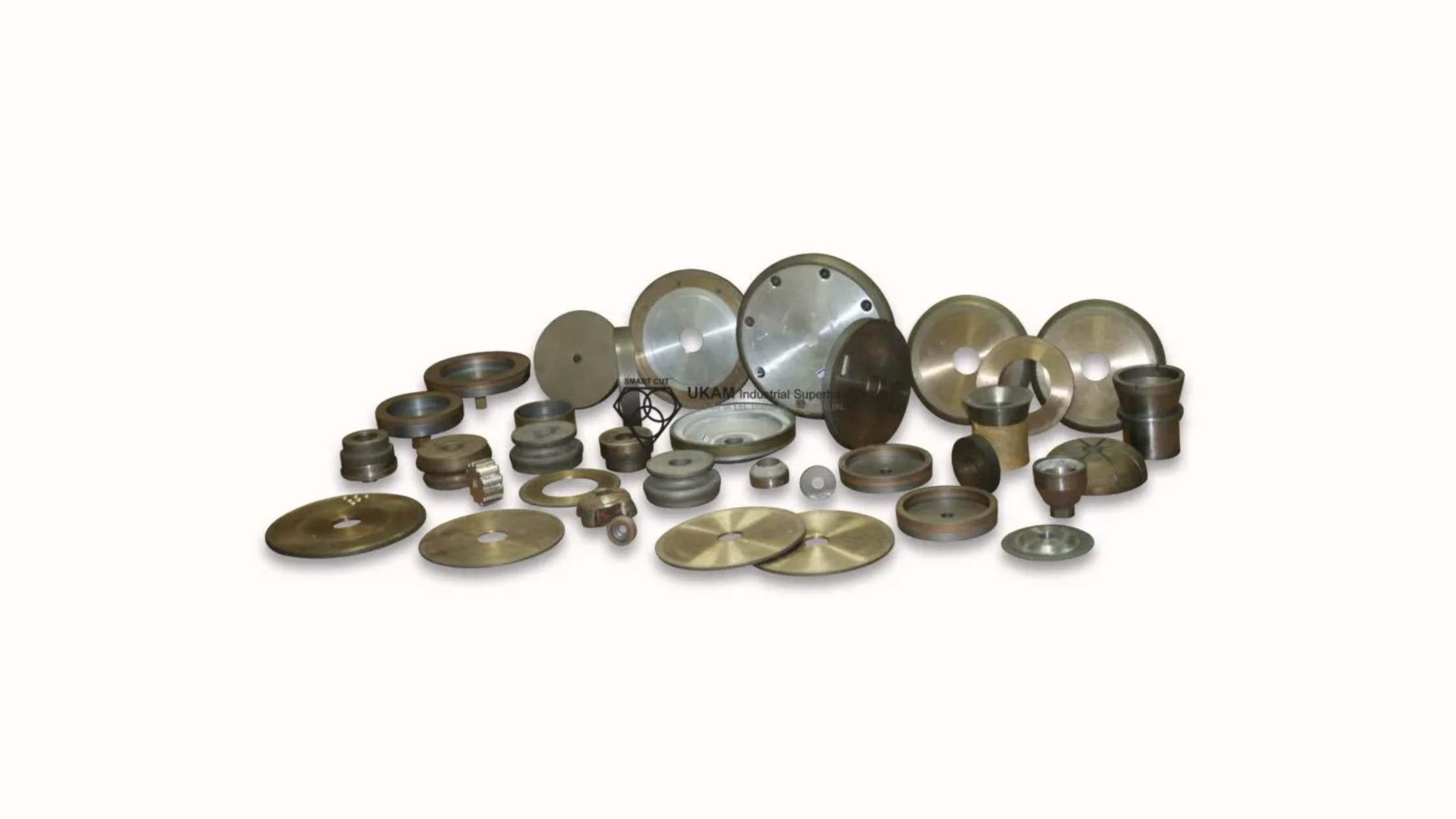
In practical production, abrasive selection should always start with the workpiece material. Steel, stainless steel, cast iron, aluminum, carbide, and ceramics do not behave the same in the grinding zone, so they should not be matched with the same abrasive strategy.
Why abrasive type matters
The abrasive is the cutting element in the grinding wheel. Its hardness, friability, and cutting behavior influence:
- how freely the wheel cuts
- how much heat builds up
- how quickly the wheel wears
- how stable the surface finish remains
- how often the wheel needs dressing
A wrong abrasive choice can create several shop-floor problems. Typical symptoms include wheel loading, grinding burn, unstable finish, short wheel life, and excessive dressing frequency.
Main abrasive types used in grinding wheels
Aluminum oxide abrasives
Aluminum oxide abrasives are the standard starting point for many ferrous materials. Common codes include:
- A for brown fused alumina
- WA for white fused alumina
- PA for chromium alumina
- SA for monocrystalline alumina
These abrasives are widely used in steel grinding, but they are not identical. Some are more general-purpose, while others are better for cleaner cutting, heat-sensitive work, or higher-precision applications.
Silicon carbide abrasives
Silicon carbide abrasives include:
- GC for green silicon carbide
- C for black silicon carbide
These abrasives are often considered for brittle materials and many non-ferrous applications. They are also useful in situations where a sharper, freer-cutting wheel action is needed.
Superabrasives
The two main superabrasives are:
- CBN
- Diamond
CBN is commonly reviewed for difficult hardened ferrous materials and high-precision grinding. Diamond is typically used for very hard brittle materials such as carbide, ceramics, and glass.
How to match abrasive type to workpiece material
Carbon steel and alloy steel
For many carbon steel and alloy steel jobs, aluminum oxide wheels are the normal starting point. Brown fused alumina can be used as a general-purpose route, while white fused alumina or premium alumina variants may be considered when finish quality, cutting sharpness, or thermal behavior becomes more critical.
Hardened steel and bearing steel
As hardness increases, abrasive selection becomes more demanding. In these cases, buyers often review WA, SA, PA, or CBN routes depending on the precision target, wheel life requirement, and grinding method. In simple terms, the harder and more demanding the steel application becomes, the more important it is to review more specialized abrasive routes.
Stainless steel
Stainless steel often creates loading and clogging problems. That is why abrasive matching for stainless steel should not focus only on the abrasive code itself. The wheel also needs the right structure and anti-loading behavior.
For 304 stainless steel grinding, Zhongxin commonly reviews SA big-porosity or GC big-porosity wheel routes because stainless steel tends to load the wheel surface easily. A J-grade route may also be considered as a cautious house reference in principle-based discussions, depending on the application.
Cast iron
Cast iron should not be treated the same way as steel. Its grinding behavior is different, so buyers often review silicon carbide routes for freer cutting and more suitable performance in brittle-material conditions.
Aluminum and soft non-ferrous metals
Soft non-ferrous materials often create severe loading issues. In these jobs, the abrasive must be reviewed together with wheel structure, porosity, and anti-loading strategy. Silicon carbide is often part of the discussion, but the final recommendation still depends on the real grinding process.
Carbide, ceramics, and glass
These very hard brittle materials usually move abrasive selection toward diamond wheels. This is a different route from ordinary steel grinding and should be treated separately in wheel selection.
Abrasive type is not the full wheel specification
Choosing the right abrasive type is only the first step. After that, buyers still need to review:
- bond type
- wheel grade
- wheel structure and porosity
- dressing condition
- coolant delivery
- machine rigidity
- workpiece geometry and finish target
For example, the right abrasive can still perform poorly if the wheel structure is too dense for a loading-prone material or if dressing conditions are incorrect.
A simple buyer checklist
Before asking for a wheel recommendation, it helps to prepare the following information:
- workpiece material
- hardness or heat-treatment condition
- grinding method
- machine type
- finish requirement
- dimensional tolerance
- whether loading, burn, or rapid wear is already happening
This information makes it much easier to match the abrasive type and the full wheel specification correctly.
Conclusion
Abrasive type should always be matched to the workpiece material first. Aluminum oxide, silicon carbide, CBN, and diamond each have their place, but the correct choice depends on what you are grinding and how the process runs.
For the best result, abrasive type should be reviewed together with bond, grade, structure, coolant, and machine condition. That is the practical way to move from a general abrasive code to a wheel that performs well in real production.
If you are selecting wheels for steel, stainless steel, cast iron, or other demanding materials, Zhongxin can recommend a more suitable abrasive route based on your actual grinding conditions.
发表回复