
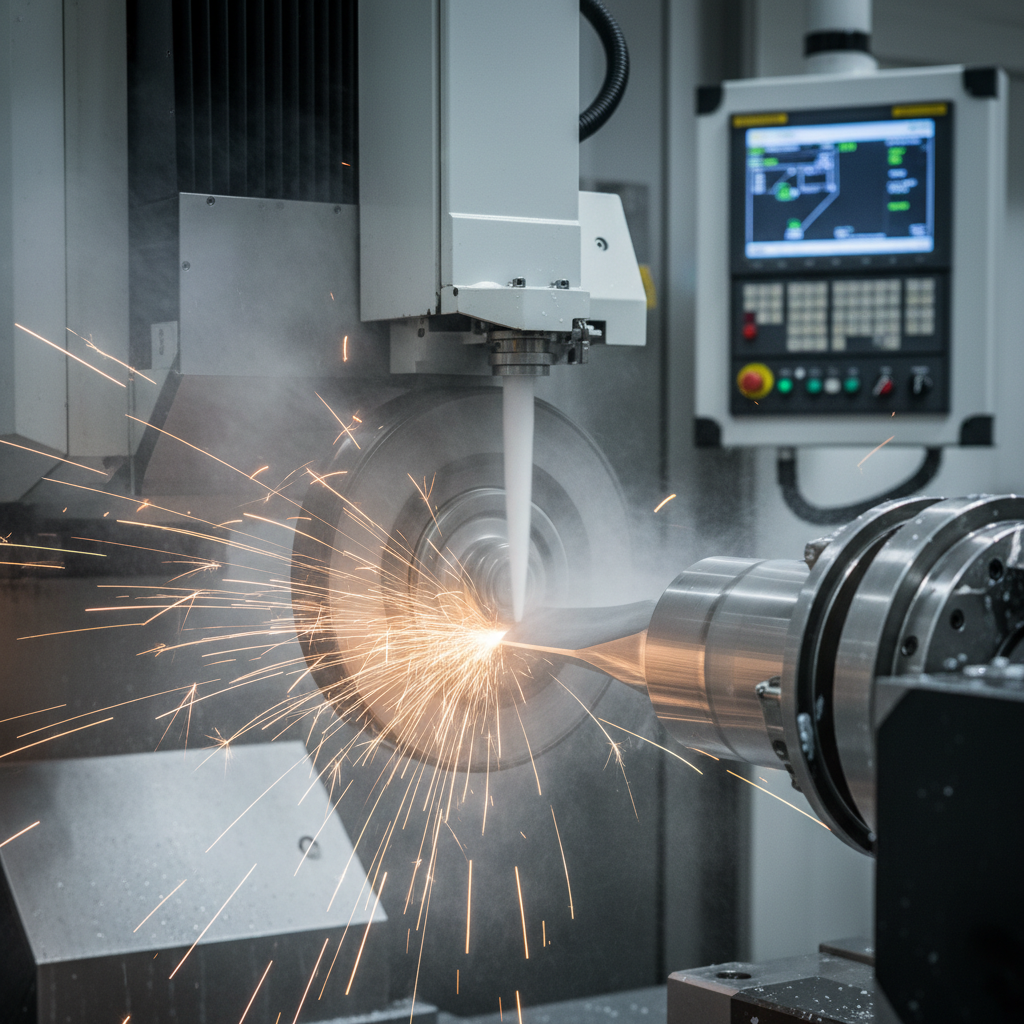
Grinding Inconel and Titanium: Superalloy Grinding Wheel Selection for Aerospace Alloys
In aerospace manufacturing, grinding nickel-based superalloys and titanium alloys represents one of the most demanding challenges in metalworking. Materials like Inconel 718 and Ti-6Al-4V generate extreme heat, resist cutting action, and chemically react with conventional abrasive grains. Grinding shops that work with these alloys frequently encounter rapid wheel breakdown, thermal damage, or inconsistent surface integrity. In most cases, the root cause traces back to a mismatch between wheel specification and the unique metallurgy of the workpiece — a gap that conventional aluminum oxide wheels simply cannot bridge.
Zhengzhou Zhongxin Grinding Wheel Co., Ltd. manufactures vitrified CBN and diamond wheels specifically engineered for difficult-to-machine alloys. The root causes of grinding difficulty in these materials, along with actionable solutions for wheel selection, coolant strategy, and dressing parameters, are outlined below.
Why Inconel and Titanium Are So Difficult to Grind
The grinding difficulty of these alloys stems from three interrelated physical properties:
1. Low Thermal Conductivity. Inconel 718 has a thermal conductivity of approximately 11.4 W/m·K, compared to 401 W/m·K for copper and 50 W/m·K for carbon steel. Titanium alloys are similarly poor at 6.7 W/m·K. This means that nearly all the heat generated at the grinding zone stays concentrated in a thin surface layer of the workpiece instead of conducting away. At typical grinding energy inputs of 10–30 J/mm³, surface temperatures can exceed 1,000°C in milliseconds, causing metallurgical damage, re-deposited material, and white layer formation.
2. High Work Hardening Rate. Both alloy families harden rapidly under mechanical deformation. Inconel 718 can increase from 40 HRC to over 55 HRC in the deformed layer if grinding parameters are too aggressive. This hardened layer is extremely difficult to remove in subsequent passes and causes the wheel to encounter progressively harder material with each spark-out stroke.
3. Chemical Affinity with Conventional Abrasives. Aluminum oxide (Al₂O₃) wheels, the industry default for general-purpose grinding, chemically bond to nickel and titanium at elevated temperatures. This causes rapid wheel loading — the abrasive grains become coated with workpiece material, lose their cutting edges, and begin plowing instead of cutting. The result is a vicious cycle: more heat, more loading, more thermal damage.
Material Properties Comparison
| Property | Inconel 718 | Ti-6Al-4V | AISI 4340 Steel |
|---|---|---|---|
| Thermal Conductivity | 11.4 W/m·K | 6.7 W/m·K | 44.5 W/m·K |
| Hardness (Typical) | 36–44 HRC | 30–36 HRC | 28–32 HRC |
| Specific Cutting Energy | 15–30 J/mm³ | 12–25 J/mm³ | 6–12 J/mm³ |
| Work Hardening Rate | Very High | High | Moderate |
| Recommended Abrasive | Vitrified CBN | Diamond (resin or vitrified) | Conventional or CBN |
Wheel Selection: Vitrified CBN for Inconel, Diamond for Titanium
Grinding Inconel 718 with CBN Wheels
Cubic Boron Nitride (CBN) is the correct abrasive for nickel-based superalloys. CBN has a Vickers hardness of approximately 4,500 HV (compared to 2,100 HV for aluminum oxide), which maintains cutting action without excessive force. More importantly, CBN does not chemically react with nickel at grinding temperatures — this eliminates the loading problem entirely.
For Inconel grinding, we recommend:
- Abrasive: High-purity monocrystalline CBN, grit sizes 80/100 for roughing and 120/150 for finishing
- Bond: Vitrified bond — the controlled porosity allows chip evacuation and coolant penetration, which is critical for heat management in superalloys
- Hardness Grade: Medium (K–M range on the standard scale) — soft enough to self-sharpen as grains dull, hard enough to maintain form accuracy
- Concentration: 100% (standard) for general Inconel work; 75% for lower-force applications on thin-wall turbine casings
Typical starting parameters for surface grinding Inconel 718 with a vitrified CBN wheel:
| Parameter | Roughing | Finishing |
|---|---|---|
| Wheel Speed | 25–30 m/s | 30–35 m/s |
| Work Speed | 15–20 m/min | 8–12 m/min |
| Depth of Cut | 0.015–0.025 mm | 0.003–0.005 mm |
| Coolant Pressure | 8–15 bar | 5–10 bar |
Grinding Ti-6Al-4V with Diamond Wheels
Titanium presents a different challenge. While CBN can grind titanium, diamond is often preferred because titanium has an extremely high chemical affinity to CBN at temperatures above 800°C. Synthetic diamond (SDC or MBD grade) in a resin or vitrified bond provides cooler cutting and longer wheel life on pure titanium alloys.
However, if you are grinding titanium in a mixed-material environment (e.g., Ti-6Al-4V components alongside Inconel 718 on the same machine), a vitrified CBN wheel at lower speeds (20–25 m/s) with aggressive coolant delivery is a practical compromise. For dedicated titanium grinding lines, we recommend:
- Abrasive: Synthetic diamond, grit size 100/120 for general purpose
- Bond: Resin bond for burr-free finishing; vitrified bond for form grinding
- Concentration: 75–100%
- Coolant: Full-synthetic, non-reactive fluid at 10+ bar pressure — never use chlorinated oils on titanium
Coolant Strategy for Aerospace Alloys
Coolant delivery is arguably more important than wheel selection for difficult-to-machine alloys. Because these materials have such poor thermal conductivity, the grinding fluid must physically reach the contact zone at sufficient velocity to penetrate the air barrier surrounding the spinning wheel.
For a detailed discussion of coolant physics and nozzle design, refer to our technical article on optimizing coolant delivery for precision grinding.
Key coolant recommendations for Inconel and titanium:
- Pressure: Minimum 8 bar for roughing; 15–20 bar for deep creep-feed grinding. Standard flood coolant at 2–3 bar is insufficient for aerospace alloys.
- Flow Rate: 40–80 liters per minute per 25 mm of wheel width. Volume matters as much as pressure.
- Nozzle Design: Use coherent-jet nozzles positioned within 15 mm of the wheel-workpiece interface. Fan nozzles lose velocity too quickly.
- Fluid Type: Full-synthetic coolant (pH 8.5–9.5) for Inconel. Semi-synthetic or soluble oil for titanium, provided it contains no sulfur or chlorine additives that corrode titanium surfaces.
- Temperature Control: Maintain fluid temperature at 20 ± 2°C. Thermal cycling of the workpiece causes dimensional instability in precision aerospace components.
Dressing Parameters for Superalloy Grinding Wheels
CBN and diamond wheels used on aerospace alloys require more frequent dressing than those used on conventional steels. The high grinding forces tend to flatten grain tips faster, reducing material removal rate and increasing heat generation.
These dressing parameters represent starting points for creep-feed and reciprocating grinding on Inconel 718. Shops running profile grinding or high-speed finishing may need to adjust the traverse rate downward to maintain wheel form. For vitrified CBN wheels on Inconel:
- Dresser: Rotary diamond disc (RD 902 or similar), 100–150 mm diameter
- Dress Depth: 0.005–0.010 mm per pass, 3–5 passes total
- Dress Speed Ratio (Qd): +0.5 to +0.8 (dresser peripheral speed / wheel peripheral speed)
- Traverse Rate: 1.0–1.5 mm/rev of wheel
- Dressing Interval: Every 10–15 parts for roughing; every 25–30 parts for finishing
After dressing, always run 2–3 spark-out passes at zero infeed to stabilize the wheel surface before grinding production parts. This removes loose abrasive fragments that could embed in the workpiece surface — an unacceptable defect in aerospace applications.
Common Defects and Their Root Causes
| Defect | Root Cause | Solution |
|---|---|---|
| White Layer (re-hardened surface) | Excessive temperature >1,000°C | Reduce depth of cut; increase coolant pressure; use softer wheel grade |
| Surface Loading | Chemical affinity between wheel and workpiece | Switch to CBN (for Inconel) or diamond (for Ti); improve coolant delivery |
| Chatter Marks | Wheel imbalance or machine vibration | Dynamic balance wheel; check spindle bearings; reduce work speed |
| Grain Pullout | Bond too weak for grinding forces | Increase wheel hardness grade by 1–2 steps; reduce depth of cut |
| Residual Tensile Stress | Thermal damage exceeding compressive stress threshold | Lower specific energy: lighter cuts, sharper wheel, better coolant |
Industry Applications
The grinding solutions described here apply to a wide range of aerospace and energy components:
- Turbine Blades and Vanes: Root form grinding of Inconel 718 and Waspaloy airfoils using profiled vitrified CBN wheels
- Turbine Discs: Slot and fir-tree root grinding on nickel superalloy discs for jet engines
- Titanium Structural Components: Landing gear fittings, bulkheads, and spars requiring Ra 0.4 μm or better
- Medical Implants: Ti-6Al-4V hip and knee prosthetics with biocompatible surface finish requirements
- Oil and Gas Valves: Inconel 625 and 718 valve bodies and seats for sour service applications
Summary
Grinding Inconel and titanium is not simply a matter of applying more aggressive parameters to a standard grinding wheel. It requires a fundamentally different approach: superabrasive wheels (CBN for nickel alloys, diamond for titanium), high-pressure coolant delivery, controlled dressing cycles, and parameters optimized for low specific energy to minimize thermal damage.
Getting these variables right reduces scrap rates, improves surface integrity, and delivers measurable cost savings per part — even though the initial wheel cost is higher than conventional abrasives.
Need a wheel recommendation for your aerospace grinding application? Contact Zhengzhou Zhongxin Grinding Wheel Co., Ltd. Our engineering team can analyze your material, machine specifications, and quality requirements to recommend the optimal vitrified CBN or diamond wheel. Request a trial wheel or a custom specification quote today.
Leave a Reply