


Choosing a grinding wheel for hardened steel shafts is not just a matter of hardness. In cylindrical grinding, buyers also need to consider heat control, wheel wear, dressing frequency, machine rigidity, and the final surface requirement. A practical selection route usually starts with understanding the workpiece, then deciding whether a conventional vitrified alumina wheel is sufficient or whether a CBN wheel offers better long-run value.

What makes hardened steel shafts difficult to grind?
Hardened shafts often combine high hardness with tight dimensional and surface-finish requirements. That means the grinding wheel has to cut efficiently without generating excessive heat. If the wheel dulls too quickly or the process becomes unstable, the result may be grinding burn, chatter marks, size drift, or poor roundness.
Exact wheel speed, feed, and depth of cut should not be generalized without machine and application details. In practice, results depend on the shaft material, hardness range, coolant delivery, dressing condition, and tolerance target.
What wheel types are commonly used for hardened steel shaft grinding?
Vitrified aluminum oxide wheels
For many general precision cylindrical grinding jobs, a vitrified aluminum oxide wheel remains a practical and economical solution. It is widely used when buyers need flexibility, easier sourcing, and solid performance across mixed shaft applications.
CBN wheels
CBN wheels are often chosen when the shaft material is harder, tolerance expectations are tighter, or production runs are long enough that form retention and reduced dressing frequency become more important than initial wheel cost.
Why diamond is not the main route here
For ferrous hardened steels, diamond is generally not the main recommendation. The more common comparison in this application is conventional alumina route versus CBN route.
How do abrasive, grit, grade, structure, and bond affect results?
Wheel selection works best when buyers review the full specification logic instead of focusing on one parameter alone:
- Abrasive: conventional alumina for broad applicability, or CBN for higher-performance hardened steel grinding.
- Grit size: coarser grits support stock removal, while finer grits are commonly used when finish quality matters more.
- Grade: the wheel should be hard enough to hold form, but not so hard that it glazes quickly and raises burn risk.
- Structure: a suitable structure helps chip space, coolant access, and cutting stability.
- Bond: vitrified bond is widely used in precision cylindrical grinding because it supports form control and dressing response.
When should buyers choose a vitrified alumina wheel?
A vitrified alumina wheel is often a good first route when the job involves moderate production volume, mixed shaft specifications, or cost-sensitive sourcing. It is especially practical when the process window is conventional and the buyer values flexibility. With proper grit, grade, and dressing logic, it can handle many hardened alloy steel shaft applications credibly.
When does a CBN wheel become the better option?
CBN becomes more attractive when process stability, longer dressing intervals, and tighter tolerance retention are critical. It is often the stronger route for harder steels and more demanding production lines where total process performance matters more than purchase price alone.
Common grinding defects and how wheel choice helps
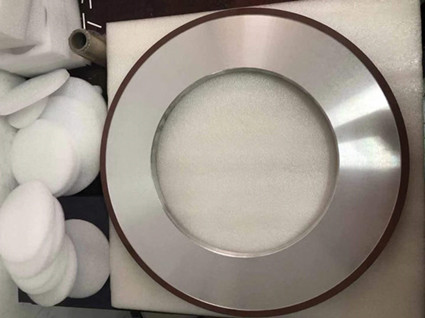
If buyers see burn, loading, glazing, chatter, or inconsistent size control, the issue is not always the machine alone. Wheel specification, dressing condition, and coolant application often play a major role. A better-matched wheel route can improve cutting action, thermal control, and profile stability.
How Zhongxin can support wheel selection
To recommend a suitable wheel route, Zhongxin typically needs the shaft material, hardness range, machine type, wheel size, dimensional tolerance, finish target, and production volume. With that information, the team can suggest whether a vitrified alumina wheel is sufficient or whether a CBN route is more suitable for the application.
Conclusion
For many hardened steel shaft cylindrical grinding jobs, the practical decision rule is simple: start with a conventional vitrified alumina wheel when flexibility and cost control matter, and move toward CBN when hardness, tolerance, and long-run consistency justify the upgrade.
If you are sourcing wheels for hardened steel shaft grinding, send Zhongxin your workpiece material, hardness, machine type, wheel dimensions, and finish requirement. A more accurate recommendation always starts from the actual application.