
Railway axle and wheelset maintenance is a demanding application because the parts are heavy, safety-critical, and expected to deliver consistent service life under repeated rolling contact. In wheelset workshops, grinding and reprofiling work must balance dimensional recovery, surface quality, thermal control, and production efficiency.
For this reason, grinding wheel selection should not be reduced to a single recommendation. The right wheel depends on the wheel or axle material, the machine setup, the maintenance objective, and the required balance between stock removal and finish control.
Why railway wheelset maintenance needs careful wheel selection
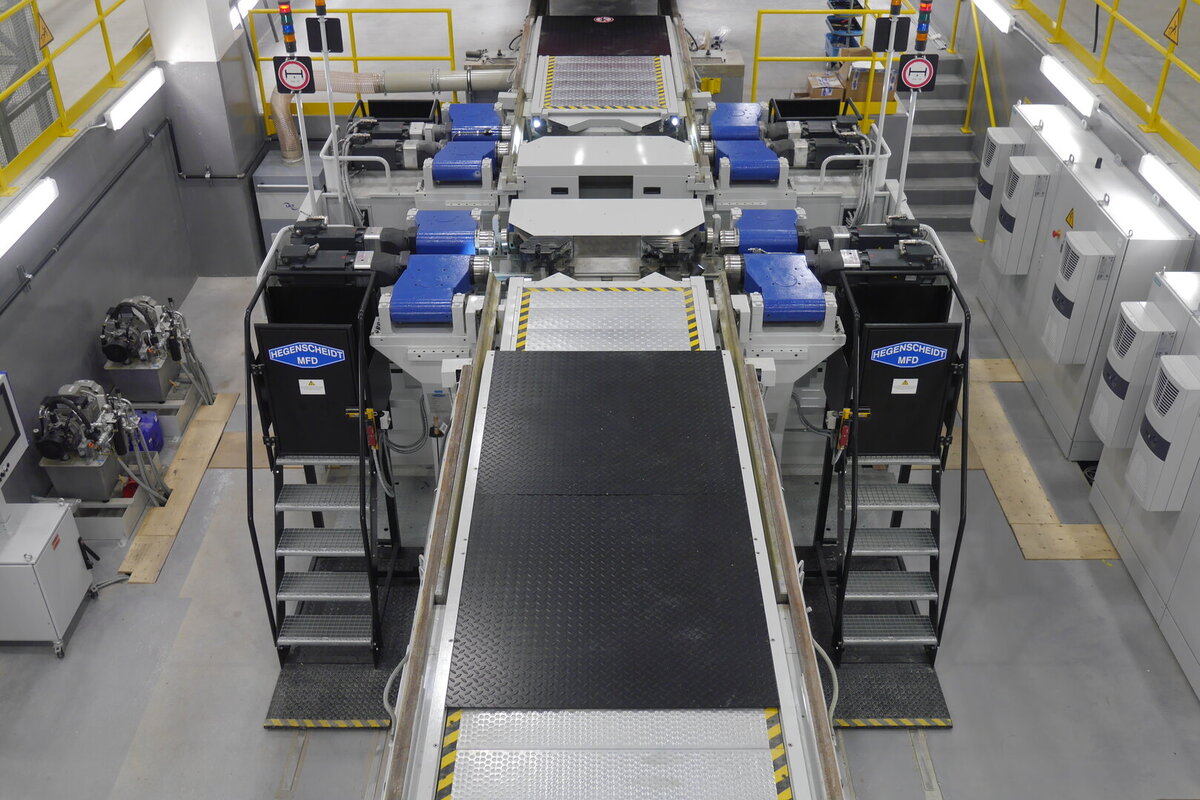
Railway wheelsets operate under high load and repeated contact stress. During maintenance, the process usually focuses on restoring geometry, correcting surface damage, and preparing components for reliable return to service.
A suitable grinding wheel should help the workshop maintain process stability instead of creating extra heat, chatter, loading, or rapid wheel wear. In practical production, buyers usually care about four things first:
- Stable cutting action on large, heavy-duty components
- Controlled heat generation during long passes
- Predictable wheel wear and dressing behavior
- Surface quality appropriate for maintenance requirements
- Workpiece material
- Grinding method
- Machine condition
- Required finish and geometry control
- Wheel life expectations
- Dressing and coolant conditions
Main grinding tasks in railway axle and wheelset service
Wheel tread and profile correction
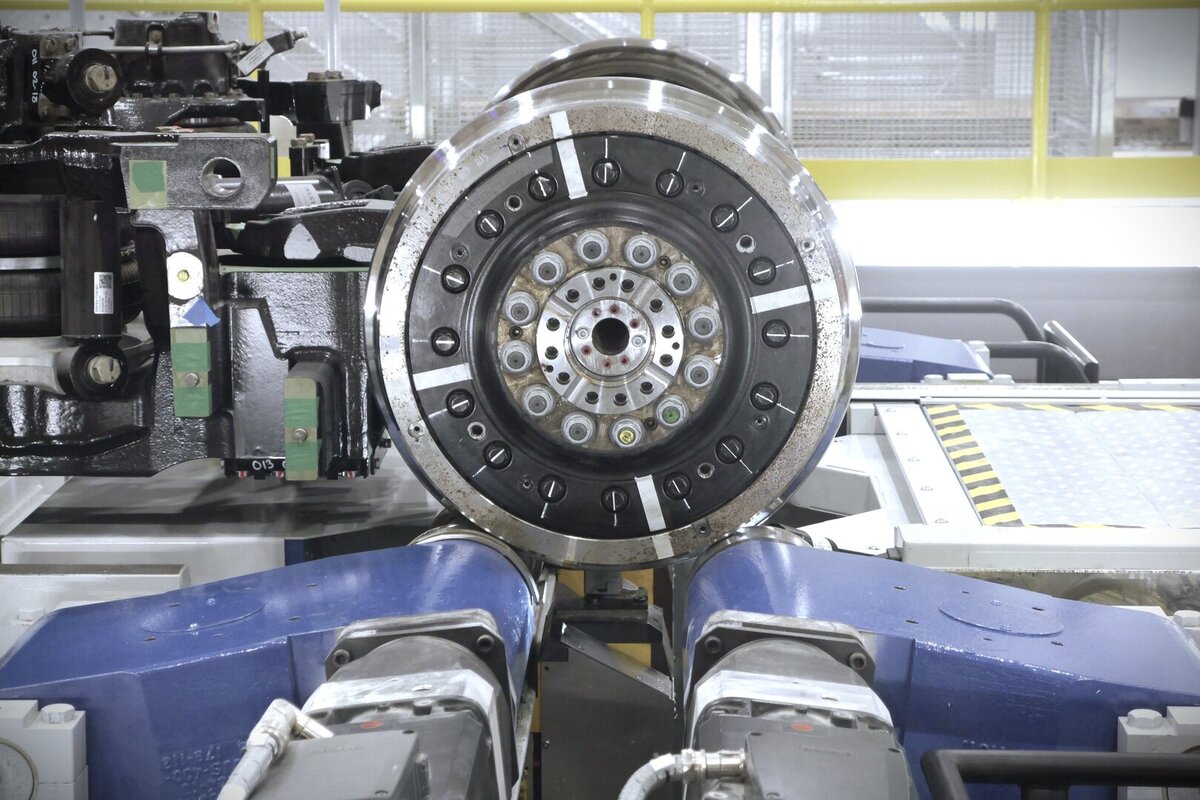
Wheel reprofiling often requires steady cutting action and good form retention, especially when the target is to restore wheel geometry consistently across repeated maintenance cycles.
Axle seat and related cylindrical surfaces
Some maintenance workflows involve cylindrical or form-related grinding where dimensional consistency and vibration control matter as much as raw removal rate.
Surface defect removal and finish recovery
Where the goal is to improve surface condition rather than remove heavy stock, wheel behavior must stay controlled to avoid unnecessary thermal damage or roughness drift.
What wheel characteristics matter most
Abrasive type
For ferrous railway components, aluminum oxide is a common starting route because it is widely used for steel grinding applications. In tougher or more heat-sensitive cases, the exact abrasive grade should be matched to the workpiece condition and grinding objective.
Bond type
Vitrified bond is often preferred where form retention, dressing response, and stable cutting behavior are important. Resin bond may be considered in some finishing-oriented applications, but the final choice depends on machine conditions and maintenance targets.
Grade and structure
A wheel that is too hard may increase rubbing and heat, while a wheel that is too soft may wear too quickly. Open structure can help chip clearance and improve cutting freedom, especially when long contact conditions increase loading risk.
Dimensional and dressing stability
Railway maintenance is not only about whether a wheel cuts. It is also about whether the wheel can maintain a predictable working condition over time with manageable dressing intervals.
Common process risks in railway wheelset grinding
Excess heat
If wheel specification, dressing, or feed conditions are mismatched, heat can build quickly in the grinding zone. This can reduce process confidence and shorten effective wheel life.
Loading and reduced cutting freedom
When chips are not cleared efficiently, the wheel may begin to load. Once that happens, cutting behavior becomes less stable and the process may require earlier dressing.
Vibration and form instability
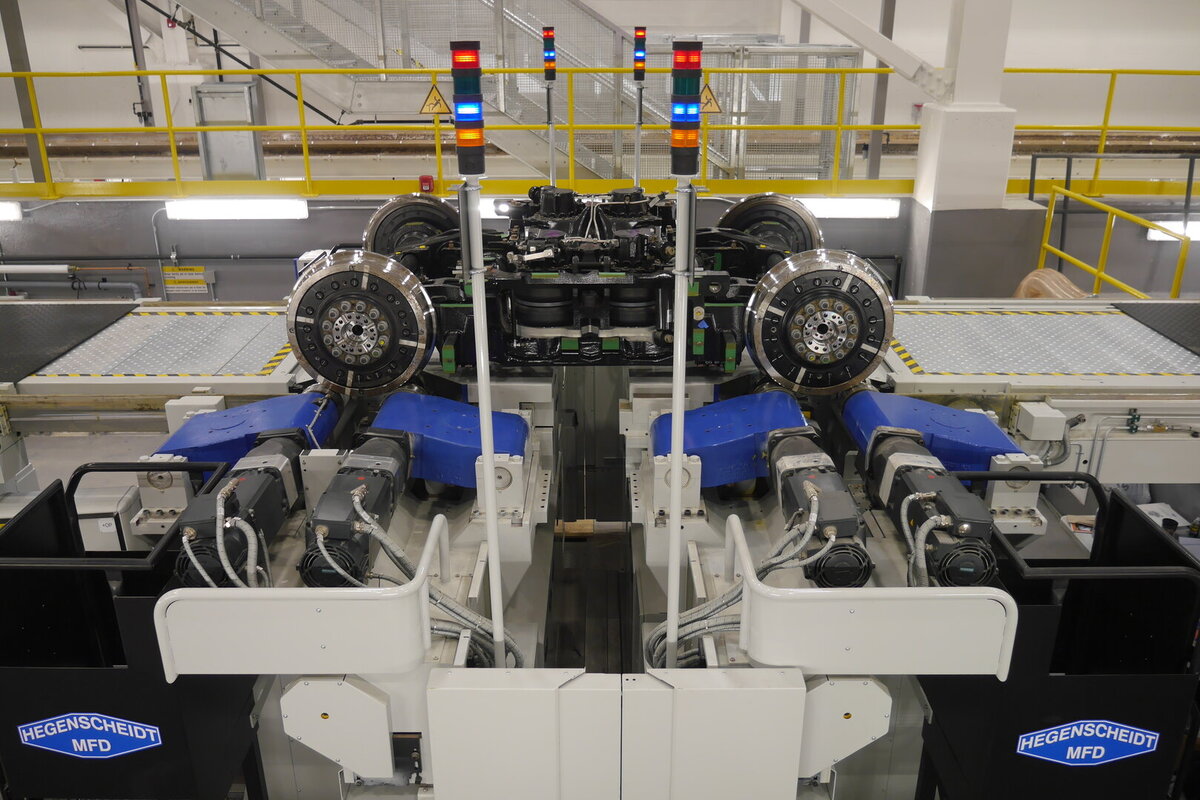
Because wheelset components are large and maintenance equipment may run long passes, vibration control and wheel balance are especially important for consistent results.
Practical selection advice for buyers
When choosing grinding wheels for railway axle and wheelset maintenance, buyers should prepare the following information before asking for a recommendation:
1. Workpiece material and hardness range
2. Whether the task is wheel reprofiling, axle grinding, or finish correction
3. Machine type and operating constraints
4. Desired balance between stock removal and finish quality
5. Current problems such as burn tendency, wheel wear, loading, or chatter
With that information, wheel selection can be narrowed more accurately than by asking for a generic “railway grinding wheel.”
How Zhongxin supports wheel matching
Zhongxin matches grinding wheel recommendations to the real production target rather than using one specification for every maintenance line. The evaluation usually considers:
That makes it easier to recommend a wheel route that fits actual workshop maintenance instead of only looking good on paper.
Conclusion
Grinding wheels for railway axle and wheelset maintenance should be selected from the perspective of process stability, heat control, form retention, and service efficiency. The best result comes from matching abrasive, bond, grade, structure, and dressing behavior to the real maintenance task.
If you share your wheelset material, machine type, and maintenance target, Zhongxin can help narrow the grinding wheel specification for your application.
**Need help choosing a grinding wheel for your application?**