
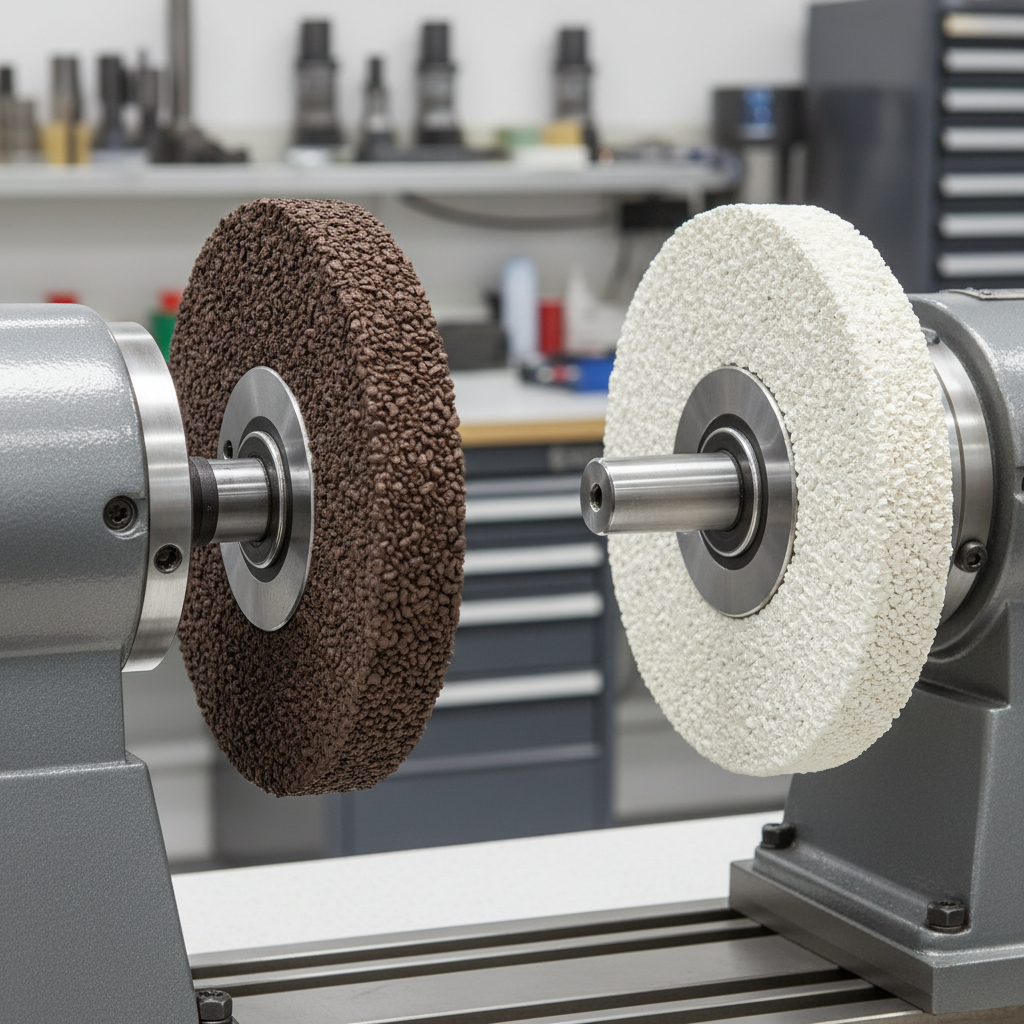
BFA vs WFA Grinding Wheels: Choosing Between Brown and White Fused Alumina
When you’re selecting a grinding wheel for your operation, the abrasive material is your most critical decision. Two of the most common choices you’ll encounter are Brown Fused Alumina (BFA) and White Fused Alumina (WFA). They sound similar, and they’re both aluminum oxide based, but they behave very differently on the workpiece.
At Zhengzhou Zhongxin, we manufacture both types, and we’ve seen countless shops struggle with this choice. Here’s the breakdown that actually helps you decide.
What Is Brown Fused Alumina (BFA)?
BFA is your workhorse abrasive. It’s made by fusing bauxite in an electric arc furnace at temperatures above 2000°C. The result is a tough, blocky grain with high fracture resistance. Think of it as the abrasive that refuses to break down.
Key characteristics:
- Color: Dark brown to black
- Hardness: Moderate (harder than silicon carbide, softer than WFA)
- Grain shape: Blocky, angular
- Fracture behavior: Tough, maintains cutting edges longer
- Cost: Lower than WFA
BFA wheels are ideal when you need aggressive material removal on softer materials like carbon steel, mild steel, and cast iron. The grain toughness means the wheel keeps its cutting ability longer, reducing dressing frequency.
What Is White Fused Alumina (WFA)?
WFA is produced from high-purity alumina, resulting in a purer, harder, and more brittle grain. It fractures more easily under pressure, constantly exposing fresh cutting edges. This self-sharpening behavior is what makes it special.
Key characteristics:
- Color: White to cream
- Hardness: Higher than BFA
- Grain shape: More angular, sharper edges
- Fracture behavior: Friable, breaks down to reveal new edges
- Cost: Higher than BFA due to purity
WFA wheels excel on harder materials like hardened tool steels, high-speed steel (HSS), and alloy steels. Because the grain fractures more readily, it stays sharp and produces a finer surface finish with less heat generation.
The Selection Rule: Hard Workpiece Needs Hard Abrasive
Here’s the principle most shops miss: when grinding a hard material, use a harder, more friable abrasive (WFA). When grinding a softer material, use a tougher abrasive (BFA).
Why? When you grind a hard material like hardened steel with BFA, the tough grain doesn’t fracture properly. It dulls and glazes over, generating heat instead of cutting. The wheel loads up, you get burn marks on your workpiece, and surface finish suffers.
Conversely, if you use WFA on soft mild steel, the friable grain breaks down too fast. You’re constantly dressing the wheel, wasting abrasive, and driving up costs. BFA’s toughness is exactly what softer materials need.
Practical Application Guide
Use this quick reference for your next wheel selection:
| Workpiece Material | Recommended Abrasive | Why |
|---|---|---|
| Carbon steel, mild steel | BFA (Brown) | Tough grain handles softer material efficiently |
| Cast iron | BFA (Brown) | Blocky grain shape resizes well on abrasive surfaces |
| Hardened tool steel (50-65 HRC) | WFA (White) | Friable grain stays sharp on hard surfaces |
| High-speed steel (HSS) | WFA (White) | Self-sharpening reduces heat, preserves edge integrity |
| Alloy steels | WFA (White) | Higher hardness matches workpiece resistance |
| Stainless steel | WFA or PFA | Reduced heat prevents workpiece discoloration |
When Cost Matters
BFA wheels cost 20-30% less than WFA wheels on average. If you’re running high-volume production on mild steel components, BFA is the economical choice. The longer wheel life and reduced dressing frequency lower your total grinding cost per part.
But if you’re grinding precision tools where surface finish and dimensional tolerance are critical, WFA’s superior finish quality justifies the higher upfront cost. A poor finish on a precision tool costs you more in rework than you’d save on abrasive.
Summary
Choose BFA when you need economy and aggressive removal on softer steels. Choose WFA when surface finish, heat control, and hard material grinding are your priorities. The right choice depends on what you’re grinding, not on which wheel happens to be in stock.
Need help selecting the right wheel? Contact Zhengzhou Zhongxin Grinding Wheel Co., Ltd. Our technical team can recommend the optimal abrasive, grit size, and bond system for your specific application.
Leave a Reply