

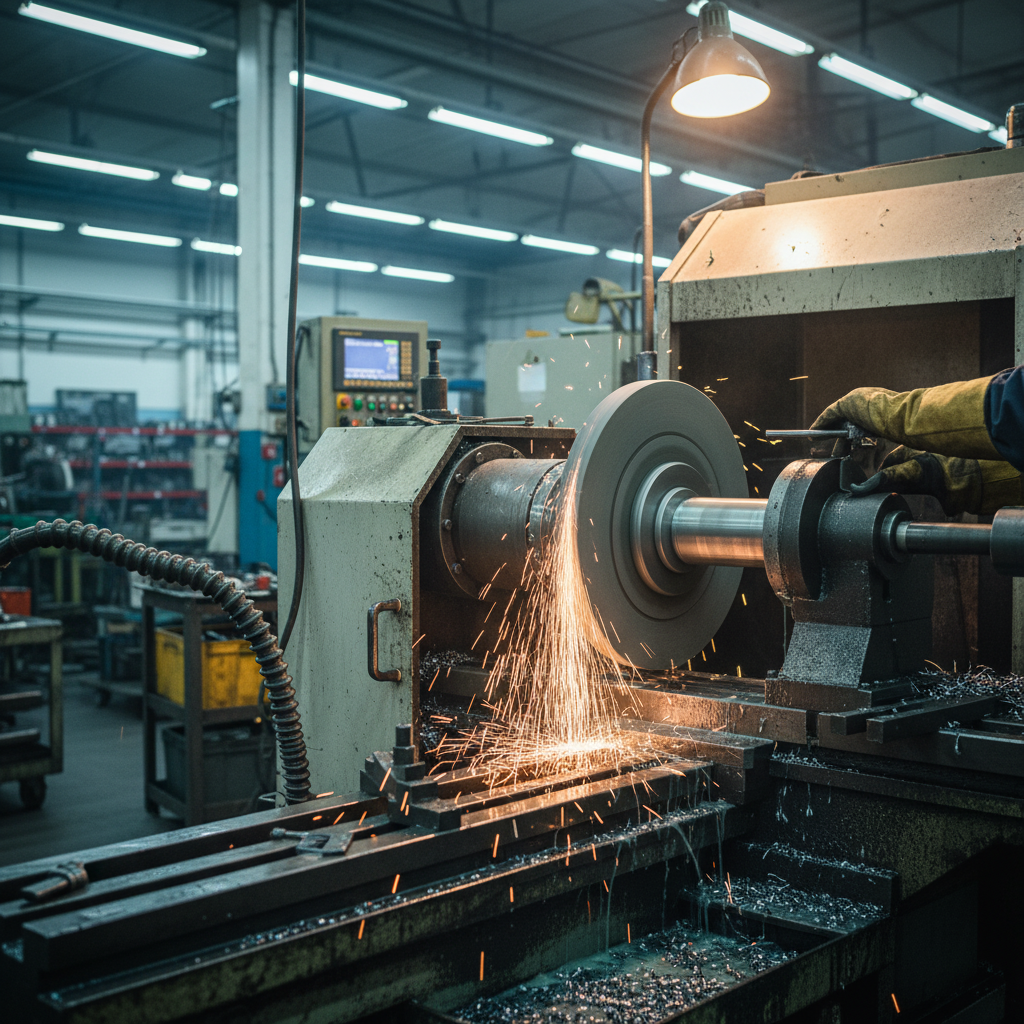
Precision grinding of advanced engineering materials represents one of the most severe thermal environments in modern manufacturing. Aerospace-grade nickel-based superalloys, high-strength titanium alloys, and technical ceramics possess physical properties that make them highly desirable for extreme applications. But these same properties make them incredibly difficult to grind. High thermal sensitivity, low thermal conductivity, and extreme chemical reactivity at elevated temperatures combine to create a hostile machining environment. When you grind materials like Inconel 718 or Titanium Ti-6Al-4V, the thermal energy generated at the contact zone can easily exceed critical thresholds. This heat must go somewhere. If the grinding system cannot manage it, the energy penetrates the workpiece, leading to catastrophic thermal damage.
The consequences of poor thermal management are severe. Workpieces suffer from grinding burns, phase transformations, micro-cracking, and highly undesirable tensile residual stresses. These defects severely compromise the fatigue life and structural integrity of critical components. In the aerospace and medical industries, such failures are unacceptable. Traditional fused alumina abrasives, which have served as the industry workhorses for decades, rapidly fail when subjected to these materials. Brown fused alumina and white fused alumina are highly susceptible to rapid wear flat development. As the sharp edges of these traditional grains wear down, they form flat contact areas. These wear flats no longer cut the metal. Instead, they rub and plow against the workpiece surface. This sliding action increases friction exponentially, turning the grinding wheel into a heat generator rather than a cutting tool. The wheel glazes over, forces spike, and the workpiece is ruined.
To solve this thermal crisis, manufacturers must combine advanced abrasive materials with optimized macroscopic wheel structures. This article discusses the powerful synergy between sol-gel ceramic abrasives and open-structure grinding wheels, providing a comprehensive engineering guide to achieving cool grinding in high-performance applications.
Sol-Gel Ceramic Abrasives: The Microcrystalline Self-Sharpening Mechanism
Sol-gel ceramic abrasives represent a major leap forward in abrasive grain technology. Unlike traditional fused alumina, which is manufactured by melting raw materials in an electric arc furnace and then crushing the solidified ingot, sol-gel alumina is produced through a chemical wet process. This process allows engineers to control the grain structure at the sub-micron level. The resulting abrasive grain is not a single crystal or a collection of large, blocky crystals. It is a microcrystalline matrix consisting of billions of sub-micron alumina particles sintered together.
This microcrystalline structure completely changes the way the abrasive grain wears during grinding. Traditional fused alumina grains wear by micro-cleavage or macro-fracture, which often results in large chunks of the grain breaking off, or worse, the gradual flattening of the grain tip. This flattening forms wear flats, leading to high forces and extreme heat. In contrast, sol-gel ceramic grains wear through a continuous micro-fracturing mechanism. When the cutting force on a ceramic grain reaches a critical threshold, the bond between the individual sub-micron crystallites breaks. Only a tiny, microscopic portion of the grain chips away. This micro-fracture event exposes a new, incredibly sharp cutting edge without reducing the overall height of the grain or losing the entire abrasive particle.
Because the grain self-sharpens at such a microscopic scale, the grinding wheel maintains a highly consistent, low grinding force throughout its operational cycle. The absence of large wear flats means that the primary grinding mechanism remains efficient chip formation rather than rubbing and plowing. Energy consumption remains low, and the heat generated at the contact zone is kept to a absolute minimum.
To help you select the ideal abrasive for your application, the table below compares the physical and performance characteristics of sol-gel ceramic alumina, White Fused Alumina (WFA), and Brown Fused Alumina (BFA). It is critical to never interchange these terms. White Fused Alumina is always referred to as WFA, and Brown Fused Alumina is always BFA.
| Abrasive Material Type | Microstructure | Knoop Hardness (HK) | Relative Toughness | Primary Wear Mechanism | Best Workpiece Materials |
|---|---|---|---|---|---|
| Sol-Gel Ceramic Alumina | Microcrystalline (sub-micron grains) | 1900 – 2200 | Extremely High | Micro-fracturing (Self-sharpening) | Inconel, Titanium, Hardened Steels, Superalloys |
| White Fused Alumina (WFA) | Large single/macro-crystal | 2100 – 2200 | Low to Medium | Cleavage and macro-fracture | Heat-sensitive tool steels, light-duty grinding |
| Brown Fused Alumina (BFA) | Coarse macrocrystalline | 2000 – 2100 | High | Wear flat development and dulling | General carbon steels, structural steels, cast iron |
The high toughness and unique micro-fracturing of sol-gel ceramic grains make them highly cost-effective despite their higher initial price. They last significantly longer, reduce the frequency of dressing, and protect expensive parts from thermal scrap.
Open-Structure Grinding Wheels: Macro-Scale Heat Dissipation
While the abrasive grain operates on a micro-scale, the grinding wheel structure must support cool grinding on a macro-scale. This is where open-structure grinding wheels become indispensable. An open-structure wheel is characterized by a high volume of interconnected, induced pores. These pores are not random defects. They are carefully engineered spaces distributed uniformly throughout the vitrified or organic bond matrix.
These large pores perform several critical functions in the grinding zone. First, they provide active chip clearance. When grinding ductile, gummy materials like Inconel 718 or titanium, the resulting metal chips are long and highly prone to sticking to the wheel. In a standard, dense grinding wheel, these chips quickly fill the tiny gaps between abrasive grains, leading to wheel loading. Once the wheel loads, metal rubs against metal, generating extreme friction and immediate grinding burns. In an open-structure wheel, the large pores act as chip pockets. They collect the chips during the active cut and carry them safely out of the grinding arc, where they are easily flushed away by the coolant jet. For a deep understanding of this process in high-MRR setups, you can refer to Open-Structure Grinding Wheels: A 2026 Guide to Preventing Loading in High-MRR Nickel Alloy Applications.
Second, open pores act as a highly efficient coolant transport system. The rotating grinding wheel acts like a centrifugal pump, siphoning coolant from the nozzle and carrying it directly into the contact zone. The porous structure holds the liquid within the wheel body, ensuring that a steady supply of coolant reaches the very point of cutting. This active transport prevents the phenomenon of coolant starvation, which is a major cause of thermal damage in deep creep-feed grinding. If you are working with extremely hard and brittle materials, you should consult the specialized guidelines in How to Select Open-Structure Grinding Wheels for Technical Ceramic Grinding.
Finally, the open structure reduces the overall contact area between the wheel bond and the workpiece. By minimizing the land area of the bond, the wheel reduces unnecessary friction, allowing the sharp sol-gel grains to do their work with minimal resistance. This combination of microscopic self-sharpening and macroscopic chip and coolant management creates the ultimate cool grinding system.
Abrasive Grain Selection & Grinding Parameter Design
Achieving cool grinding requires precise coordination between abrasive grain specifications and machine operating parameters. You cannot simply mount a ceramic wheel and expect perfect results without tuning your process. You must carefully engineer the grit size, bond grade, SGE, and coolant parameters.
Grit Size Selection and Surface Roughness (Ra) Guidelines
Selecting the correct grain size is a trade-off between material removal rate and target surface finish. Coarser grits create larger chips and provide more aggressive cutting, but they leave a rougher surface. Finer grits produce excellent surface finishes but generate more friction due to the higher number of active cutting points per unit area. Here are the recommended guidelines for sol-gel ceramic wheels:
- Rough Grinding (Grit 46# to 60#): Best for heavy stock removal and creep-feed operations. These sizes provide massive chip clearance within the open pores. They consistently yield surface roughness values of Ra 0.8 to 1.6 μm.
- Medium/Finish Grinding (Grit 80# to 120#): Ideal for general-purpose precision grinding. This range balances cool cutting with surface quality, producing finishes of Ra 0.4 to 0.8 μm.
- Super-Finishing (Grit 150# to 240#): Used in fine grinding and polishing stages. At this level, coolant application must be extremely precise to prevent localized thermal spikes. It achieves highly polished surfaces of Ra 0.1 to 0.4 μm.
Bond Grade and Structure Number Selection
In grinding technology, the structure number indicates the relative volume of pores in the wheel. For open-structure wheels, the structure number must range from 8 to 16. A structure number of 12 to 16 represents an extremely open, highly porous wheel, which is highly recommended for creep-feed grinding of superalloys.
The selection of bond hardness is governed by a fundamental rule: use a soft wheel for hard materials, and a hard wheel for soft materials. When grinding hard, thermal-sensitive alloys like Inconel 718, titanium, or tungsten carbide, you must select a soft bond grade, typically ranging from G, H, I, to J. A soft bond holds the grains gently. As the sol-gel grains eventually dull after multiple micro-fracturing cycles, the rising grinding force easily breaks the weak bond posts. The dull grains shed quickly, exposing a completely fresh layer of sharp grains. If you use a hard bond on a hard alloy, the dull grains will be held too tightly. They will glaze, rub, and cause severe thermal damage. Conversely, when grinding soft, ductile steels, use a harder bond grade to prevent premature wheel wear.
Specific Grinding Energy (SGE) & Force Ratio Optimization
Specific Grinding Energy (SGE) is the energy required to remove a unit volume of material. High SGE indicates that a large portion of the spindle power is being converted into friction and plastic deformation (plowing) rather than efficient cutting. To minimize plowing, you must optimize the grinding force ratio, which is the ratio of tangential force to normal force (Ft/Fn).
A higher Ft/Fn ratio indicates that a greater percentage of the force is being used for active cutting rather than pushing the wheel into the workpiece. Sharp sol-gel grains combined with an open structure keep the abrasive tips cutting cleanly. This reduces plowing and sliding, lowering the SGE by up to 25% compared to traditional fused alumina wheels. This reduction in energy translates directly into lower temperatures in the grinding zone.
High-Pressure Coolant (HPC) & Water Hardness Management
To keep the open pores of the wheel clean and flowing, a High-Pressure Coolant (HPC) system is mandatory. The high-velocity liquid acts as a mechanical scrubber, blasting away metal chips before they can weld themselves to the wheel face. However, the chemical composition of the water used in the coolant mix is equally critical.
You must maintain the water hardness between 125 and 200 ppm. This specific range is a critical engineering balance. If the water hardness is too low (below 125 ppm), the high-pressure delivery system will generate massive amounts of foam. This foam introduces air bubbles into the grinding zone, reducing the actual liquid contact and destroying the cooling efficiency. But if the water hardness is too high (above 200 ppm), calcium and magnesium minerals will rapidly precipitate within the wheel. These minerals build up inside the microscopic pores of your open-structure wheel, clogging the channels and causing premature wheel loading. Keeping the hardness strictly in the 125 to 200 ppm range ensures excellent lubricity, zero foaming, and clean pores.
Overcoming the Aerodynamic Boundary Layer
At high grinding speeds where the wheel peripheral speed (vs) is 30 m/s or higher, a major physical obstacle arises. The rotating wheel carries a high-pressure, highly turbulent layer of air around its circumference. This is known as the aerodynamic boundary layer, or air barrier. This air barrier acts like an invisible shield, deflecting low-pressure coolant jets away from the grinding zone and causing localized coolant starvation.
To overcome this air barrier, you must employ two physical interventions. First, install a scraper-board or aerodynamic baffle on the grinding machine. This baffle must be positioned close to the wheel surface, with a tight clearance of 0.5 mm to 1.0 mm (or up to 1.5 mm to 3.0 mm depending on the machine setup). The baffle physically cuts off the high-velocity air stream, creating a low-pressure zone immediately behind it. To prevent dangerous sparking and wheel damage in case of accidental contact, the scraper-board must be constructed from non-metallic, low-friction materials such as Teflon or dense engineering polymers.
Second, you must ensure that your coolant jet velocity (vj) is equal to or greater than the wheel peripheral speed (vs). When vj is greater than or equal to vs, the coolant possesses sufficient kinetic energy to punch straight through any residual air boundary layer, ensuring that the fluid penetrates the grinding arc and wets the workpiece surface completely.
Recommended Creep-Feed Grinding Parameters
Creep-feed grinding (CFG) is a heavy-duty process characterized by deep cuts and slow work feed rates. It is highly demanding but highly efficient when paired with sol-gel ceramic, open-structure wheels. The table below outlines the recommended starting parameters for three difficult-to-machine materials. All parameters are optimized for a wheel speed (vs) of 30 m/s or higher, with high-pressure coolant applied through coherent nozzles.
| Workpiece Material | Recommended Abrasive & Grit Size | Wheel Speed (v_s) [m/s] | Work Speed (v_w) [mm/min] | Depth of Cut (a_e) [mm] | Coolant Pressure & Flow Rate |
|---|---|---|---|---|---|
| Inconel 718 (Nickel Superalloy) | Sol-Gel Ceramic Alumina, Grit 46# – 60# | 30 – 45 | 100 – 250 | 1.0 – 5.0 | 15 – 25 bar, 120 L/min |
| Ti-6Al-4V (Titanium Alloy) | Sol-Gel Ceramic Alumina, Grit 60# – 80# | 25 – 35 | 150 – 300 | 0.5 – 2.5 | 20 – 30 bar, 150 L/min |
| Alumina Technical Ceramics (Al2O3) | Sol-Gel / Diamond Hybrid, Grit 80# – 120# | 35 – 50 | 50 – 150 | 0.1 – 1.0 | 25 – 35 bar, 100 L/min |
When running these parameters, closely monitor the spindle load. A steady spindle load indicates that the self-sharpening mechanism is operating correctly and the wheel pores are successfully shedding chips. If you observe a progressive rise in spindle load, increase the coolant pressure or decrease the work feed rate to prevent heat accumulation.
Conclusion: A Systems Approach to Cool Grinding
Maximizing cool grinding is not a matter of changing a single variable. It is about understanding how microscopic grain behavior interacts with macroscopic wheel structure and external process parameters. Sol-gel ceramic abrasives provide the sharp, self-sharpening micro-edges needed to cut through tough alloys without generating excessive frictional heat. Open-structure grinding wheels provide the essential physical space to transport coolant and carry away highly abrasive metal chips. But you must also control your coolant chemistry, match your jet speeds, and break down the high-speed air barrier to ensure these advanced components can work as designed.
By implementing these technical recommendations, B2B manufacturers can achieve remarkable improvements in material removal rates, dramatically extend their dressing intervals, and completely eliminate grinding burns on thermal-sensitive alloys. This translates directly to shorter cycle times, lower scrap rates, and higher profitability on the shop floor.
Connect with Our Technical Team
At Zhengzhou Zhongxin Grinding Wheel Co., Ltd., we specialize in engineering high-performance open-structure vitrified wheels and advanced sol-gel ceramic grinding solutions for the world’s most demanding B2B manufacturing applications. Our technical engineers are available to help you design custom grinding wheels tailored to your specific workpiece materials and machine configurations.
Whether you need to optimize your creep-feed grinding lines, select the perfect grit size and bond grade, or solve a persistent grinding burn issue, we are ready to assist you. Contact our engineering team today to schedule a technical consultation.
Zhengzhou Zhongxin Grinding Wheel Co., Ltd.
Phone / WhatsApp: +86 15538050608
Email: root@shalun.net
Address: No. 1111-1, Kexue Avenue, Shangjie District, Zhengzhou, Henan, China (河南省郑州市上街区科学大道1111-1号)