
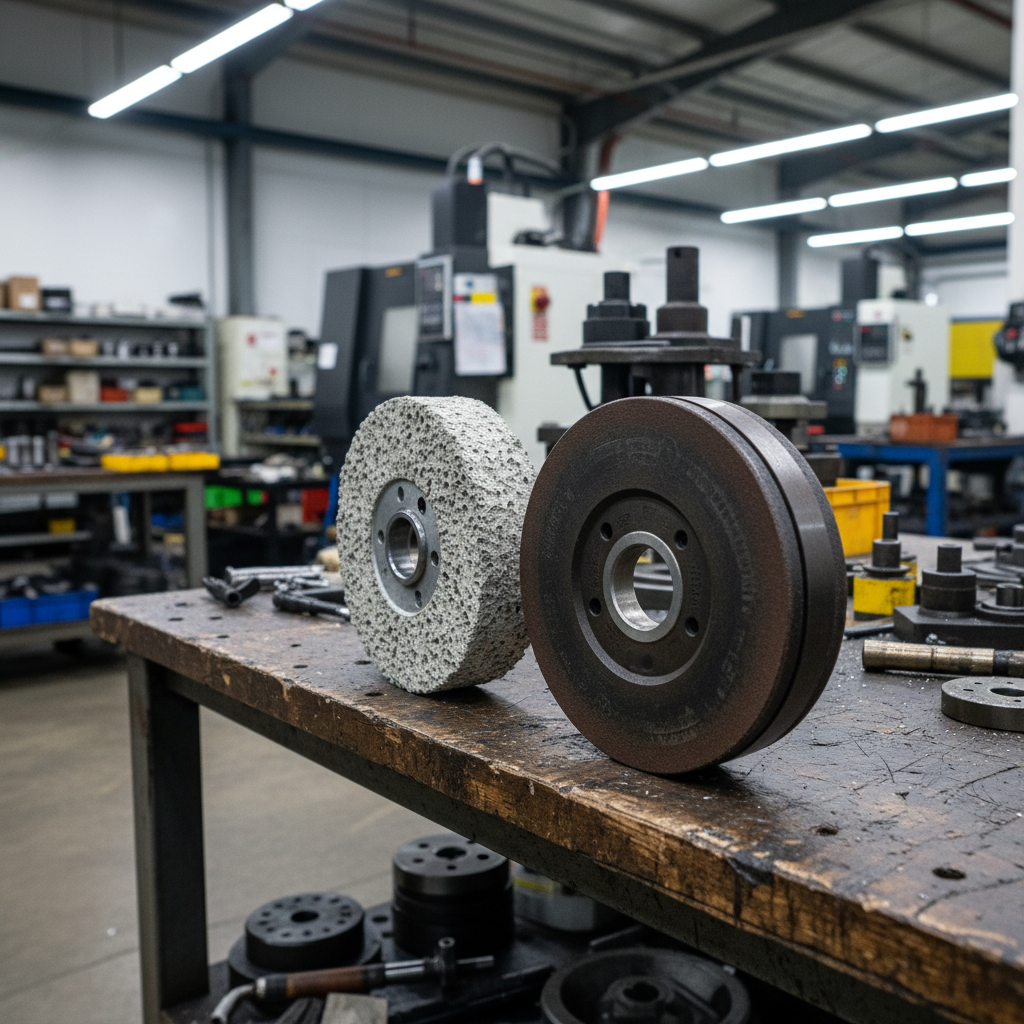
Vitrified vs Resin Bond: How Bond Type Affects Wheel Performance
When selecting a grinding wheel for precision metalworking applications, the bond type—the material that holds abrasive grains together—is just as critical as the abrasive itself. Two of the most common bond systems in industrial grinding are vitrified (ceramic) bonds and resin bonds. Each offers distinct advantages in terms of cutting efficiency, wheel life, surface finish, and thermal management. Understanding these differences enables engineers and purchasing managers to optimize grinding processes for specific materials, production volumes, and quality requirements.
What Is a Grinding Wheel Bond?
The bond is the matrix that secures abrasive grains in place and determines how they release during grinding. As grains dull, the bond must wear away at the right rate to expose fresh, sharp cutting edges. If the bond is too hard, grains become dull and glaze over, increasing heat and reducing cutting efficiency. If the bond is too soft, grains dislodge prematurely, shortening wheel life and compromising dimensional accuracy. The bond also influences wheel porosity, coolant penetration, and vibration damping—all factors that directly affect grinding performance.
Bond selection is not a one-size-fits-all decision. It depends on workpiece material hardness, grinding operation type (roughing vs. finishing), machine rigidity, coolant delivery, and production volume. For a deeper understanding of how wheel structure interacts with bond performance, see what grinding wheel structure means in real production.
Vitrified Bonds: Precision and Long Wheel Life
Vitrified bonds are ceramic-based materials fired at high temperatures to create a glass-like matrix. They are the most widely used bond system in precision grinding due to their exceptional dimensional stability, high porosity, and ability to hold form accuracy over long production runs.
Key Advantages of Vitrified Bonds
1. Superior Form Holding: Vitrified wheels maintain their profile with minimal wear, making them ideal for form grinding, thread grinding, and gear grinding where dimensional tolerances are tight. The rigid bond structure resists deformation even under high grinding forces.
2. High Porosity for Coolant Penetration: The vitrified manufacturing process creates controlled porosity within the wheel structure. This porosity allows coolant to reach the grinding zone more effectively, reducing thermal damage to the workpiece and extending wheel life. For applications involving heat-sensitive materials, this is a critical advantage.
3. Self-Dressing Characteristics: Vitrified bonds fracture in a controlled manner as grains dull, exposing fresh cutting edges without requiring frequent dressing. This self-dressing behavior maintains consistent cutting performance and reduces downtime in high-volume production.
4. Chemical Inertness: Vitrified bonds are resistant to chemical attack from coolants and workpiece materials, ensuring stable performance across a wide range of grinding environments.
Limitations of Vitrified Bonds
Vitrified wheels are generally more brittle than resin-bonded wheels, making them less suitable for high-impact grinding operations or applications with significant vibration. They also require more careful handling to prevent chipping during mounting and storage. Additionally, vitrified wheels typically operate at lower surface speeds compared to resin-bonded wheels, which can limit material removal rates in some applications.
Best Applications for Vitrified Bonds
- Precision cylindrical grinding of hardened steel and tool steel
- Form grinding and profile grinding where dimensional accuracy is critical
- Thread grinding and gear grinding applications
- High-volume production runs requiring consistent wheel performance
- Applications where coolant penetration is essential for thermal management
For specialized applications requiring extreme precision, vitrified CBN wheels for precision steel grinding offer exceptional performance when cost per part justifies the investment.
Resin Bonds: Toughness and Versatility
Resin bonds are organic materials—typically phenolic resins—that cure at lower temperatures than vitrified bonds. They offer greater toughness and flexibility, making them suitable for a broader range of grinding operations, particularly those involving high impact or interrupted cuts.
Key Advantages of Resin Bonds
1. High Toughness and Impact Resistance: Resin-bonded wheels can withstand higher impact forces without chipping or fracturing. This makes them ideal for rough grinding, snagging, and applications with interrupted cuts such as keyway grinding or slot grinding.
2. Higher Operating Speeds: Resin bonds can operate at higher surface speeds than vitrified bonds, enabling higher material removal rates in roughing applications. This speed advantage is particularly valuable in high-production environments where cycle time reduction is critical.
3. Better Damping Characteristics: The organic nature of resin bonds provides better vibration damping compared to vitrified bonds. This reduces chatter marks and improves surface finish, especially on less rigid machines or thin-wall workpieces. For more on how wheel grade affects thin-wall grinding, see why grinding wheel grade matters for thin-wall workpieces.
4. Versatility Across Materials: Resin bonds work well with a wide range of abrasive types, including aluminum oxide, silicon carbide, CBN, and diamond. This versatility makes them suitable for grinding diverse materials from cast iron to carbide.
Limitations of Resin Bonds
Resin bonds are less dimensionally stable than vitrified bonds, which can lead to wheel wear and form loss over time. This makes them less suitable for precision form grinding applications where tight tolerances must be maintained throughout the wheel’s life. Resin bonds also have lower heat resistance compared to vitrified bonds, which can lead to bond softening and accelerated wear in high-temperature grinding operations. Additionally, resin-bonded wheels typically require more frequent dressing to maintain cutting performance.
Best Applications for Resin Bonds
- Rough grinding and snagging operations where high material removal rates are required
- Grinding operations with interrupted cuts or high impact forces
- Off-hand grinding and portable grinding applications
- Grinding of softer materials where wheel loading is a concern
- Applications on less rigid machines where vibration damping is critical
Comparative Performance: Vitrified vs Resin Bond
To make an informed bond selection, it’s essential to compare performance across key grinding parameters:
Wheel Life
Vitrified bonds generally offer longer wheel life in precision grinding applications due to their controlled wear characteristics and self-dressing behavior. Resin bonds may wear faster in high-temperature operations but can provide longer life in rough grinding applications where impact resistance is critical.
Surface Finish
Both bond systems can achieve excellent surface finishes when properly specified. Vitrified bonds excel in maintaining consistent surface finish over long production runs due to their dimensional stability. Resin bonds can achieve comparable finishes but may require more frequent dressing to maintain consistency.
Material Removal Rate
Resin bonds typically enable higher material removal rates in roughing applications due to their ability to operate at higher surface speeds. Vitrified bonds offer more controlled material removal in precision applications, which is often preferable when dimensional accuracy is paramount.
Thermal Management
Vitrified bonds generally provide better thermal management due to their higher porosity and coolant penetration capabilities. Resin bonds are more susceptible to thermal softening, which can accelerate wear in high-temperature grinding operations.
Cost Considerations
Vitrified wheels typically have higher upfront costs but offer lower cost per part in high-volume precision applications due to their longer wheel life and reduced downtime. Resin wheels often have lower initial costs and may be more economical for lower-volume or roughing applications where wheel life is less critical.
Selecting the Right Bond for Your Application
The choice between vitrified and resin bonds depends on multiple factors:
Workpiece Material
Hardened steels and tool steels generally benefit from vitrified bonds in precision grinding applications. Softer materials such as aluminum and cast iron may perform better with resin bonds, especially in roughing operations. For superalloys such as Inconel and titanium, bond selection must account for the material’s low thermal conductivity and tendency to work-harden.
Grinding Operation Type
Precision cylindrical grinding, centerless grinding, and form grinding typically favor vitrified bonds for their dimensional stability. Rough grinding, surface grinding with interrupted cuts, and off-hand grinding often benefit from the toughness of resin bonds.
Machine Rigidity
More rigid machines can take advantage of vitrified bonds’ precision characteristics. Less rigid machines or those with vibration issues may benefit from resin bonds’ damping properties.
Production Volume
High-volume production runs where consistency and wheel life are critical typically justify the investment in vitrified bonds. Lower-volume applications or job shop environments may find resin bonds more economical due to their versatility and lower upfront cost.
Coolant Delivery
Applications with effective coolant delivery can maximize the advantages of vitrified bonds’ porosity. Operations with limited coolant access may benefit from resin bonds’ ability to perform in drier conditions.
Advanced Bond Systems: Beyond Vitrified and Resin
While vitrified and resin bonds represent the majority of industrial grinding applications, advanced bond systems offer specialized performance for demanding applications:
Ceramic Bonds
Ceramic bonds offer higher porosity and sharper cutting edges than traditional vitrified bonds, making them ideal for high-speed grinding and applications requiring cool cutting. For more on ceramic bond advantages, see ceramic bond grinding wheels.
Metal Bonds
Metal bonds provide exceptional wheel life and form holding for diamond wheels used in carbide and ceramic grinding. They are typically used in applications where wheel life outweighs the need for frequent dressing.
Hybrid Bonds
Hybrid bonds combine characteristics of multiple bond systems to optimize performance for specific applications. For example, vitrified-resin hybrids offer the form holding of vitrified bonds with the toughness of resin bonds.
Practical Recommendations for Bond Selection
Based on the performance characteristics outlined above, here are practical recommendations for common grinding scenarios:
Precision Cylindrical Grinding of Hardened Steel
Choose vitrified bonds for their dimensional stability and long wheel life. Specify a medium-hard grade (H-J) with open structure (6-8) to balance wheel life and self-dressing characteristics.
Rough Grinding of Cast Iron
Resin bonds provide the toughness needed for high material removal rates. Specify a softer grade (E-G) with open structure (7-9) to minimize wheel loading and maximize cutting efficiency.
Form Grinding of Tool Steel
Vitrified bonds are essential for maintaining form accuracy. Specify a hard grade (K-M) with dense structure (4-6) to maximize wheel life and form holding.
Grinding of Heat-Sensitive Materials
Vitrified bonds with high porosity (8-12) provide the best coolant penetration and thermal management. Consider ceramic bonds for even better cool cutting performance.
High-Speed Grinding Applications
Resin bonds can handle higher surface speeds, but vitrified bonds with reinforced construction may offer better balance of speed and precision. Consult with wheel manufacturers for speed-rated specifications.
Conclusion: Optimizing Bond Selection for Performance and Cost
The choice between vitrified and resin bonds significantly impacts grinding performance, wheel life, and overall cost per part. Vitrified bonds excel in precision applications where dimensional stability, long wheel life, and consistent surface finish are critical. Resin bonds offer toughness, versatility, and higher operating speeds for rough grinding and interrupted cut applications.
Successful bond selection requires evaluating workpiece material, grinding operation type, machine rigidity, production volume, and coolant delivery. By matching bond characteristics to application requirements, manufacturers can optimize grinding processes for both performance and cost-effectiveness.
For complex applications or when transitioning between bond systems, consider working with grinding wheel manufacturers who can provide application-specific recommendations based on wheel speed, workpiece material, grinding forces, and quality requirements. The right bond selection not only improves grinding performance but also reduces downtime, extends wheel life, and ensures consistent part quality across production runs.
Leave a Reply