
Precision Grinding and Polishing of Tungsten Carbide: What You Need to Know
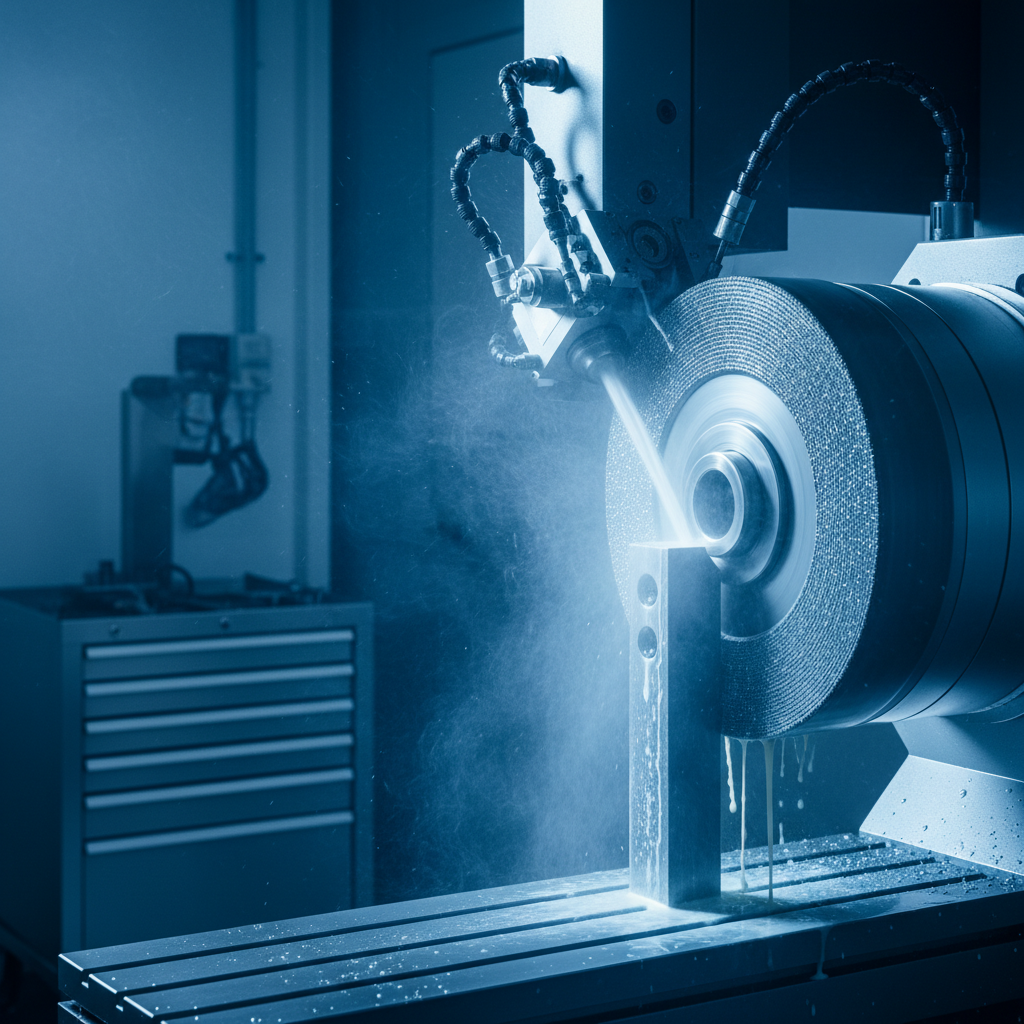
Tungsten carbide is a material of extremes. It’s incredibly hard, second only to diamond, and has exceptional wear resistance. But that same hardness makes it a nightmare to work with if you’re using the wrong tools. At Zhengzhou Zhongxin, we’ve seen many shops struggle with cracking and poor finishes when they treat carbide like tool steel.
The secret to success lies in the transition from shaping to finishing. You can’t just slap on a wheel and hope for a mirror finish. It’s a calculated progression.
Step 1: Rough Grinding (The Shaping Phase)
In the initial stage, your goal is to remove stock quickly while maintaining the tool’s geometric integrity.
For roughing, we recommend Diamond wheels with a grit size between 80# and 120#. At this stage, you’re looking for a surface roughness (Ra) of about 0.8μm to 1.6μm. Resin bonds are the standard choice here because they offer a freer cutting action, which minimizes heat. If you’re pushing the wheel too hard and seeing discoloration, you’re building up too much heat, which will lead to micro-cracks in the carbide matrix.
Step 2: Semi-Finishing (The Smoothing Phase)
Once the shape is established, you need to bring the surface roughness down. This is where most shops make mistakes.
Switching to a 180# to 220# diamond wheel will bring your Ra down to the 0.2μm to 0.4μm range. This is often the final stage for industrial cutting tools where a high-quality edge is needed, but a mirror finish isn’t required.
Step 3: Precision Grinding and Polishing (The Mirror Finish)
Achieving a true mirror finish (Ra < 0.05μm) on tungsten carbide requires precision and patience.
- Fine Grinding: Use W40 down to W7 micron-sized diamond powder in a resin or ceramic bond wheel. This should get you down to Ra 0.05-0.2μm.
- Final Polishing: For a true optical mirror finish, diamond lapping pastes or specialized polishing wheels with W3.5 down to W1 particles are used.
The Common Pitfalls
- Thermal Shock: Using too little coolant or an improper flow can cause the surface to heat up and then cool rapidly, leading to “spider-web” cracking.
- Wheel Loading: Tungsten carbide dust can clog the wheel. Regular dressing is essential to keep the diamond grains exposed.
- Vibration: Because carbide is brittle, even minor vibrations in the machine can lead to chipping at the edges.
Why Quality Wheels Matter
When you’re working with a material as expensive and hard as tungsten carbide, using a subpar diamond wheel is a false economy. A well-manufactured wheel with consistent grain concentration ensures that the material removal is uniform.
Looking for the right wheel for your carbide projects? At Zhengzhou Zhongxin, we specialize in high-performance diamond wheels tailored for exactly these challenges.
Leave a Reply