


Grinding Wheel Choices for Bearing Steel: Conventional Alumina or CBN?
When buyers compare grinding wheel choices for bearing steel, the best answer is rarely a single abrasive name. Bearing components demand a balance of dimensional accuracy, form retention, surface integrity, and stable batch production.
For many applications, conventional vitrified aluminum oxide wheels remain a sound and economical route. When hardened bearing steel, tighter tolerances, and longer production runs raise the performance bar, CBN wheels often become the more attractive option.
Why Bearing Steel Is Demanding to Grind
Bearing steels such as 52100, 100Cr6, and GCr15 are commonly ground after heat treatment. That means the grinding process must control heat, hold geometry, and protect surface integrity at the same time.
High hardness after heat treatment
Harder material raises cutting pressure and makes wheel behavior more critical.
Tight tolerance and form-retention pressure
Bearing rings, raceways, rollers, and shafts often require consistent size and geometry over long runs.
Why thermal damage matters in bearing parts
If the wheel becomes dull, glazed, or poorly matched, burn risk and surface damage can rise quickly.
What Wheel Options Are Commonly Used for Bearing Steel?
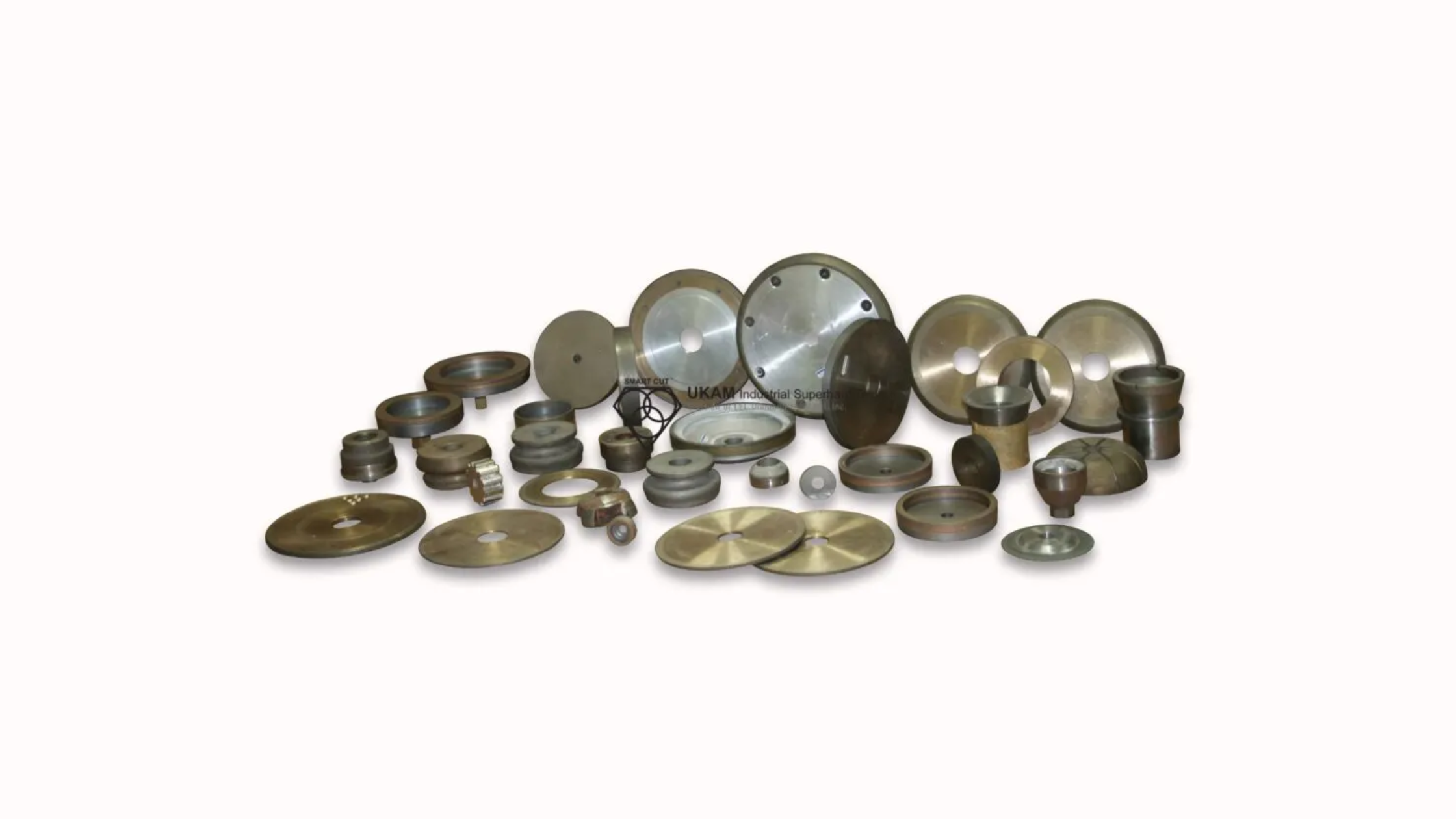
Conventional vitrified aluminum oxide wheels
This is still the baseline solution in many bearing-steel grinding jobs. It offers broad applicability, lower initial wheel cost, and easier integration with established dressing practice.
CBN wheels for hardened precision grinding
CBN becomes more attractive when buyers need better form holding, fewer dressing interruptions, and stronger dimensional repeatability in hardened bearing-steel work.
Why diamond is not the main route for ferrous bearing steel
For ferrous hardened steels, diamond should not be positioned as the default solution. In this category, CBN is the more appropriate superabrasive direction.
How Should Buyers Compare Conventional Wheels and CBN?
Initial cost vs total process cost
A conventional vitrified wheel may be easier to adopt from a purchasing standpoint. CBN may justify itself when dressing downtime, wheel wear, and consistency matter more across the whole production batch.
Dressing frequency and form holding
Conventional wheels can work well, but they usually need closer dressing management as the run continues. CBN often earns its place when long-run form retention is more important.
Surface quality and process consistency
The right wheel supports size stability, lower thermal risk, and a more repeatable finish. The wrong wheel can increase burn, drift, and unstable results.
When Is a Conventional Vitrified Wheel Still the Right Choice?
A conventional vitrified wheel remains a good option when:
- Production is cost sensitive
- Part types change frequently
- The machine and dressing setup already support the route well
- Long-run form holding is important, but not the main process bottleneck
When Does CBN Become the Better Option?
CBN becomes more attractive when:
- The bearing steel is hardened and tolerance targets are tighter
- Production runs are longer
- Form retention over the batch matters more
- Dressing interruptions need to be reduced
- Process repeatability has higher value than lowest wheel purchase price
Common Bearing-Steel Grinding Problems and Wheel-Related Fixes
Grinding burn
This often appears when heat concentration rises or the wheel stops cutting freely.
Size drift and profile loss
This is especially important in bearing work because geometry is a core quality target.
Chatter or unstable finish
These problems may involve machine condition, dressing condition, and wheel match rather than abrasive name alone.
What Information Should Buyers Send Before Wheel Selection?
To recommend a better wheel, Zhongxin should receive:
- Workpiece material and hardness condition
- Bearing ring, raceway, roller, or shaft geometry
- Grinding method such as cylindrical, internal, or centerless grinding
- Tolerance and surface-finish target
- Batch size and production rhythm
Conclusion
The best grinding wheel for bearing steel depends on process goals, not one universal label. Conventional vitrified alumina wheels remain valid in many jobs, while CBN becomes more attractive when the application demands stronger form retention, lower dressing frequency, and better production consistency.
Need help choosing a grinding wheel for bearing steel?
- Website: https://shalun.net
- Email: root@shalun.net
- WhatsApp / Phone: +86 15538050608