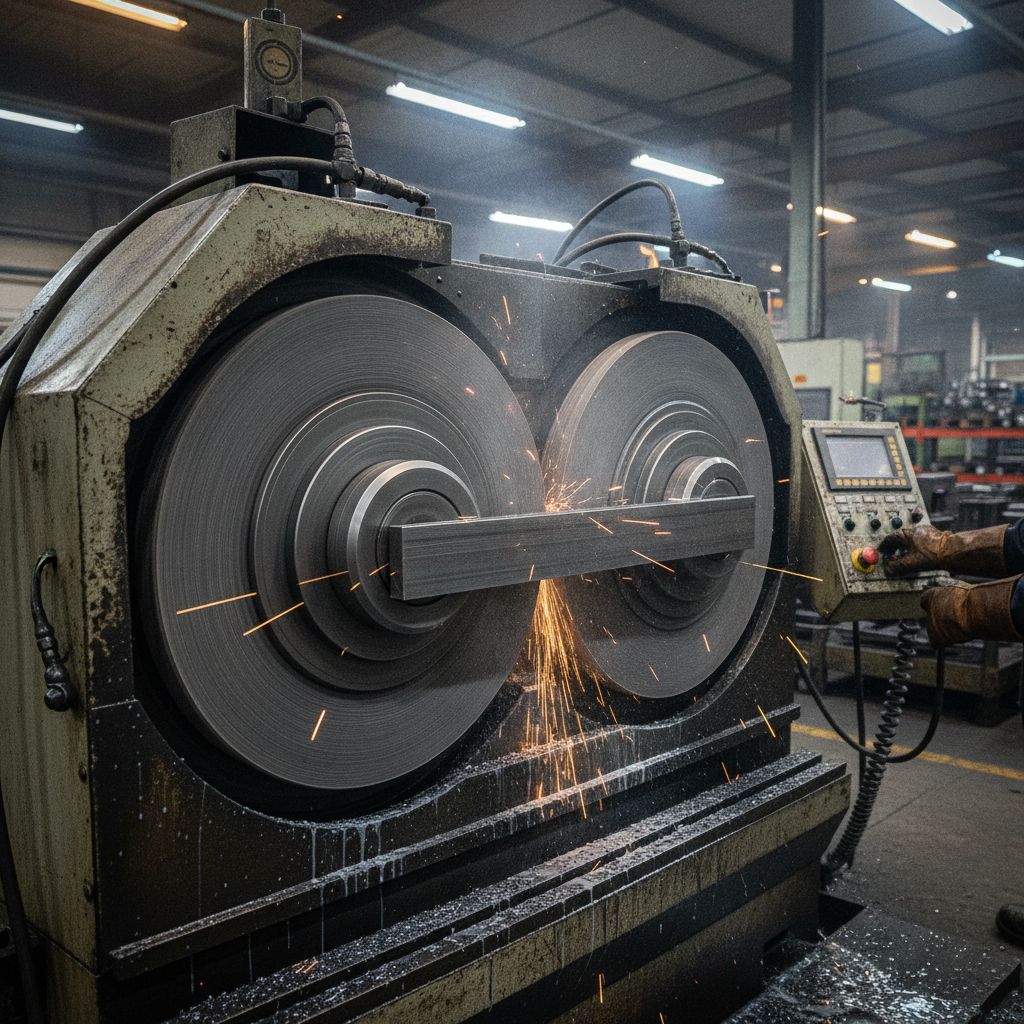

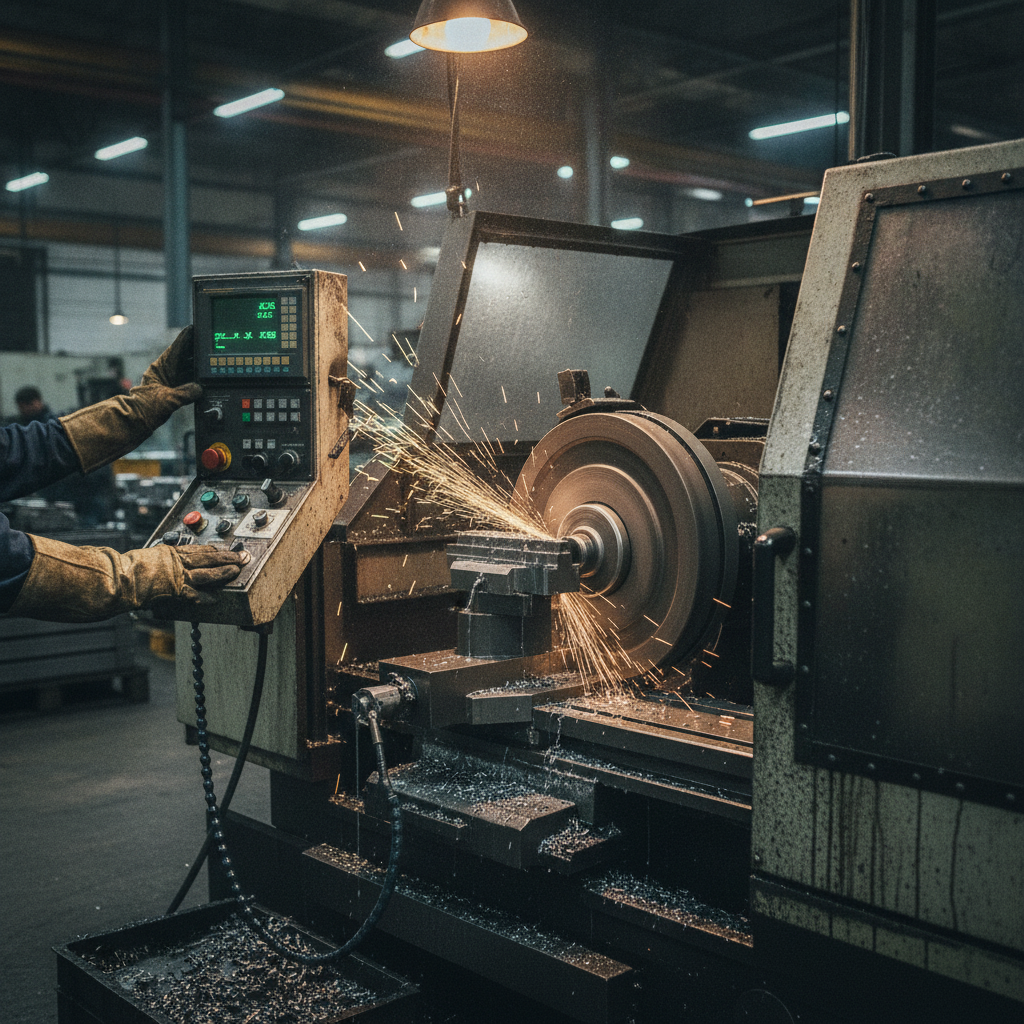
Anodic Aluminum Oxide (AAO) and hard-anodized aluminum alloys have become indispensable in high-tech manufacturing. From semiconductor processing chamber components and aerospace optical housings to medical devices, these materials are selected for their extreme surface hardness, corrosion resistance, and thermal stability. However, the very properties that make hard-anodized coatings desirable present an extraordinary challenge during precision grinding.
Machining an extremely hard, brittle, and highly abrasive ceramic-like layer (often exceeding 60 HRC or 1000 HV) that is metallurgically bonded to a highly ductile, low-melting-point aluminum substrate is a classic manufacturing paradox. Standard grinding wheels glazing or loading within seconds of contact is a common issue, leading to thermal cracking, edge chipping, and expensive scrap parts.
As a leading manufacturer of high-performance abrasives, Zhengzhou Zhongxin Grinding Wheel Co., Ltd. has engineered advanced solutions to this industrial bottleneck. This technical guide explains the tribological challenges of anodic aluminum oxide grinding and details why utilizing an open-structure grinding wheel is the most effective method for preventing wheel loading while achieving superior geometric accuracy.
The Dual-Material Physics of Hard-Anodized Aluminum Grinding
To understand why traditional grinding wheels fail, we must look at the microstructural mechanics of hard-anodized coatings. Anodization converts the outer layer of aluminum into aluminum oxide (Al₂O₃), a technical ceramic. When grinding this composite structure, the grinding wheel simultaneously interacts with two completely different material regimes:
- The Hard-Anodized Layer: This is a highly porous, brittle oxide ceramic. It exhibits high specific grinding energy, low thermal conductivity, and extreme abrasiveness. It behaves identically to structural alumina, wearing down abrasive grains rapidly via micro-fracturing and attritious wear.
- The Aluminum Substrate: Beneath the oxide layer lies the parent aluminum alloy (e.g., 6061, 7075). Aluminum is highly ductile, soft, and has a relatively low melting point (approx. 660°C). During grinding, especially along chamfers, steps, or when the oxide layer is thin, the wheel inevitably contacts this ductile substrate.
When a conventional, dense grinding wheel attempts to grind this dual-material interface, two failure modes occur almost immediately:
1. Wheel Glazing
The highly abrasive Al₂O₃ layer dulls the abrasive grains. If the bond system is too hard, these dull grains cannot micro-fracture or self-sharpen. The wheel surface becomes smooth and shiny, friction spikes, and specific grinding energy rises exponentially, leading to severe thermal stress on the workpiece.
2. Wheel Loading (Clogging)
As soon as the wheel contacts the ductile aluminum substrate or microscopic aluminum particles migrate from the interface, the soft metal chips are sheared off. In a dense wheel with small pore spaces, these chips have nowhere to go. Under intense localized pressure and frictional heat, the aluminum chips melt and weld directly onto the abrasive grains and into the tight inter-granular pores. This is known as “loading.” Once loaded, the wheel ceases to cut; instead, it rubs, causing extreme thermal spikes, micro-cracking of the oxide layer, and catastrophic part delamination.
What is an Open-Structure Grinding Wheel?
An open-structure grinding wheel is engineered with a high volume of interconnected, macro-porous spaces within the bond matrix. Unlike standard wheels, which rely solely on the natural, tight porosity of packed abrasive grains, open-structure wheels utilize specialized pore-induced manufacturing technologies.
During the manufacturing process at Zhengzhou Zhongxin, we introduce temporary organic pore-forming agents into the raw mix. During the high-temperature firing (vitrification) process, these agents burn off cleanly, leaving behind a highly organized, open network of large, spherical pores. The resulting wheel features a high structure number (typically 12 to 20), meaning the volume of abrasive grains is lower, and the volume of void space is significantly higher (often 50% to 65% porosity).
This design is highly effective for technical ceramics. For a deeper look at how this porosity benefits similar materials, read our guide on How to Select Open-Structure Grinding Wheels for Technical Ceramic Grinding.
Mechanistic Analysis: Why Open-Structure Wheels Prevent Loading
In precision grinding of hard-anodized aluminum, the open-structure wheel acts as a multi-functional system that addresses the root causes of wheel loading and thermal damage through three primary mechanisms:
1. Micro-Chip Pocket Provision
The large, induced pores of an open-structure wheel serve as temporary storage chambers for grinding debris. When the abrasive grains shear away the brittle anodic oxide and the underlying ductile aluminum, the resulting micro-chips are thrown into these macro-pores. Because the pores are significantly larger than the chip size, the metal chips cannot wedge themselves between the abrasive grains. As the wheel rotates out of the grinding zone (the arc of cut), centrifugal force and high-pressure coolant wash the chips out of the open pores, keeping the wheel clean and sharp.
2. Elimination of the Aerodynamic Boundary Layer
At high peripheral wheel speeds (30 m/s and above), a spinning grinding wheel generates a high-velocity boundary layer of air around its circumference. This air barrier acts as an aerodynamic shield, deflecting grinding fluid away from the critical grinding zone and causing coolant starvation.
An open-structure wheel disrupts this air barrier. The highly porous surface acts like a sponge, drawing coolant directly into the wheel body. The wheel carries the coolant internally through the pore network and releases it under centrifugal pressure directly at the point of contact. This ensures maximum lubrication and cooling exactly where the abrasive grains engage the work material. To optimize this process further, engineers often combine these wheels with external hardware; learn more in our article on How to Combine Aerodynamic Baffles and Open-Structure Grinding Wheels for Aluminum.
3. Reduction of Specific Grinding Energy (SGE)
Specific Grinding Energy (SGE) is the energy required to remove a unit volume of material. When grinding hard, brittle ceramics like AAO, high SGE translates directly into heat. Open-structure wheels reduce SGE by:
- Reducing the actual contact area between the wheel and the workpiece, which lowers friction.
- Promoting a clean, micro-fracturing self-sharpening mechanism of the abrasive grains, ensuring only sharp cutting edges are presented to the material.
- Preventing the accumulation of loaded metal, which would otherwise rub and generate massive frictional heat.
Comparative Performance: Dense vs. Open-Structure Wheels
The table below highlights the operational differences between standard dense wheels and engineered open-structure wheels when grinding hard anodic aluminum oxide (AAO) coatings. Because of the unique material properties of AAO—namely its high hardness combined with a porous, brittle structure—standard dense wheels suffer from rapid pore clogging, whereas open-structure wheels maintain their self-sharpening mechanism through engineered void spaces.
| Operational Parameter | Standard Dense Wheels (Closed Structure) | Engineered Open-Structure Wheels |
|---|---|---|
| Pore Volume / Porosity | Low (less than 10%) | High (30% to 50% induced porosity) |
| Chip Clearance Capacity | Extremely limited; prone to rapid packing | Excellent; large voids collect and eject debris |
| Coolant Penetration | Surface-level only; poor heat dissipation | Deep infiltration directly to the grinding zone |
| Loading & Glazing Risk | Very high; requires frequent dressing | Minimal; self-dressing action is maintained |
| Thermal Damage (Micro-cracking) | High risk due to frictional heat buildup | Low risk; cooler cutting action preserves oxide integrity |
The Physics of Loading in AAO Grinding
Anodic aluminum oxide consists of a highly ordered hexagonal array of cylindrical nanopores. When a grinding wheel shears this ceramic surface, the material does not form continuous ductile chips. Instead, it fractures into micro- and nano-scale ceramic debris. In a standard dense wheel, these microscopic particles are forced into the tiny clearance spaces between the abrasive grains. Under the immense pressure of the grinding zone, this debris compacts, a phenomenon known as wheel loading.
Once loading occurs, the exposed abrasive grits can no longer penetrate the workpiece. Instead of cutting, the loaded metal and ceramic particles slide against the AAO surface, generating extreme frictional heat. This thermal spike leads to micro-cracking, delamination of the anodic layer from the aluminum substrate, and severe dimensional inaccuracy.
Open-structure wheels solve this by utilizing artificial pore-forming agents during the manufacturing process. These agents create large, interconnected channels within the bond matrix. As the abrasive grains micro-fracture the AAO, the resulting debris is swept into these large pores and carried out of the grinding zone by the rotational centrifugal force and the flow of coolant.
Optimizing Grinding Parameters for Open-Structure Wheels
To fully leverage the benefits of an open-structure wheel when processing AAO, operators must calibrate their machine kinematics to balance material removal rates with surface integrity. Because AAO is highly brittle, the following technical guidelines should be followed:
- Wheel Speed (vc): Maintain a moderate peripheral speed between 25 and 35 m/s. Excessively high speeds increase the thermal load, while excessively low speeds increase the mechanical force per grit, risking edge chipping.
- Infeed Depth (ae): Keep the depth of cut ultra-low—ideally in the micro-grinding regime of 1 to 5 µm per pass. This minimizes the normal grinding forces that cause coating delamination.
- Coolant Delivery: Use high-pressure, high-volume flood cooling. The open pores of the wheel act as natural conduits, drawing the fluid directly into the grinding arc to maximize lubrication and heat dissipation.
Troubleshooting Common AAO Grinding Defects
When grinding delicate ceramic coatings, surface anomalies can occur if the grinding system is out of balance. Use the troubleshooting matrix below to quickly identify and resolve common issues:
| Observed Defect | Primary Root Cause | Recommended Corrective Action |
|---|---|---|
| Delamination / Coating Flaking | Excessive normal grinding forces or blunt abrasive grits. | Increase wheel porosity, switch to a more friable diamond grit, or reduce the depth of cut. |
| Surface Burn / Discoloration | Thermal loading due to poor coolant access or wheel loading. | Increase coolant pressure, direct the nozzle precisely at the grinding zone, and switch to an open-structure wheel. |
| Rapid Wheel Glazing | Inadequate chip clearance and insufficient self-sharpening. | Reduce bond hardness or increase the artificial pore-forming agent content in the wheel matrix. |
Conclusion: Engineered Porosity for Precision AAO Grinding
Grinding anodic aluminum oxide presents a unique tribological challenge where extreme hardness meets high brittleness. Standard dense grinding wheels inevitably fail due to rapid loading, friction-induced heat, and subsequent coating delamination. Engineered open-structure wheels solve this fundamental bottleneck by providing dedicated reservoirs for chip clearance and coolant transport. By transitioning to highly porous, open-structure wheels, manufacturers can achieve superior surface finishes, eliminate thermal damage, and dramatically extend wheel life in demanding production environments.
Partner with the Precision Grinding Experts
At Zhengzhou Zhongxin Grinding Wheel Co., Ltd., we specialize in engineering high-performance, open-structure grinding wheels tailored to the strict demands of semiconductor, aerospace, and advanced electronics manufacturing. If you are looking to optimize your anodic aluminum oxide (AAO) grinding processes, prevent wheel loading, and reduce scrap rates, our technical team is ready to design a custom abrasive solution for your specific application.
Email: root@shalun.net
Phone/WhatsApp: +86 15538050608
Telephone: 0371-62513386
Address: No. 1111-1, Kexue Avenue, Shangjie District, Zhengzhou, Henan, China