

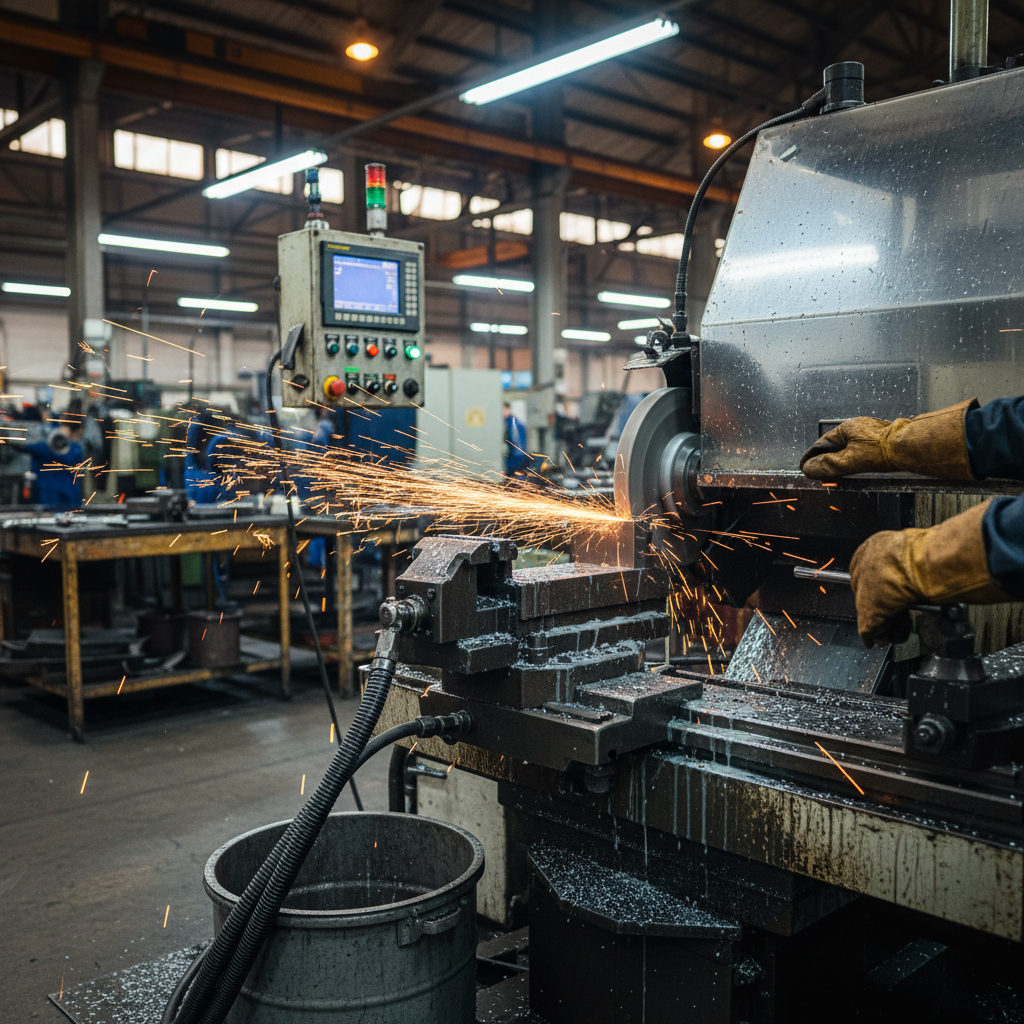
High-Speed Steel (HSS) remains a cornerstone material in the cutting tool industry, valued for its exceptional toughness, wear resistance, and ability to maintain a sharp cutting edge under high mechanical loads. From complex hobs and gear cutters to standard twist drills, taps, and end mills, HSS tools are indispensable in modern manufacturing. However, the very alloying elements that give HSS its desirable properties—tungsten, molybdenum, chromium, vanadium, and cobalt—also make it highly sensitive to thermal stress during manufacturing and resharpening operations.
During precision HSS tool grinding, the friction generated at the grinding zone can elevate temperatures rapidly. If this thermal energy is not managed correctly, it leads to grinding burns, surface tempering, and—most critically—the formation of microscopic cracks (micro-cracks). These micro-cracks are often invisible to the naked eye but act as stress concentration points, leading to catastrophic tool failure during subsequent machining operations. For B2B tool manufacturers and resharpening shops, eliminating these defects is paramount to ensuring tool reliability and optimizing production yields.
The solution lies in advanced grinding wheel thermal management. Specifically, the implementation of an Open-Structure Grinding Wheel has emerged as the industry standard for preventing micro-cracks in grinding while simultaneously improving material removal rates (MRR) and machine hour utilization.
1. The Metallurgical Genesis of Micro-Cracks in HSS Grinding
To understand why an open-structure wheel is necessary, one must first examine the metallurgical changes that occur when high speed steel sharpening is subjected to excessive heat. High-speed steels are heat-treated to achieve a fine, tempered martensitic matrix interspersed with hard alloy carbides. This microstructure is stable up to approximately 550°C to 600°C (depending on the cobalt and molybdenum content).
When the localized grinding temperature exceeds this tempering threshold, several destructive phenomena occur:
- Over-Tempering (Softening): The heat causes localized tempering of the martensitic structure, reducing the hardness of the cutting edge and accelerating tool wear.
- Re-Hardening (Untempered Martensite): If the temperature spikes above the austenitizing temperature (typically above 800°C) and is immediately quenched by the incoming coolant, a layer of untempered (white) martensite forms. This phase is extremely brittle and highly stressed.
- Tensile Residual Stress: Rapid thermal expansion followed by rapid contraction induces severe tensile residual stresses on the tool surface. When these stresses exceed the ultimate tensile strength of the HSS matrix, micro-cracks in grinding (often called thermal shock cracks or craze cracking) propagate across the surface.
These micro-cracks typically align perpendicular to the grinding direction, forming a network of microscopic fissures. Under the cyclic mechanical loads of actual cutting operations, these cracks propagate, leading to premature chipping, edge deformation, or complete structural breakage of the tool.
2. The Physics of the Open-Structure Grinding Wheel Solution
An open-structure grinding wheel is engineered with highly controlled, induced porosity. Unlike conventional, dense wheels where the abrasive grains, bond material, and natural pores are tightly packed, open-structure wheels utilize specialized pore-forming agents during the manufacturing process to create large, interconnected microscopic voids. This unique architecture directly addresses the root causes of thermal damage through three key mechanisms:
A. Enhanced Coolant Transportation and Reservoir Capability
The primary barrier to effective cooling in high-speed grinding is “coolant starvation.” High-speed rotating wheels generate a high-pressure air barrier (boundary layer) that deflects liquid coolant away from the grind zone. The large, open pores of an open-structure wheel act as physical reservoirs. They carry the coolant directly into the arc of contact, releasing it precisely where the abrasive grain meets the HSS workpiece. This localized fluid delivery drastically reduces the peak temperature at the cutting interface. For a deeper look at managing coolant delivery in demanding grinding environments, consider our technical guide on solving coolant starvation in high-speed setups.
B. Chip Clearance and Prevention of Wheel Loading
HSS is ductile compared to carbide, meaning it produces longer, highly heated metallic chips. In a standard grinding wheel, these chips can easily become trapped between the closely packed abrasive grains—a phenomenon known as “wheel loading.” Once a wheel is loaded, metal-on-metal friction replaces the cutting action of the abrasive, generating massive amounts of frictional heat and causing immediate grinding burns. The open pores of an open-structure wheel provide ample clearance volume for these chips to reside temporarily before they are slung out by centrifugal force as the wheel exits the cut.
C. Reduced Friction and Power Consumption
By optimizing the ratio of abrasive grain to open pore space, the contact area between the wheel bond and the workpiece is minimized. This reduces idle friction and normal grinding forces. Lower grinding forces mean less mechanical energy is converted into heat, keeping the overall thermal load on the HSS tool well below the critical damage threshold.
3. Comparative Matrix: Standard vs. Open-Structure Grinding Wheels
To assist technical procurement managers and grinding engineers in evaluating their options, the table below outlines the performance differences between standard dense vitrified wheels and engineered open-structure wheels in HSS grinding applications:
| Performance Attribute | Standard Vitrified Wheel (Dense Structure) | Open-Structure Grinding Wheel (Porous) |
|---|---|---|
| Porosity Volume (%) | 30% – 45% (mostly closed/small) | 50% – 65% (interconnected/large) |
| Coolant Penetration | Poor; coolant is deflected by boundary air layer | Excellent; pores act as active fluid carriers |
| Risk of Loading (Clogging) | High; requires frequent dressing to clear metal chips | Very Low; chips are naturally evacuated |
| Peak Grinding Temperature | High (often exceeding 700°C) | Low (typically maintained below 450°C) |
| Micro-Crack Occurrence | Frequent, especially in creep-feed & heavy roughing | Virtually eliminated |
| Dressing Frequency | High (leads to faster wheel wear and downtime) | Low (promotes self-sharpening behavior) |
| Surface Integrity | Inconsistent; prone to tensile residual stresses | Consistent; maintains compressive residual stresses |
4. Optimizing Abrasive Selection for Open-Structure Wheels
While the open structure provides the physical framework for thermal management, the choice of abrasive grain is equally critical to achieving optimal results in HSS tool grinding. The three main abrasive categories utilized in open-structure configurations include:
1. Micro-Crystalline Ceramic Alumina Grains
Ceramic abrasives are engineered to micro-fracture under specific loads. Instead of dulling and flattening (which increases friction and heat), these grains fracture at a microscopic level to constantly reveal new, sharp cutting edges. When paired with an open-structure vitrified bond, ceramic grains deliver an incredibly cool cutting action, making them ideal for high-productivity creep-feed grinding and heavy profile grinding of HSS. You can learn more about this synergy in our detailed analysis of maximizing cool grinding with ceramic abrasives.
2. Cubic Boron Nitride (CBN)
For high-volume production and CNC tool grinding centers, CBN is the premier choice for HSS. CBN possesses extreme hardness and thermal conductivity, allowing it to withstand high grinding speeds without chemical degradation. An open-structure CBN wheel represents the pinnacle of thermal management, ensuring zero micro-cracks even during deep-slotting or flute-grinding operations on hardened HSS (62-66 HRC).
3. High-Purity White Alumina (WA) and Monocrystalline Alumina (SA)
For conventional tool room grinders and manual resharpening setups, high-purity white or monocrystalline aluminum oxide in a soft, open-structure vitrified bond (typically H, I, or J grade) offers an extremely cost-effective solution. The friable nature of these grains ensures they break down before causing thermal damage to the tool edge.
5. Critical Process Prerequisites for Eliminating Micro-Cracks
While swapping to an open-structure grinding wheel is the most impactful change a shop can make, achieving a completely crack-free HSS grinding process requires a holistic approach to the machine setup. Engineers must optimize several mechanical and operational parameters:
A. High-Pressure Coolant Delivery and Alignment
Simply flooding the grinding enclosure is insufficient. The coolant nozzle must be positioned as close to the grinding zone as possible, with the fluid jet velocity matched to the peripheral speed of the grinding wheel. This ensures the fluid can break through the air barrier and actively load the wheel’s open pores. A water-soluble oil emulsion (10% to 12% concentration) or high-quality neat grinding oil is highly recommended to maximize lubricity and heat dissipation.
Dressing Techniques for Maintaining Open Porosity
An open-structure grinding wheel is only as effective as its dressing state. Improper dressing can close the carefully engineered pores, causing the wheel to behave like a standard, dense-structure wheel. To prevent glazing and preserve the chip-clearance pockets, specific dressing protocols must be followed:
- Use Sharp Diamond Tools: Dull dressing diamonds tear the abrasive grains rather than fracturing them cleanly. This leads to flattened grain tops (wear flats) that increase friction and thermal loading.
- Optimize Dressing Lead and Depth: A relatively coarse dressing lead (feed rate across the wheel face) is recommended to open up the structure. For vitrified CBN or aluminum oxide open-structure wheels, a depth of cut between 0.01 mm and 0.02 mm per pass prevents excessive stress on the bond while exposing fresh, sharp cutting edges.
- Avoid Over-Dressing: Over-dressing accelerates wheel wear and unnecessarily reduces wheel life. Dress only when power consumption spikes or when visual inspection of the HSS tool indicates the onset of micro-loading.
Troubleshooting HSS Tool Grinding Defects
When grinding high-speed steel (such as M2, M35, or M42 cobalt grades), operators must monitor the process closely. The table below outlines common grinding defects, their root causes, and how utilizing an open-structure wheel configuration resolves these issues.
| Grinding Defect | Primary Root Cause | Open-Structure Solution & Adjustment |
|---|---|---|
| Thermal Micro-Cracks | Excessive localized heat exceeding the tempering temperature of the HSS matrix. | Switch to an open-structure wheel with induced porosity; reduce radial depth of cut ($a_e$) and increase coolant pressure. |
| Workpiece Burn (Discoloration) | Friction from loaded wheel pores or dull abrasive grains. | Increase dressing lead to open the wheel face; ensure coolant is penetrating the boundary layer. |
| Rapid Wheel Wear | Bond grade is too soft for the hardness of the HSS tool, or dressing is too aggressive. | Select an open-structure wheel with a slightly harder bond grade (e.g., J or K grade) while keeping high porosity. |
| Chipped Tool Edges | Excessive grinding pressure or mechanical vibration due to wheel glazing. | Use a coarser grit size within the open-structure matrix to reduce grinding forces and improve self-sharpening behavior. |
Operational Parameters for High-Performance Grinding
To maximize the benefits of open-structure grinding wheels, machine parameters should be adjusted to balance material removal rate (MRR) with thermal safety. Keep the following guidelines in mind:
Wheel Speed ($v_s$): For conventional super-porous aluminum oxide wheels, maintain a peripheral speed of 25 to 30 m/s. For vitrified CBN open-structure wheels, speeds can be increased to 45 to 60 m/s, provided the machine spindle and coolant delivery system can support the higher kinetic energy without causing starvation at the contact zone.
Workpiece Feed Rate ($v_f$): High table speeds are beneficial. A faster feed rate reduces the contact time between any single point on the HSS tool and the grinding wheel, minimizing thermal accumulation. Let the open pores carry the chips away instead of slowing down the feed.
Conclusion: Protecting HSS Tool Integrity
Preventing micro-cracks in HSS tool grinding is a critical requirement for maintaining tool life, cutting edge sharpness, and structural reliability under heavy machining loads. Standard, dense grinding wheels struggle with the high alloy content and thermal sensitivity of modern high-speed steels.
By implementing open-structure wheels with induced porosity, tool manufacturers and regrinding shops can significantly lower grinding zone temperatures. The open pores act as built-in coolant reservoirs and chip pockets, ensuring that friction is minimized and heat is swept away before it can damage the HSS microstructure. When paired with precise dressing techniques and optimized coolant delivery, open-structure wheels represent the ultimate solution for defect-free, high-efficiency HSS tool production.
Partner with the Grinding Experts
Are you experiencing issues with thermal cracking, workpiece burn, or premature wheel wear in your HSS tool grinding processes? Optimize your production line with custom-engineered open-structure grinding wheels tailored to your specific machinery and alloy requirements.
Contact our technical engineering team today for expert consultations, product specifications, and custom manufacturing inquiries:
Zhengzhou Zhongxin Grinding Wheel Co., Ltd.
Email: root@shalun.net
Phone/WhatsApp: +86 15538050608
Telephone: 0371-62513386
Address: No. 1111-1, Kexue Avenue, Shangjie District, Zhengzhou, Henan, China.