

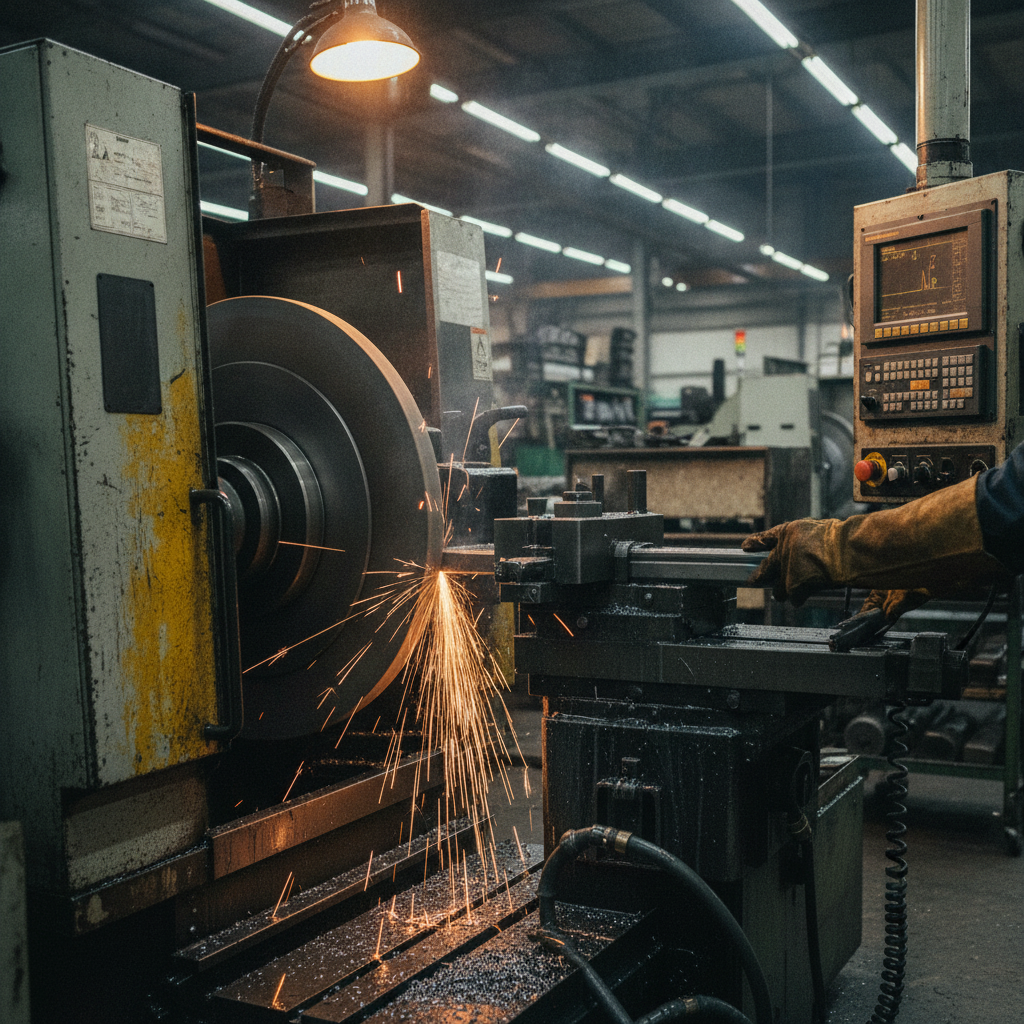
Double Disc Grinding FCG Best Practices: The Open-Structure Grinding Wheel Advantage
In high-precision manufacturing, achieving flat, parallel surfaces on high-volume components is a critical requirement. Double disc grinding (DDG) has long been the industry standard for processing automotive parts, bearing rings, compressor valves, and aerospace components. Among the various kinematic variations of this process, Fixed Carrier Grinding (FCG) stands out for its ability to deliver extreme geometric tolerances. However, FCG presents severe thermal challenges due to its unique kinematics.
Because the workpiece is continuously trapped between two opposing grinding wheels, coolant penetration is highly restricted, leading to localized heat accumulation, wheel glazing, and devastating grinding burns. To mitigate these risks, senior technical engineers are increasingly turning to open-structure grinding wheels. This comprehensive guide explores the kinematics of FCG, analyzes the root causes of thermal damage, and demonstrates why open-structure grinding wheels are essential for optimizing your double disc grinding operations.
Understanding FCG Kinematics and the Thermal Challenge
To understand why thermal management is so difficult in fixed carrier grinding, we must first examine the kinematics of the process. In standard rotary or thru-feed double disc grinding, workpieces move dynamically across the wheel face, allowing for brief periods of cooling and stress relief. In contrast, FCG kinematics involve holding the workpiece in a fixed pocket of a carrier plate that oscillates or moves along a predetermined, highly controlled path between the two parallel grinding wheels.
This fixed trajectory ensures exceptional control over thickness, parallelism, and flatness. However, it also means that the contact zone between the grinding wheels and the workpiece is constant and prolonged. The workpiece is subjected to continuous friction without the momentary “breathing” phases found in other grinding methods. This setup creates several severe technical challenges:
- Coolant Starvation: The physical presence of the fixed carrier and the tight gap between the twin wheels create a high-pressure air barrier. Traditional coolant application methods fail to penetrate this barrier, leaving the grinding zone dry and starved of lubrication.
- Extreme Heat Accumulation: Without adequate coolant, the friction generated by the abrasive grains rapidly heats the workpiece surface, often exceeding the material’s phase-transformation temperature.
- Chip Loading: In FCG, metal chips have no easy exit path. They become trapped in the grinding zone, leading to wheel loading, increased normal forces, and surface scratching.
The Metallurgy of Thermal Damage: Grinding Burn & Work Hardening
When grinding heat is not managed, the metallurgical consequences for the workpiece are catastrophic. Grinding burn is not merely a cosmetic discoloration; it represents a fundamental change in the material’s surface integrity. Under extreme thermal stress, the surface layer of hardened steel can undergo localized tempering (softening) or re-hardening (forming brittle untempered martensite, known as white layer).
This thermal shock introduces high tensile residual stresses into the surface, which drastically reduces the fatigue life of the component and leads to micro-cracking under operational loads. For high-performance alloys, the consequences are even more complex. If you are processing nickel-based superalloys or highly alloyed steels, managing this thermal zone is critical to prevent severe work hardening.
For a deeper dive into how thermal accumulation alters the microstructure of heat-sensitive materials, you can read our technical analysis on Avoiding Work Hardening in Hastelloy and Inconel: Why Open-Structure Grinding Wheels are Critical. In these superalloys, thermal friction triggers rapid dislocation multiplication, making the surface layer virtually unmachinable and highly prone to cracking.
Additionally, when conventional wheels are used in FCG, the bond holds onto the abrasive grains too tightly. As the grains dull, they do not fracture or release. This leads to wheel glazing, where the wheel surface becomes smooth and shiny. Instead of cutting, the glazed wheel rubs against the workpiece, escalating the Specific Grinding Energy (SGE) and guaranteeing grinding burn. To resolve this, engineers must implement grinding wheels designed specifically to counter these thermal and mechanical dynamics.
For troubleshooting tips on identifying and correcting wheel glazing, refer to our guide on Troubleshooting Grinding Burns: Fixing Glazing with Open-Structure Grinding Wheels.
The Open-Structure Grinding Wheel Solution
To overcome the inherent coolant starvation and chip-evacuation issues of FCG kinematics, Zhengzhou Zhongxin Grinding Wheel Co., Ltd. has engineered highly porous, open-structure grinding wheels. By utilizing advanced induced-pore technology and specialized vitrified bonds, these wheels feature a highly interconnected network of artificial pores that act as a mechanical system to combat thermal damage.

1. Micro-Pump Coolant Delivery
The interconnected pores within an open-structure grinding wheel function as miniature centrifugal pumps. As the wheel rotates at high speeds, coolant is drawn into the porous structure near the center and forced outward by centrifugal force. This mechanism allows the coolant to bypass the high-velocity air barrier surrounding the wheel and injects lubrication directly into the contact zone between the workpiece and the wheel face.
2. Dedicated Chip Pockets
In double disc grinding, metal chips must be removed immediately to prevent re-cutting and wheel loading. The large, open pores of our engineered wheels serve as temporary storage pockets for grinding chips. These chips are safely held within the pores during the active cut and are subsequently flushed out by the high-pressure coolant once the wheel rotates past the workpiece, keeping the grinding face clean and sharp.
3. Controlled Self-Sharpening
Open-structure wheels feature a lower volumetric bond post-density. This design allows the bond to release dull abrasive grains more easily under grinding forces. When an abrasive grain becomes dull, the resulting increase in cutting force causes the bond post to fracture, exposing fresh, sharp micro-fractured crystal edges. This continuous self-sharpening action keeps cutting forces low and prevents the frictional rubbing that causes grinding burn.
Best Practices for Implementing Open-Structure Wheels in FCG
Successfully implementing open-structure wheels in a B2B production environment requires careful coordination of the grinding wheel specification, dressing parameters, and coolant delivery systems. Below are the industry-proven best practices compiled by our engineering team.
Wheel Specification Selection
When selecting a wheel for FCG, the balance between grain type, grit size, grade, and structure is critical. For conventional setups processing hardened steels, an open-structure aluminum oxide wheel (with a structure number of 12 to 18) is highly recommended. For superalloys or high-production automotive lines, ceramic (seeded gel) abrasives blended with monocrystalline alumina offer the highest material removal rates (MRR) while maintaining cool cutting temperatures.
| Parameter | Conventional Wheel (Standard) | Zhongxin Open-Structure Wheel |
|---|---|---|
| Structure Rating | Structure 6 to 9 (Dense) | Structure 12 to 18 (Highly Porous) |
| Coolant Penetration | Poor (Surface deflection) | Excellent (Internal micro-pumping) |
| Risk of Grinding Burn | High (Due to rapid glazing) | Extremely Low (Self-sharpening) |
| Dressing Frequency | High (To clear loaded metal) | Low (Extended wheel life) |
| Surface Finish (Ra) | Good (But prone to thermal micro-cracks) | Excellent and structurally sound |
Optimizing Dressing Parameters
Dressing open-structure wheels requires a precise approach. Because the structure is inherently free-cutting, aggressive dressing can lead to excessive wheel wear. We recommend using a rotary diamond dresser with a controlled dressing speed ratio. The goal is to dress the wheel just enough to maintain geometric flatness without closing the open pores.
For detailed parameters on maintaining wheel geometry and balancing, see our technical guide on Preventing Grinding Burn: G2.5 Balance and Dressing Speed Ratios for Open-Structure Wheels.
Coolant Management and Nozzle Design
Even the best open-structure wheel will fail if the coolant delivery is inadequate. For FCG, we recommend a dual-nozzle configuration:
- Tangential Nozzles: Positioned to spray coolant directly into the entry nip of the two wheels, matching the peripheral speed of the grinding wheels to break the air barrier.
- Scraper Nozzles: Used to physically sweep away the boundary layer of air and push high-pressure coolant directly into the open pores of the wheel face before it enters the grinding zone.
- Coolant Chemistry: Maintain a 10% to 12% concentration of high-quality water-soluble chemical emulsion or use pure grinding oil to maximize lubrication and prevent built-up edge (BUE).
Coolant Dynamics and Flow Optimization
While the induced porosity of open-structure grinding wheels inherently improves coolant transport into the grinding zone, achieving optimal results in Double Disc Grinding (DDG) requires a highly coordinated coolant delivery strategy. Because the workpieces are held between two opposing wheels, the contact zone is highly restricted, limiting natural coolant entry.
- Nozzle Alignment and Pressure: Position coolant nozzles to direct fluid directly into the wheel-workpiece interface. Ensure the velocity of the coolant matches or slightly exceeds the peripheral speed of the grinding wheels to prevent the air barrier from deflecting the fluid.
- Filtration Efficiency: Open-structure wheels can easily become loaded if the coolant contains suspended fine swarf. Implement high-efficiency magnetic separators and paper band filters (filtration rating of 5 to 10 microns) to maintain coolant purity.
- Temperature Stabilization: Maintain coolant temperature within ±1°C of the ambient machine temperature to prevent thermal expansion of the machine spindle and carrier plate, which directly impacts flatness tolerances.
Troubleshooting Double Disc Grinding with Open-Structure Wheels
Even with advanced open-structure technology, process drift can occur due to changes in incoming part stock, dressing parameters, or coolant degradation. The table below outlines common FCG issues and their corresponding corrective actions.
| Issue / Symptom | Potential Root Cause | Recommended Corrective Action |
|---|---|---|
| Workpiece Thermal Burn | Insufficient coolant flow or wheel loading. | Increase coolant pressure; decrease dressing lead to open the wheel structure; verify coolant concentration. |
| Poor Surface Finish (High Ra) | Wheel structure too open or dressing rate too aggressive. | Reduce dressing traverse speed; increase wheel speed relative to feed rate; select a finer grit size. |
| Loss of Flatness / Parallelism | Uneven wheel wear or thermal distortion. | Re-align wheel spindles; ensure equal coolant flow to both wheels; optimize dressing frequency. |
| Rapid Wheel Wear | Bond system is too soft for the workpiece hardness. | Increase wheel speed to make the wheel act “harder”; transition to a slightly harder bond grade. |
Dressing Guidelines for Open-Structure Wheels
Dressing is critical to maintaining the “open” nature of these wheels. Over-dressing can strip away the structural integrity of the porous matrix, while under-dressing leads to glazed grains and thermal friction. For vitrified bond open-structure wheels, rotary diamond dressers or multi-point diamond nibs are recommended. Dress with a relatively fast traverse rate to expose the pore-inducing agents and fresh, sharp abrasive crystals without flattening the wheel face.
Conclusion
Implementing open-structure grinding wheels in Double Disc Grinding FCG processes offers a decisive competitive advantage for manufacturers processing high-precision, heat-sensitive components. By facilitating superior coolant penetration, reducing cutting forces, and maintaining low thermal loads, these wheels consistently deliver exceptional flatness, parallelism, and surface integrity. Maximizing these benefits requires a holistic approach that balances precise wheel selection, optimized dressing regimes, and meticulous coolant management.
Partner with the Double Disc Grinding Experts
At Zhengzhou Zhongxin Grinding Wheel Co., Ltd., we specialize in engineering high-performance, open-structure grinding wheels tailored to your exact double disc grinding applications. Our technical team is ready to assist you in optimizing your FCG processes, reducing cycle times, and eliminating thermal defects.
Contact us today to discuss your technical requirements and request a custom quote:
Zhengzhou Zhongxin Grinding Wheel Co., Ltd.
Email: root@shalun.net
Phone/WhatsApp: +86 15538050608
Telephone: 0371-62513386
Address: No. 1111-1, Kexue Avenue, Shangjie District, Zhengzhou, Henan, China.