








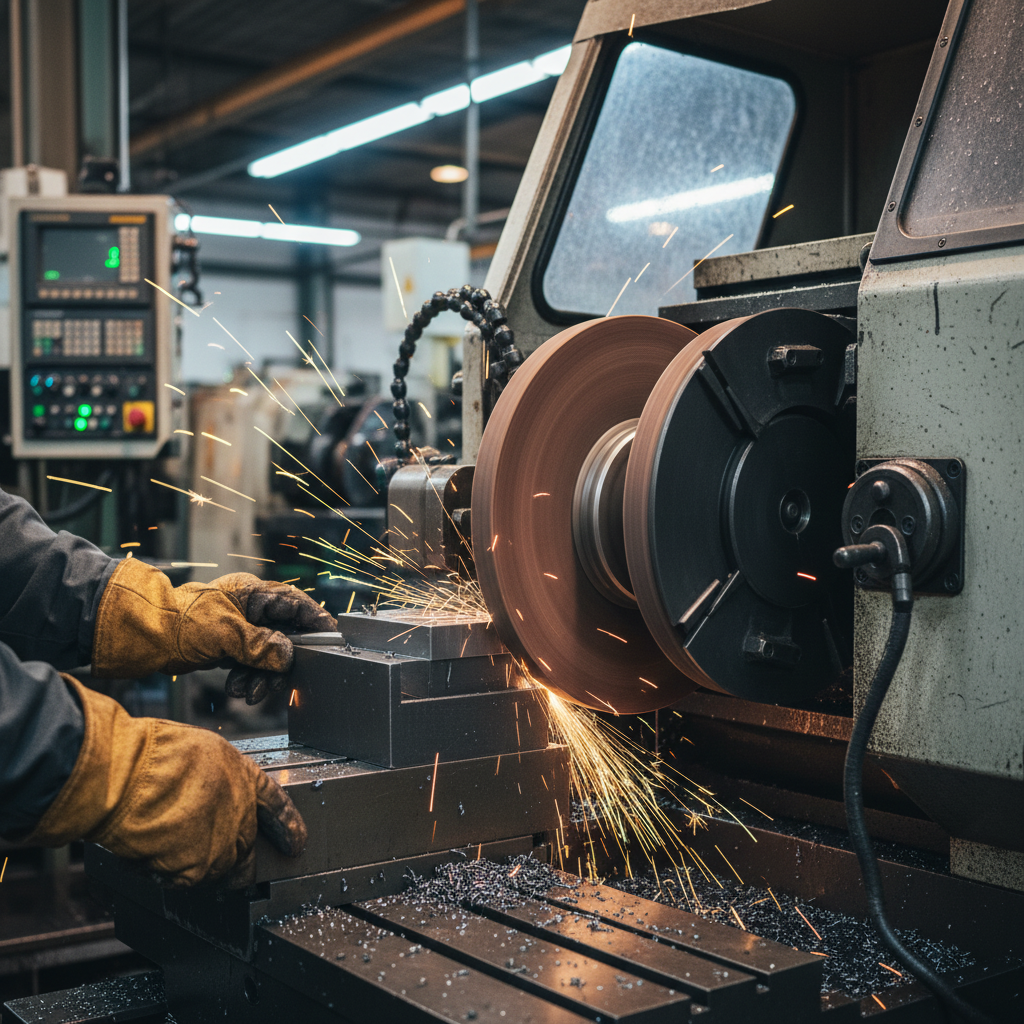
Avoiding Work Hardening in Hastelloy and Inconel: Why Open-Structure Grinding Wheels are Critical
In high-precision aerospace, chemical processing, and power generation manufacturing, nickel-based superalloys like Inconel (e.g., Inconel 718, Inconel 625) and Hastelloy (e.g., Hastelloy C-276, Hastelloy B-3) are indispensable. Renowned for their exceptional high-temperature strength, corrosion resistance, and oxidation resistance, these materials are also notoriously difficult to machine. For grinding engineers, the primary adversary when processing these alloys is work hardening.
Work hardening superalloys during grinding not only ruins the surface integrity of the workpiece, leading to micro-cracks and residual tensile stress, but also dramatically accelerates tool wear. To overcome this metallurgical hurdle, conventional grinding strategies are insufficient. Instead, utilizing an Open-Structure Grinding Wheel has emerged as a critical, industry-proven solution. This technical article explores the metallurgical mechanisms of work hardening during Hastelloy grinding and Inconel grinding, and details why open-structure abrasive technology is essential to maintaining surface integrity and process efficiency.
The Metallurgical Challenge: Why Inconel and Hastelloy Work-Harden So Rapidly
To understand why specialized grinding wheels are required, we must first examine the physical and metallurgical properties of nickel-based superalloys:
- Low Thermal Conductivity: Unlike carbon steels, which rapidly conduct heat away from the grinding zone into the bulk of the material or the chips, Inconel and Hastelloy have extremely low thermal conductivity. Approximately 70% to 80% of the generated grinding heat remains concentrated at the immediate grinding contact arc.
- High High-Temperature Strength: These alloys maintain their mechanical strength and hardness even at temperatures exceeding 700°C (1292°F). Consequently, the abrasive grains require immense force to shear the material, generating substantial friction and heat.
- High Ductility and Gumminess: Nickel-based alloys are highly ductile. Instead of forming clean, brittle chips, they tend to plasticly deform, plow, and adhere to the abrasive grains.
When these three properties interact during grinding, the localized temperature at the grinding zone spikes instantly. If the mechanical shear stress and thermal energy exceed the material’s elastic limit, the crystalline structure undergoes plastic deformation. This deformation induces dislocation multiplication within the nickel matrix, leading to immediate localized hardening. The resulting “white layer” or severely work-hardened zone is brittle, prone to micro-cracking, and highly susceptible to premature fatigue failure under operational stress.
The Vicious Cycle of Wheel Loading and Glazing
In conventional grinding setups, work hardening is exacerbated by a phenomenon known as “wheel loading.” Because Inconel and Hastelloy are gummy and ductile, the microscopic metal chips do not eject cleanly. Instead, they weld themselves into the pore spaces between the abrasive grains of the grinding wheel. This is known as metal loading.
Once the pores are filled with loaded metal, the wheel loses its chip-clearance capacity. The loaded metal-on-metal contact increases friction exponentially. This friction rapidly dulls (glazes) the abrasive grains. Instead of cutting, the glazed wheel slides across the workpiece surface, plowing the metal and generating extreme frictional heat. This heat, combined with the intense normal forces required to force the glazed wheel into the material, triggers severe work hardening. For detailed insights on identifying and resolving these visual and mechanical failures, engineers can refer to our guide on troubleshooting grinding burns and fixing glazing with open-structure grinding wheels.
The Anatomy of an Open-Structure Grinding Wheel
An Open-Structure Grinding Wheel is engineered specifically to break this destructive cycle. Unlike standard, dense grinding wheels (which have low porosity and closely packed grains), open-structure wheels are manufactured with highly controlled, interconnected, large-volume pore spaces. This is achieved through specialized bond formulations—typically advanced vitrified bonds—and the inclusion of temporary pore-inducing agents (such as naphthalene or synthetic microspheres) that burn out during the firing process, leaving behind a highly porous matrix.
Typically, an open-structure wheel features a porosity volume of 45% to over 60%. This engineered structure delivers three distinct physical advantages at the grinding zone:
1. Dedicated Chip Clearance Pockets
The massive, interconnected pores act as temporary storage chambers for the ductile nickel-alloy chips. As the abrasive grain shears the Hastelloy or Inconel, the resulting long, curly chip is immediately directed into the adjacent pore. The chip is carried safely through the grinding arc without being compressed against the workpiece surface or forced into the wheel body. Once the wheel rotates out of the grinding zone, centrifugal force and coolant pressure easily flush the chips out, preventing wheel loading.
2. Elimination of Coolant Starvation
Standard grinding wheels rotating at high speeds (30 to 50 m/s) create a high-pressure air barrier around their periphery. This air barrier deflects conventional coolant nozzles, preventing fluid from reaching the actual contact zone—a phenomenon known as coolant starvation.
An open-structure wheel solves this by acting as a centrifugal pump. The interconnected pores absorb the coolant before it enters the grinding zone and carry it directly through the contact arc. This continuous fluid transport is crucial for preventing coolant starvation by breaking the boundary layer, ensuring that the grinding zone remains flooded, lubricated, and cooled.
3. Controlled Self-Sharpening (Micro-Fracturing)
Open-structure wheels utilize a softer bond grade (typically H, I, or J on the hardness scale). Because the bond posts supporting the abrasive grains are thinner and more spaced out, they are designed to fracture under controlled mechanical loads. When an abrasive grain dulls and the cutting force rises, the surrounding bond post breaks, releasing the dull grain and exposing a fresh, sharp cutting edge. This continuous self-sharpening action ensures that the wheel always cuts cleanly, minimizing the frictional heat that causes work hardening.
Technical Comparison: Standard vs. Open-Structure Grinding
| Grinding Parameter / Metric | Standard Grinding Wheel (Dense Structure) | Open-Structure Grinding Wheel (Porous) |
|---|---|---|
| Porosity Volume (%) | 30% – 40% (Closed, isolated pores) | 45% – 65% (Open, interconnected channels) |
| Chip Clearance Capacity | Low; prone to loading and chip packing | Excellent; chips are stored and flushed easily |
| Grinding Zone Temperature | High (often exceeding 800°C; high risk of burn) | Low to Moderate (typically maintained <400°C) |
| Workpiece Surface Integrity | High risk of work hardening and residual tensile stress | Compressive residual stress; clean surface profile |
| Coolant Transport Method | External flooding (often deflected by air barrier) | Internal absorption and active transport through arc |
| Dressing Frequency Required | Very high (frequent dressing to remove loaded metal) | Low (self-sharpening bond maintains cutting edges) |
Optimizing the Grinding Process for Hastelloy and Inconel
To successfully eliminate work hardening, selecting an open-structure wheel is the first step; configuring the correct grinding parameters and abrasive chemistry is the second. Below are the engineering guidelines recommended by Zhengzhou Zhongxin Grinding Wheel Co., Ltd. for optimizing superalloy grinding operations.
1. Abrasive Grain Selection
While standard aluminum oxide (Al2O3) is suitable for light, conventional grinding, high-performance applications demand engineered grains:
- Ceramic Alumina (Sol-Gel): Micro-crystalline ceramic grains are highly recommended. These grains micro-fracture at a microscopic level under grinding forces, constantly presenting new, razor-sharp cutting edges. This drastically reduces the specific grinding energy and heat generation.
- Cubic Boron Nitride (CBN): For high-volume production, vitrified CBN wheels with an open structure are the gold standard. CBN possesses extreme thermal conductivity and wear resistance, maintaining its sharp cutting edge far longer than conventional abrasives.
2. Wheel Grade and Grit Size
Always opt for a softer wheel grade (typically in the H to K range) and a coarser grit size (typically 46 to 60 grit) when roughing these superalloys. Softer grades ensure that the bond matrix releases dulled abrasive grains quickly, maintaining a self-sharpening action. If the wheel grade is too hard, the dulled grains will remain embedded in the wheel face, rubbing against the work surface rather than cutting it. This rubbing generates extreme frictional heat, which immediately triggers work hardening and thermal stress cracks.
3. Coolant Delivery and Pressure
Even the most advanced open-structure wheel requires an optimized coolant system to perform at its peak. When grinding Hastelloy and Inconel, flood cooling with a high-quality, sulfurized soluble oil or synthetic grinding fluid is mandatory. The coolant serves a dual purpose: lubricating the cutting zone to reduce friction and instantly removing heat from the workpiece surface.
To overcome the high-velocity air barrier generated by the spinning grinding wheel, the coolant nozzle must be positioned precisely. Using a coherent jet nozzle that matches the wheel speed ensures that the fluid actually penetrates the open pores of the wheel, carrying away micro-chips before they can weld to the wheel face (clogging) or cause severe thermal damage.
4. Optimized Operating Parameters: Speeds and Feeds
To minimize the risk of work hardening, operators must avoid “rubbing” at all costs. This requires maintaining a positive, consistent feed rate. Light, tentative cuts do more harm than good because they burnish the surface rather than cutting through it. Keep wheel speeds moderate—typically between 20 to 30 m/s—to prevent excess thermal generation, and maintain a steady work table speed to ensure the heat is distributed and dissipated quickly.
Troubleshooting Work Hardening & Grinding Burn in Superalloys
| Symptom | Root Cause | Corrective Action |
|---|---|---|
| Workpiece surface glazing / discolored burn marks | Excessive heat due to dull abrasive grains or insufficient coolant penetration. | Switch to a softer wheel grade (e.g., H or I), increase coolant pressure, or adjust nozzle alignment. |
| Rapid wheel wear / loss of form | Wheel grade is too soft for the feed rate, causing premature grain release. | Slightly increase wheel speed or step up one grade (e.g., from H to I/J), but monitor closely for surface hardening. |
| Load-up (metal loading on wheel face) | Inadequate chip clearance space in the wheel structure. | Use a highly porous, open-structure wheel (induced porosity) and increase dressing frequency. |
| Sub-surface micro-cracking (detected via NDT) | Severe localized thermal expansion and contraction during grinding. | Reduce downfeed increment, use a coarser grit size, and ensure continuous, high-volume coolant supply. |
Conclusion: Engineering Success with the Right Abrasive Technology
Grinding nickel-based superalloys like Hastelloy and Inconel does not have to be a bottleneck in your production line. By understanding the metallurgical behavior of these materials—specifically their tendency to work harden under thermal and mechanical stress—engineers can make informed tooling decisions. Utilizing open-structure grinding wheels with induced porosity, combined with softer bond grades, sharp ceramic or silicon carbide grains, and aggressive coolant delivery, is the most reliable strategy to maintain surface integrity, extend tool life, and achieve tight dimensional tolerances.
Partner with the Superalloy Grinding Experts
At Zhengzhou Zhongxin Grinding Wheel Co., Ltd., we specialize in manufacturing high-performance, customized open-structure and highly porous grinding wheels tailored specifically for challenging materials like Inconel, Hastelloy, and titanium alloys. Our technical team can help you select the precise grit, grade, and structure to eliminate work hardening and optimize your manufacturing efficiency.
Contact us today to discuss your specific grinding requirements or to request a quote:
- Company Name: Zhengzhou Zhongxin Grinding Wheel Co., Ltd.
- Email: root@shalun.net
- Phone/WhatsApp: +86 15538050608
- Telephone: 0371-62513386
- Address: No. 1111-1, Kexue Avenue, Shangjie District, Zhengzhou, Henan, China.