








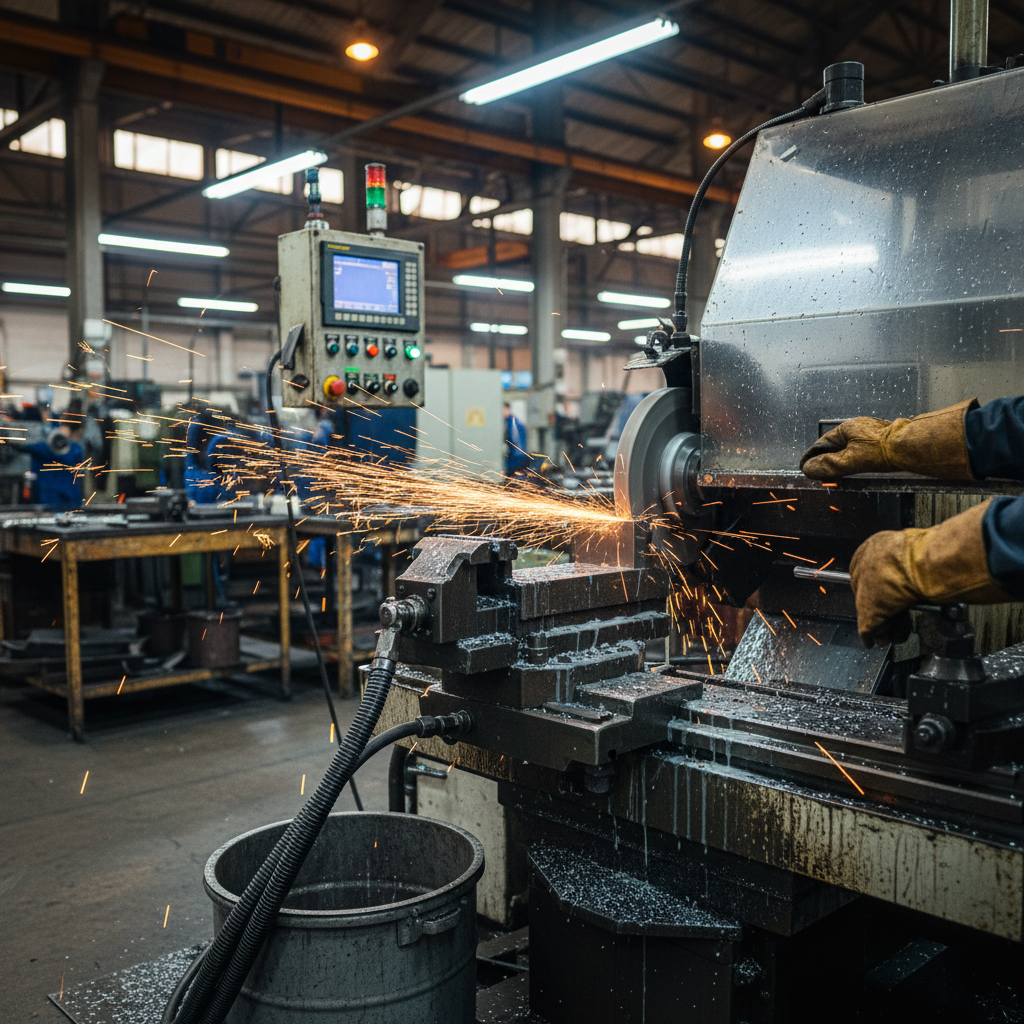
Selecting Diamond Grinding Wheels for PCBN Insert OD Grinding: A Technical Guide
Polycrystalline Cubic Boron Nitride (PCBN) has revolutionized the metal-cutting industry. Renowned for its exceptional thermal stability and extreme hardness, second only to diamond, PCBN is the material of choice for machining hardened steels, cast irons, and high-temperature superalloys. However, the very properties that make PCBN an outstanding cutting tool material present significant challenges during its manufacturing and re-conditioning phases.
Outer Diameter (OD) grinding of PCBN inserts—whether they are round, indexable, multi-tipped, or full-face—is a critical step in tool manufacturing. The process must establish highly precise peripheral dimensions, exact chamfers, and K-lands, all while ensuring the cutting edge remains perfectly sharp and free of micro-chipping. Achieving a surface roughness of Ra < 0.2 μm without introducing thermal damage to the PCBN binder requires highly specialized superhard abrasive wheels. This guide provides a deep technical analysis of how to select the optimal diamond grinding wheels for PCBN OD grinding applications.
The Physics of PCBN OD Grinding: Why Diamond is Mandatory
While Cubic Boron Nitride (CBN) is the ideal abrasive for grinding hardened steels, it cannot be used efficiently to grind itself. PCBN tool materials consist of fine CBN particles fused together with a metallic or ceramic binder phase (such as TiN, TiC, or Al2O3) under ultra-high temperature and pressure. Because of the extreme hardness of the CBN grains, there is no hardness differential if you attempt to use a CBN wheel.
Therefore, synthetic diamond is mandatory for PCBN insert grinding. The hardness differential between synthetic diamond (approx. 80-100 GPa) and PCBN (approx. 30-45 GPa) provides the necessary abrasive action to shear and chip away the PCBN material efficiently. However, because synthetic diamond is prone to chemical wear when exposed to ferrous materials at high temperatures, the grinding process must be carefully controlled via thermal management and mechanical parameter optimization.
During OD grinding PCBN, the wheel faces two distinct materials: the extremely hard PCBN layer and, in many cases, a cemented carbide substrate to which the PCBN layer is bonded. This dual-material interface places unique structural demands on the diamond wheel, requiring a bond matrix that can handle both the brittle fracturing of PCBN and the ductile-to-brittle transition of tungsten carbide.
1. Bond System Selection: The Case for Vitrified Bonds
The selection of the bond system is perhaps the most critical decision when configuring diamond grinding wheels for PCBN. While resinoid and metal bonds have their niche applications, vitrified bonds are widely recognized as the industry standard for high-precision OD grinding of superhard tools.
Vitrified Bond (The Industry Standard)
Vitrified diamond wheels consist of a glass-ceramic matrix that holds the diamond grains. This bond system offers several distinct advantages for PCBN OD grinding:
- Controlled Porosity: Vitrified bonds can be manufactured with a highly controlled, open-pore structure. These pores act as microscopic pockets that carry coolant directly into the grinding zone and provide ample chip clearance. This is highly effective in controlling normal forces in PCBN grinding, preventing thermal buildup.
- Excellent Form Retention: The high rigidity of the ceramic matrix ensures that the wheel maintains its profile (especially sharp corners and chamfers) over long production runs, reducing the frequency of truing.
- Ease of Dressing: Unlike metal bonds, vitrified bonds are relatively easy to dress and true online using rotary diamond dressers, ensuring high machine uptime.
Resinoid Bond (For Ultra-Fine Finishing)
Resinoid bond wheels use organic polymers to hold the diamond abrasive. They are more elastic than vitrified wheels, providing a cushioning effect. This makes them suitable for final polishing stages where an exceptionally low surface roughness is required, and material removal rates are minimal. However, they lack the form retention and thermal conductivity required for high-efficiency roughing and semi-finishing OD grinding.
Metal Bond (Niche High-Volume Production)
Metal bonds (bronze, steel, or alloy matrices) offer the highest wear resistance and grain retention. However, they suffer from poor dressability and tend to glaze quickly when grinding PCBN, leading to high grinding forces and thermal damage. They are rarely used for precision OD grinding unless paired with continuous electrolytic in-process dressing (ELID) systems.
For a broader comparison of how open-structure wheels handle similar high-precision tool grinding challenges, you can refer to our OD Grinding PCD Tools: Open-Structure Diamond Wheel Guide.
2. Abrasive Grit Size and Edge Quality
The selection of diamond grit size represents a delicate balance between Material Removal Rate (MRR) and the surface finish of the PCBN cutting edge. If the grit size is too coarse, the grinding forces will cause macro-chipping along the cutting edge, rendering the insert useless. If the grit size is too fine, the wheel will glaze, leading to thermal damage and extremely long cycle times.
For PCBN OD grinding, the target is typically to achieve a cutting-edge roughness of Ra < 0.2 μm, with zero visible micro-chipping under 40x magnification. To achieve this, engineers typically employ a multi-step grinding strategy:
- Rough Grinding: Grit sizes ranging from D46 to D64 (FEPA standard) are used to quickly remove bulk material from the PCBN blank and the carbide carrier. The goal here is high MRR while keeping thermal generation within acceptable limits.
- Semi-Finish Grinding: Grit sizes from D25 to D30 are used to transition the tool shape close to its final dimensions, removing the subsurface damage layer introduced during roughing.
- Fine Finish Grinding: Fine grit sizes from D15 to D20 (or micro-grits down to 6-12 μm) are used to establish the final edge quality, K-land, and peripheral surface finish. This step ensures the cutting edge is perfectly keen and free of defects.
3. Optimizing Diamond Concentration
Concentration refers to the weight of diamond carats per unit volume of the abrasive layer (where Concentration 100 equals 4.4 carats per cubic centimeter). For PCBN OD grinding, the concentration must be balanced with the bond system and grit size:
- Moderate Concentration (75 to 100): This range is highly recommended for vitrified wheels. It provides a balanced distribution of diamond grains, leaving enough space for the bond matrix and induced pores. A moderate concentration ensures the wheel remains free-cutting, reducing normal grinding forces and preventing thermal cracking of the PCBN binder.
- High Concentration (125 to 150): While higher concentrations offer longer wheel life, they increase the contact area between the diamond and the PCBN, which drastically elevates grinding temperatures. High concentration wheels should only be used in finishing operations with high-pressure, high-flow coolant systems.
Wheel Specification Matrix for PCBN OD Grinding
To assist production engineers in selecting the correct wheel specifications, the table below outlines typical recommendations for the three primary stages of PCBN insert OD grinding:
| Grinding Stage | Uri ng Nakasasakit | Grit Size (FEPA) | Uri ng Bond | Concentration | Target Edge Roughness (Ra) |
|---|---|---|---|---|---|
| Roughing | Synthetic Diamond | D46 – D64 | Vitrified (High Porosity) | 75 – 100 | < 0.8 μm |
| Semi-Finishing | Synthetic Diamond | D25 – D36 | Vitrified | 100 | < 0.4 μm |
| Fine Finishing | Synthetic Diamond | D15 – D20 | Vitrified or Resinoid | 100 – 125 | < 0.15 μm |
Optimizing Bond Systems for PCBN OD Grinding
While abrasive grit size determines the surface finish capability, the bond system of the diamond grinding wheel dictates the wheel’s life, cutting efficiency, and thermal management. PCBN (Polycrystalline Cubic Boron Nitride) is second only to diamond in hardness, meaning the grinding wheel experiences immense cutting forces and localized heat generation during Outer Diameter (OD) grinding.
Vitrified bonds are the industry standard for PCBN insert grinding. Unlike resin bonds, which can deflect under high mechanical loads, or metal bonds, which tend to glaze quickly when grinding ultra-hard materials, vitrified bonds feature controlled micro-porosity. These induced pores serve two critical functions:
- Coolant Delivery: The pores carry grinding fluid directly into the grinding zone, preventing thermal cracking of the PCBN phase.
- Chip Clearance: They provide pockets for microscopic chips to escape, preventing wheel loading and maintaining a clean, free-cutting action.
For the final fine-finishing stage, resinoid-bonded wheels are sometimes utilized to achieve a mirror-like finish (Ra < 0.1 μm). However, they require highly rigid machine setups to prevent deflection-induced geometric errors on the insert’s chamfer and peripheral land.
Truing and Dressing Strategies for Ultra-Hard Grinding
Because synthetic diamond and PCBN are extremely close in hardness, maintaining the grinding wheel’s geometric profile (truing) and exposing fresh cutting edges (dressing) require specialized techniques. A dull or out-of-round wheel will instantly cause edge chipping on the PCBN insert.
- Rotary Truing: Use a high-precision rotary diamond dresser (such as a CVD or rotary diamond disc) operating at a speed ratio of 0.4 to 0.7 relative to the grinding wheel speed. This ensures the wheel achieves perfect concentricity.
- Offline/Online Dressing: After truing, the vitrified bond must be opened up. Use a soft silicon carbide (SiC) dressing stone (typically grit size 220 to 400) to erode the bond matrix slightly, allowing the diamond crystals to protrude by approximately 30% of their diameter.
Troubleshooting Guide for PCBN OD Grinding
When grinding PCBN inserts, deviations in wheel specification or machine parameters can lead to immediate quality failures. Use the following troubleshooting matrix to diagnose and correct common grinding defects:
| Grinding Defect | Root Cause | Corrective Action |
|---|---|---|
| Micro-chipping on PCBN Edge | Abrasive grit size is too coarse; wheel is too hard; or insufficient coolant flow. | Switch to a finer grit size (e.g., from D46 to D25); reduce wheel concentration; optimize coolant nozzles to target the contact zone. |
| Rapid Wheel Wear | Bond system is too soft; wheel speed is too low; or dressing is too aggressive. | Increase wheel peripheral speed (Vs); select a harder vitrified bond; reduce dressing frequency and depth. |
| Surface Burn / Thermal Damage | Wheel is glazed (clogged); coolant flow rate is too low; or feed rate is too high. | Dress the wheel immediately with an SiC stone; increase coolant pressure and flow rate; reduce the radial feed rate. |
| Poor Surface Finish (High Ra) | Wheel is out-of-round; spindle vibration; or grit size is too coarse. | Re-true the diamond wheel; check machine spindle bearings and stiffness; transition to a D15/D20 fine-finishing wheel. |
Konklusyon
Selecting the optimal diamond grinding wheel for PCBN insert OD grinding requires a meticulous balance of abrasive grit size, concentration, and bond characteristics. By utilizing a multi-stage grinding process—transitioning from highly porous vitrified roughing wheels to ultra-fine finishing wheels—manufacturers can achieve sub-micron surface finishes, perfect edge quality, and maximum wheel life. Standardizing your truing and dressing protocols further ensures that your grinding process remains stable, repeatable, and highly productive.
Partner with the PCBN Grinding Specialists
Sa Zhengzhou Zhongxin Grinding Wheel Co., Ltd., we engineer high-performance vitrified and resinoid diamond grinding wheels specifically tailored for processing ultra-hard materials like PCBN and PCD. Our technical team is ready to help you optimize your insert grinding lines, reduce cycle times, and eliminate edge chipping defects.
Contact our engineering support team today for custom wheel formulations and technical consultations:
Zhengzhou Zhongxin Grinding Wheel Co., Ltd.
Email: root@shalun.net
Phone/WhatsApp: +86 15538050608
Telephone: 0371-62513386
Address: No. 1111-1, Kexue Avenue, Shangjie District, Zhengzhou, Henan, China.