







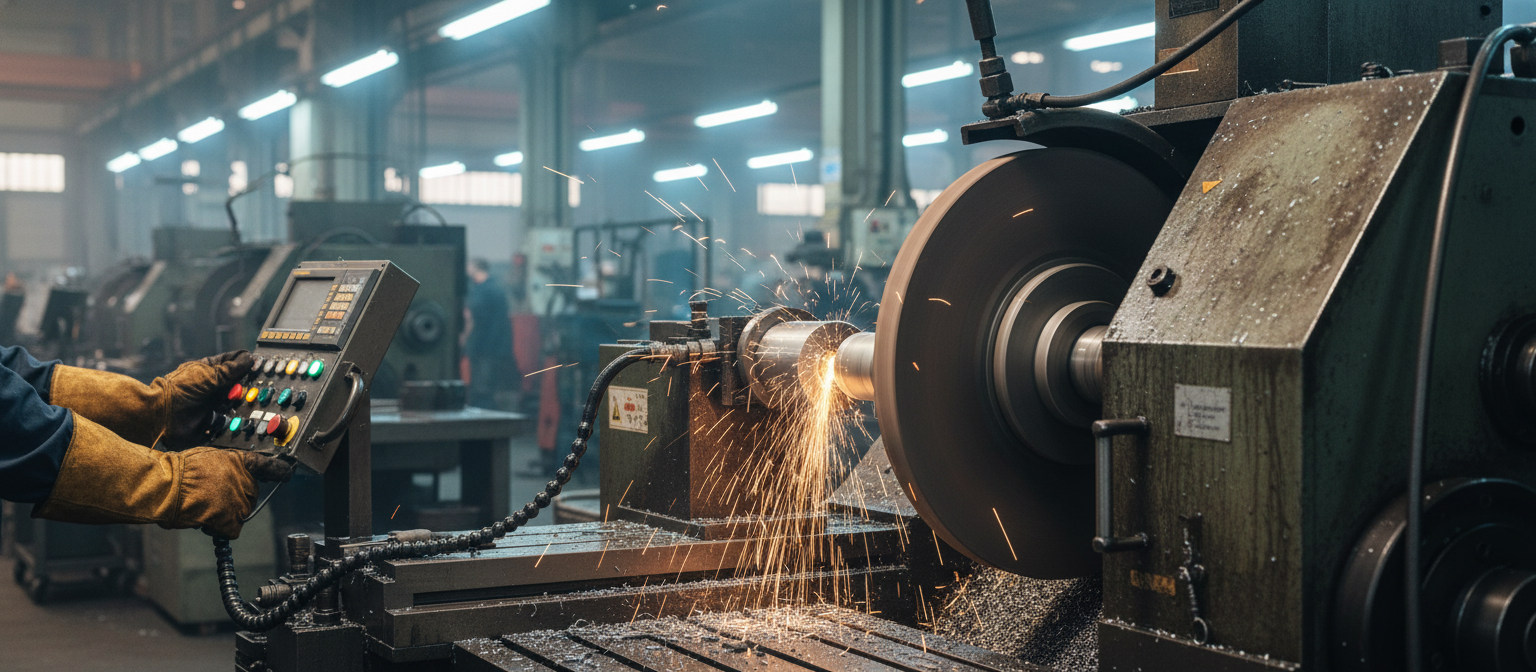
Alat Penggilingan OD PCD: Panduan Roda Berlian Struktur Terbuka 2026
The manufacturing and reconditioning of Polycrystalline Diamond (PCD) cutting tools present some of the most demanding challenges in modern precision engineering. As industries like aerospace, automotive, and high-end electronics push for tighter tolerances, the demand for ultra-precise PCD tool processing has skyrocketed. PCD is incredibly hard—often 80 to 120 times more wear-resistant than tungsten carbide—making mechanical material removal a highly complex task.
In outer diameter (OD) grinding PCD tools, conventional abrasive wheels fail almost instantly due to rapid wear and thermal overload. The modern industrial standard for this operation is the application of specialized vitrified bond diamond wheels featuring engineered roda gerinda struktur terbuka. This guide explores the technical parameters, metallurgical considerations, and machine setups required to achieve pristine surface finishes, precise geometry, and perfect edge quality in 2026.
The Mechanics of PCD Tool Processing: Why It’s Unique
PCD is not a homogeneous material; it consists of synthetic diamond particles sintered together with a metallic binder (typically cobalt) under ultra-high pressure and temperature (HPHT). This composite structure is bonded to a tungsten carbide substrate. Grinding this material requires a delicate balance of mechanical shearing and micro-fracturing of the diamond grains, while simultaneously managing the thermal expansion of the cobalt binder.
The Thermal Challenge: Cobalt Expansion and Micro-Cracking
Cobalt has a much higher coefficient of thermal expansion than diamond. When the grinding zone temperature exceeds 700°C, the cobalt binder expands rapidly, causing tensile stresses within the diamond matrix. This leads to micro-cracking, thermal degradation, and premature edge chipping. Furthermore, at temperatures above 750°C in the presence of oxygen, diamond undergoes reverse-transformation into graphite (graphitization), which drastically reduces tool life.
Delamination at the Interface
During OD grinding PCD tools, substantial shear forces are directed at the interface between the PCD layer and the carbide backing. If the grinding forces are directed incorrectly, or if the wheel becomes glazed and pushes rather than cuts, the diamond layer can delaminate from its substrate, rendering the expensive tool completely useless.
The Solution: Open-Structure Vitrified Bond Diamond Wheels
To overcome the massive thermal and mechanical hurdles of PCD processing, tool manufacturers rely on vitrified bond diamond wheels with highly controlled, porous structures.
Unlike resin or metal bonds, vitrified bonds are ceramic-based. They offer excellent rigidity, high temperature resistance, and can be manufactured with customized levels of porosity. Here is why open-structure designs are indispensable:
- Active Chip Clearance: The open-pore network provides microscopic pockets that temporarily store the ultra-fine PCD and cobalt chips, preventing them from packing onto the wheel face.
- Enhanced Coolant Transport: The pores act as micro-pumps, drawing coolant directly into the grinding arc (the contact zone) and breaking through the high-speed air barrier.
- Controlled Self-Sharpening: The brittle ceramic bond undergoes micro-fracturing under a specific threshold of grinding force, continuously exposing fresh, sharp diamond grains without losing wheel geometry.
To understand how open-structure designs prevent thermal defects across different materials, see our detailed discussion on Mengatasi Masalah Bekas Gosok Saat Penggilingan: Memperbaiki Lapisan Kaca dengan Roda Gerinda Berstruktur Terbuka.
Optimizing OD Grinding Parameters for PCD
Achieving the perfect balance between material removal rate (MRR) and edge quality requires precise control over grinding parameters. The following table outlines the recommended operating parameters for OD grinding PCD tools using vitrified bond diamond wheels in 2026:
| Grinding Parameter | Roughing Operation | Finishing Operation |
|---|---|---|
| Wheel Speed (Vs) | 22 – 30 m/s | 18 – 24 m/s |
| Infeed / Depth of Cut (Ae) | 0.01 – 0.03 mm | 0.002 – 0.01 mm |
| Feed Rate (Vf) | 200 – 500 mm/min | 50 – 150 mm/min |
| Grinding Strategy | Climb Grinding (Down Grinding) | Climb Grinding (Down Grinding) |
| Target Roughness (Ra) | 0.4 – 0.6 µm | < 0.2 µm |
| Target Roughness (Rz) | 1.5 – 2.5 µm | < 0.8 µm |
Why Climb Grinding is Non-Negotiable
When executing OD grinding on PCD tools, the relative motion of the grinding wheel and the workpiece must be configured for climb grinding. In this configuration, the grinding force is directed inward, compressing the PCD layer against the solid tungsten carbide substrate. Conversely, conventional (up) grinding pulls the wheel away from the tool, generating tensile forces that can easily peel or delaminate the diamond layer from the carbide backing.
Controlling Surface Integrity: Ra and Rz Values
In PCD tool manufacturing, surface finish is not just an aesthetic metric; it directly correlates with tool life and cutting performance. Poor surface finish on the tool flank and rake faces leads to friction, built-up edge (BUE), and premature tool failure.
Understanding Ra vs. Rz in PCD Processing
While Ra (the arithmetic average of the roughness profile) is the most common industry metric, Rz (the mean peak-to-valley height) is far more critical for PCD tools. A tool can have a low Ra value but still possess deep micro-scratches or chips (high Rz). These deep valleys act as stress concentration points, leading to catastrophic edge chipping under the high mechanical loads of machining abrasive materials.
By utilizing highly porous vitrified bond diamond wheels with fine grit sizes (typically US mesh 600 to 1500 for finishing), engineers can consistently achieve an Ra of < 0.2 µm and an Rz of < 0.8 µm. The open pores ensure that loose diamond particles do not get dragged across the freshly ground PCD surface, which is a primary cause of high Rz spikes.
Thermal Management: High-Pressure Coolant Integration
Even the best open-structure wheel cannot perform optimally without a properly configured coolant delivery system. Thermal shock is the leading cause of micro-cracking in PCD. Therefore, the application of coolant must be continuous, high-volume, and precisely directed.
Breaking the Air Barrier
At wheel speeds of 30 m/s, a high-velocity boundary layer of air rotates with the wheel. This air barrier deflects low-pressure coolant away from the contact zone, causing “coolant starvation” and localized dry grinding. To counter this, the coolant system must deliver fluid at a pressure that matches or exceeds the tangential speed of the wheel—typically between 10 to 20 bar.
Maximizing fluid delivery is crucial in high-speed applications. For a deeper look at optimizing fluid mechanics, read our guide on Optimizing Open-Structure Grinding Wheels for High-Pressure Coolant Systems.
Coolant Chemistry
Synthetic or semi-synthetic grinding oils with advanced extreme-pressure (EP) additives are highly recommended for PCD. These oils provide superior lubricity compared to water-soluble coolants, reducing the friction-induced heat generation at the flank face. Additionally, ensure the coolant is filtered down to 1-3 microns to prevent recirculating fine diamond chips from scratching the PCD surface.
Troubleshooting OD Grinding Defects in PCD Tools
Even with advanced equipment, process drift can occur. Here is how to diagnose and resolve the most common defects encountered during OD grinding of PCD tools:
1. Wheel Glazing and Loading
Symptom: The wheel surface looks shiny or metallic, grinding spindle load spikes, and the tool edge shows thermal discoloration or micro-cracking.
Cause: The vitrified bond is too hard, or the wheel structure is not open enough. The cobalt binder from the PCD has loaded the wheel pores, or the diamond grains have flattened without fracturing.
Solution: Reduce the wheel speed (Vs) to increase the grinding force per grain, encouraging self-sharpening. If the issue persists, switch to a wheel with a higher porosity grade or a softer bond. Ensure proper dressing with a soft silicon carbide dressing stick.
2. Micro-Chipping of the Cutting Edge
Symptom: Small chips appear along the cutting edge under 100x magnification.
Cause: Excessive vibration in the spindle, insufficient workholding rigidity, or too aggressive of an infeed (Ae). It can also be caused by grain pullout from the wheel.
Solution: Check spindle runout (must be < 0.002 mm). Minimize tool overhang by using high-precision hydraulic expansion chucks
to maximize mechanical damping. If the wheel itself is losing grains prematurely, reduce the dressing feed rate to ensure a more stable bond matrix profile, or opt for a slightly harder vitrified bond system.
3. Wheel Loading and Glazing
Symptom: Grinding forces spike rapidly, and thermal discoloration or burn marks appear on the PCD surface alongside a shiny, closed-off wheel face.
Cause: Melted cobalt or binder material from the PCD matrix loading the pores of the wheel, or insufficient coolant pressure failing to flush chips out of the open-structure pores.
Solution: Increase coolant nozzle pressure to match the peripheral wheel speed (typically 1.5 to 2.0 bar per 10 m/s). Implement continuous or more frequent dressing cycles using a soft alumina dressing stick to open up the glazed matrix.
Optimal Parameter Matrix for OD Grinding of PCD Tools
Achieving stable, sub-micron surface finishes requires precise synchronization of wheel velocity, workpiece rotation, and dressing parameters. The table below outlines the recommended starting parameters for 2026 high-speed CNC grinders:
| Parameter | Rough Grinding Range | Finish Grinding Range | Critical Notes |
|---|---|---|---|
| Wheel Speed (Vc) | 18 – 25 m/s | 12 – 18 m/s | Lower speeds reduce thermal stress on PCD cobalt phase. |
| Workpiece Speed (Nw) | 15 – 30 m/min | 30 – 50 m/min | Higher speeds in finishing prevent localized dwell burn. |
| Infeed (Ae) per pass | 0.005 – 0.015 mm | 0.001 – 0.003 mm | Exceeding 0.02 mm causes micro-chipping. |
| Dressing Ratio (Qd) | 0.4 – 0.6 | 0.2 – 0.3 | Maintain open-structure without inducing grain fracture. |
Coolant Delivery: The Lifeline of Open-Structure Wheels
In OD grinding of PCD, the open-structure diamond wheel acts as a mechanical pump, carrying coolant directly into the grinding zone. However, if the coolant nozzle design is suboptimal, the boundary layer of air surrounding the high-speed wheel will deflect the fluid, leading to dry grinding and immediate PCD micro-cracking.
- Nozzle Geometry: Use coherent jet nozzles that match the width of the wheel. The nozzle opening should be positioned as close to the grinding nip as possible (ideally within 10-15 mm).
- Velocity Matching: Adjust the coolant pump pressure so that the coolant jet velocity matches 100% of the peripheral wheel speed (Vc). This cuts through the air barrier and ensures the open-structure pores are fully saturated.
- Penyaringan: Maintain filtration levels down to 1 micron. Cobalt ions and fine PCD dust must be continuously filtered out to prevent chemical reactions that degrade the vitrified bond matrix.
Conclusion: Maximizing PCD Tool Yield in 2026
As the tolerances of PCD cutting tools tighten toward the nano-scale, selecting and managing the right grinding wheel is no longer just an operational decision—it is a core competitive advantage. Open-structure diamond wheels offer the perfect equilibrium of thermal dissipation, high material removal rates, and edge-holding capability. By matching these advanced wheels with rigid machine setups, precise coolant dynamics, and optimized dressing protocols, manufacturers can eliminate edge chipping, reduce cycle times, and unlock the full potential of next-generation PCD tooling.
Partner with the Superabrasive Experts
Are you looking to optimize your OD grinding process, eliminate micro-chipping, or source custom open-structure diamond wheels tailored to your specific CNC setups? The engineering team at Zhengzhou Zhongxin Roda Gerinda Co, Ltd. is ready to assist you with industry-leading technical support and high-precision abrasive solutions.
Contact us today to discuss your technical specifications or request a custom quote:
- Perusahaan: Zhengzhou Zhongxin Roda Gerinda Co, Ltd.
- E-mail: root@shalun.net
- Telepon/WhatsApp: +86 15538050608
- Telephone: 0371-62513386
- Alamat: 1111-1, Kexue Avenue, Distrik Shangjie, Zhengzhou, Henan, Cina.