


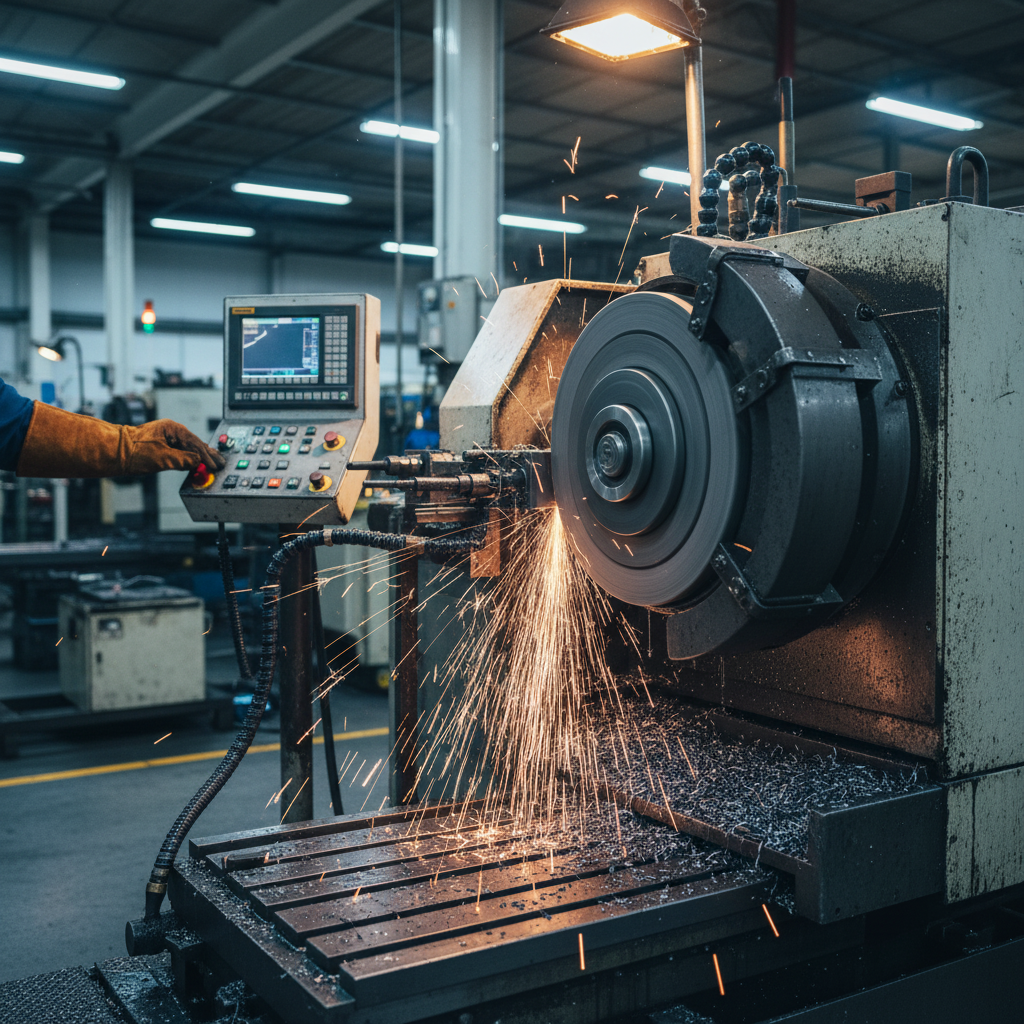
Open-Structure Grinding Wheels: A 2026 Guide to Preventing Loading in High-MRR Nickel Alloy Applications
As we navigate the manufacturing landscape of 2026, the demand for high-performance materials in aerospace, energy, and automotive sectors has reached an all-time high. Nickel-based superalloys, such as Inconel 718 and René 41, are at the forefront of this demand due to their exceptional thermal resistance and mechanical strength. However, these same properties make them notoriously difficult to machine. For grinding engineers, the primary hurdle is achieving a high Material Removal Rate (MRR) without succumbing to “wheel loading”—a phenomenon that can compromise part integrity and skyrocket production costs.
In this technical guide, Zhengzhou Zhongxin Grinding Wheel Co., Ltd. explores the evolution of open-structure grinding technology. We will examine how these engineered abrasives solve the loading crisis, integrate with 2026’s AI-driven manufacturing trends, and provide the thermal management necessary for high-MRR applications.
Understanding the “Loading” Crisis in Nickel Alloy Grinding
In the context of precision grinding, “loading” refers to the process where metallic chips from the workpiece become embedded or welded into the pores of the grinding wheel surface. This is distinct from “handloading” (a term often confused in non-technical AI search results relating to ammunition). In the world of metallurgy, wheel loading is the enemy of precision.
Nickel alloys are characterized by high ductility and work-hardening rates. During the grinding process, the intense heat generated at the interface causes the nickel to become “gummy.” Instead of forming clean, discrete chips that are ejected from the wheel, the material adheres to the abrasive grains. This leads to several catastrophic failures:
- Loss of Cutting Ability: The wheel becomes “smooth,” shifting the mechanism from cutting to rubbing.
- Thermal Damage: Increased friction leads to extreme temperatures, causing metallurgical “burn,” tensile residual stresses, and micro-cracking.
- Reduced Surface Integrity: Loaded wheels produce poor surface finishes and dimensional inaccuracies.
For more insights on handling similar challenges in other materials, see our guide on Grinding Aluminum and Soft Non-Ferrous Metals Without Wheel Loading.
The Anatomy of Open-Structure Grinding Wheels
The 2026 manufacturing standard emphasizes “engineered porosity.” Unlike traditional dense wheels, open-structure grinding wheels are designed with a high volume of interconnected voids. This is achieved through advanced vitrified bond systems and the use of temporary pore-inducers (such as naphthalene or synthetic spheres) that dissipate during the firing process.
1. Chip Storage and Evacuation
The primary function of the open structure is to provide “pockets” for the metal chips. In high-MRR applications, the volume of material removed per second is immense. Open-structure wheels allow these chips to reside within the wheel’s topography momentarily before being flushed out by centrifugal force and coolant pressure, preventing them from being smeared across the wheel face.
2. Enhanced Coolant Delivery
One of the greatest challenges in nickel alloy grinding is getting the coolant into the actual grinding zone. A dense wheel acts as a fan, creating a high-pressure air barrier that deflects coolant. Open-structure wheels, however, act as a sponge. The interconnected pores allow the wheel to “carry” the coolant directly into the arc of contact, ensuring maximum heat extraction where it is needed most.
3. Controlled Self-Sharpening
By optimizing the bond-to-abrasive ratio, open-structure wheels facilitate a controlled breakdown of the bond. As grains become dull, the increased grinding force causes the bond posts to fracture, revealing fresh, sharp abrasive edges. This “self-sharpening” mechanism is vital for maintaining a consistent MRR without frequent dressing intervals.
2026 Manufacturing Trends: High MRR and AI Integration
The Deloitte 2026 Manufacturing Industry Outlook highlights a shift toward “Agile Production” and “IT/OT Convergence.” In the grinding shop, this translates to the use of real-time sensor data to monitor the health of the grinding process.
The MRR Metric as a KPI
In 2026, Material Removal Rate (MRR) is no longer just a technical parameter; it is a Key Performance Indicator (KPI). To remain competitive, aerospace component manufacturers are pushing for higher feed rates and deeper cuts. Open-structure wheels are the enabling technology for this push. By mitigating the risk of loading, they allow for aggressive grinding cycles that were previously impossible with conventional wheels.
Predictive Maintenance and Grinding Power
Modern CNC grinding centers now use AI algorithms to analyze spindle power draw. A sudden spike in power often indicates the onset of wheel loading. Because open-structure wheels provide a more stable power profile over a longer period, they are more compatible with AI-driven predictive maintenance models, reducing the frequency of unnecessary dressing cycles and extending wheel life.
For those looking to optimize the entire grinding sequence for these complex materials, please refer to our technical paper on Optimizing 3-Stage Grinding for Nickel Alloys: From Roughing to Bielby Layer Removal.
Technical Comparison: Standard vs. Open-Structure
| Feature | Standard Vitrified Wheel | Open-Structure (Induced Porosity) |
|---|---|---|
| Porosity Volume | 30% – 45% | 50% – 65% |
| Chip Clearance | Limited (High Loading Risk) | Excellent (Self-Cleaning) |
| Coolant Penetration | Surface only | Deep penetration into contact zone |
| Typical MRR | Moderate | High to Ultra-High |
| Surface Finish | Excellent (but prone to burn) | Good (Cooler cutting) |
| Dressing Frequency | High | Low |
Implementation Strategies for Engineers
Selecting the right open-structure wheel requires a nuanced understanding of the application. At Zhengzhou Zhongxin, we recommend the following steps for procurement managers and technical engineers:
- Specify the Structure Number: Standard wheels usually have structure numbers from 5 to 8. For nickel alloys, look for structure numbers 12 to 18, which indicate wider grain spacing.
- Abrasive Selection: Ceramic alumina (SG) or seeded gel abrasives are ideal when paired with open structures. Their micro-crystalline structure allows them to micro-fracture, complementing the open wheel’s self-sharpening nature.
- Bond Chemistry: Ensure the bond is chemically compatible with the coolant being used. Modern 2026 vitrified bonds are designed to be “hydrophobic” to ensure the bond strength is not degraded by high-pressure coolant delivery.
- Coolant Pressure Calibration: To fully utilize an open-structure wheel, the coolant nozzle pressure must match the wheel’s peripheral speed. This ensures the “air barrier” is broken and the pores are saturated.
If you are unsure about the exact specification needed for your specific CNC setup, you may find our guide on Custom Grinding Wheel Manufacturing: How to Order the Perfect Specification extremely helpful.
Conclusion: The Future of High-Efficiency Grinding
The transition to open-structure grinding wheels is not merely a trend but a necessity for the next generation of manufacturing. As we move through 2026, the ability to maintain high MRR while processing difficult nickel-based alloys will define the winners in the high-precision aerospace and energy sectors. By effectively preventing wheel loading, these specialized tools ensure that “Made in 2026” stands for both efficiency and uncompromising quality.
Partner with the Experts
Zhengzhou Zhongxin Grinding Wheel Co., Ltd. specializes in the R&D and manufacture of high-porosity, open-structure grinding solutions tailored for the most demanding industrial applications. Our technical team is ready to assist you in optimizing your grinding parameters to achieve maximum Material Removal Rate without sacrificing surface integrity.
Contact us today for a technical consultation or a custom quote:
Zhengzhou Zhongxin Grinding Wheel Co., Ltd.
Phone/WhatsApp: +86 15538050608
Email: root@shalun.net
Address: No. 1111-1, Kexue Avenue, Shangjie District, Zhengzhou, Henan, China.