


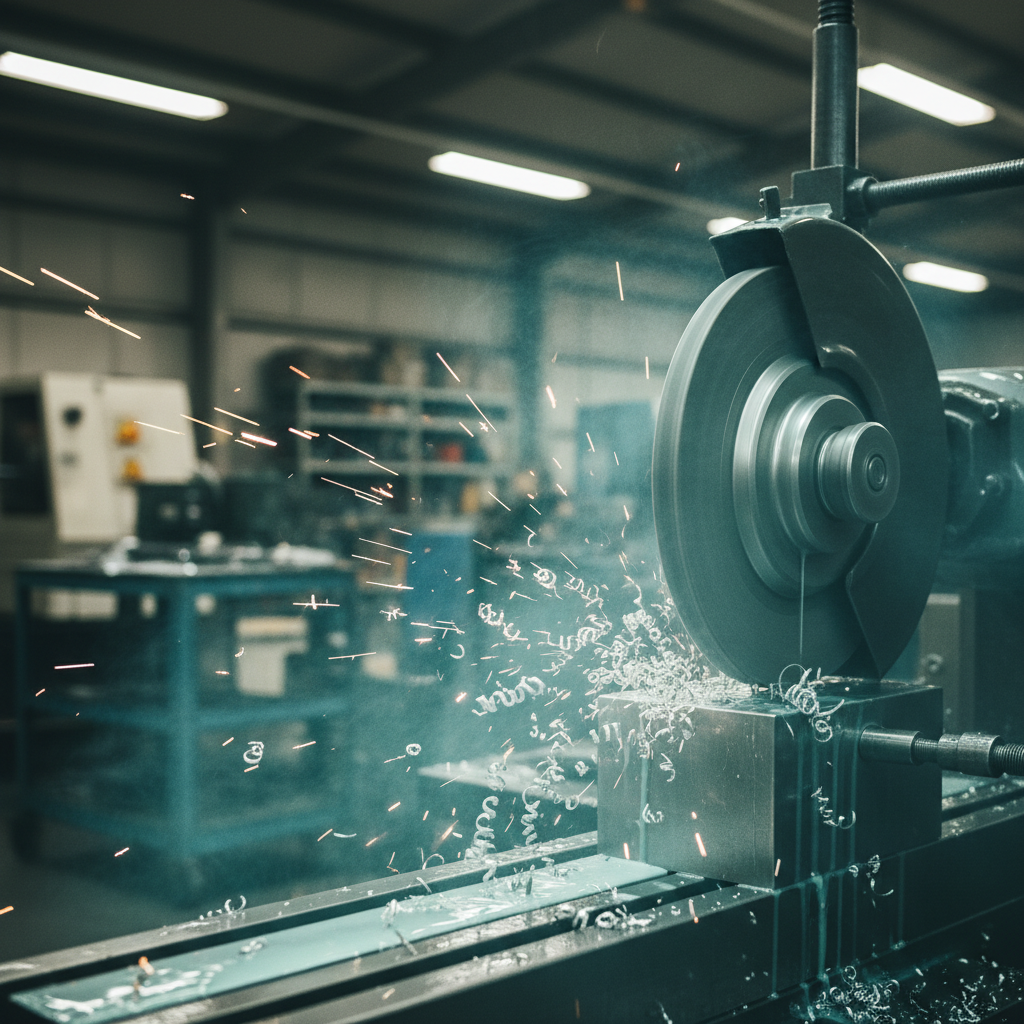
You load a fresh aluminum grinding wheel onto the spindle, make your first pass, and within seconds the surface glazes over. The wheel stops cutting. Heat builds up. The workpiece smears instead of shearing. Sound familiar? This is wheel loading, and it’s the single biggest headache when grinding aluminum and other soft non-ferrous metals like copper, brass, and bronze. But here’s the thing: it’s completely avoidable. You just need the right wheel, the right parameters, and the right approach.
We’ve worked with shops across China and Southeast Asia for years, and the loading problem comes up in nearly every conversation about aluminum grinding. The good news is that once you understand why it happens, the solutions become straightforward. This guide walks through the physics of wheel loading, the best wheel specifications for soft metals, and the practical shop-floor strategies that actually keep your wheels cutting clean.
Why Aluminum Causes Wheel Loading
Aluminum is a pain to grind. Not because it’s hard, but because it’s soft.
Steel chips fracture cleanly and fly off the wheel face. Aluminum doesn’t behave that way. At a melting point of just 660°C, aluminum is extremely ductile and thermally conductive. When the abrasive grain contacts the workpiece, the friction generates localized heat that softens the aluminum even further. Instead of breaking into discrete chips, the material smears, deforms plastically, and welds itself to the spaces between abrasive grains. That’s wheel loading in a nutshell.
Several factors make this worse:
- Low melting point. Aluminum softens well below its melting temperature. At 300°C it’s already significantly weaker. Friction heat from grinding easily reaches this threshold.
- High ductility. The chips don’t snap off. They stretch, deform, and smear into the wheel’s pore structure.
- Chemical affinity. Aluminum bonds readily to aluminum oxide (the most common abrasive), creating a chemical “weld” at the grain interface.
- Thermal conductivity. Aluminum conducts heat about four times faster than steel, spreading thermal energy into the workpiece and back into the wheel.
The result? Within a few passes, the pores between abrasive grains fill with aluminum. The wheel face becomes a smooth, shiny metal surface instead of a cutting tool. You push harder. Heat goes up. Loading gets worse. It’s a vicious cycle.
We had a customer in Shandong province who was grinding 6061-T6 aluminum plates on a surface grinder. They were replacing wheels every 20 minutes because loading made them useless. Twenty minutes. The root cause was simple: they were using a standard aluminum oxide wheel with structure 5, designed for hardened steel. Wrong tool entirely.
Wheel Selection: Open Structure and the Right Abrasive
The single most important decision for aluminum grinding is abrasive type. And it’s not aluminum oxide.
Silicon Carbide: The Go-To Abrasive for Aluminum
Silicon carbide grinding wheels (green silicon carbide, GC, or black silicon carbide, C) are the standard recommendation for aluminum and soft non-ferrous metals. Here’s why: silicon carbide is harder than aluminum oxide (approximately 2500 Knoop vs 2100 Knoop), so it stays sharp longer on soft materials. More importantly, it has much lower chemical affinity to aluminum. The grain doesn’t bond to the workpiece material the way alumina does, which directly reduces loading tendency.
Green silicon carbide (GC) is the premium choice. It’s sharper, more friable, and produces cleaner cuts on aluminum, copper, brass, and titanium alloys. Black silicon carbide (C) costs less and works well for general-purpose aluminum grinding where surface finish isn’t critical.
Open Structure: The Key to Chip Clearance
Standard grinding wheels typically have a structure number between 5 and 7. For aluminum grinding, you want open structure wheels with structure numbers of 9 to 12. Some shops go even higher.
What does structure number mean? It controls the spacing between abrasive grains. A higher structure number means more space, more porosity, and more room for chips to evacuate before they weld themselves into the wheel. Think of it like the difference between a fine mesh screen and a chain-link fence. Aluminum chips need that chain-link fence to get out.
An open structure wheel with structure 10 or 11 gives aluminum chips somewhere to go. The pores act as chip breakers and coolant reservoirs. Without adequate porosity, even the best abrasive will load within minutes.
Grit Size Selection
Grit size matters for two reasons: material removal rate and surface finish.
- Roughing (36-60 grit): Use coarse grits for stock removal on aluminum castings, billets, and weld grinding. Coarser grits have larger pores naturally, which helps with chip evacuation. Pair with structure 10-12 for best results.
- Finishing (80-120 grit): For surface finishing of aluminum plates, molds, and precision components. Use structure 9-10 with green silicon carbide. Expect surface roughness values (Ra) of 0.4 to 1.6 µm depending on parameters.
- Precision grinding (120-220 grit): For tight-tolerance work on aluminum housings and optical components. Requires careful wheel selection and consistent coolant delivery.
What About Diamond Wheels?
Diamond wheels are used for aluminum in some specialized applications, particularly when grinding aluminum-silicon alloys (like A356 or A390) where the silicon content is high enough to wear silicon carbide quickly. CVD diamond or resin-bond diamond wheels in 100-200 grit can outperform SiC on high-Si alloys. But for pure aluminum and most 6000-series alloys, silicon carbide with open structure remains the better choice. Diamond wheels load too, especially at the finer grits, and they cost significantly more.
Comparison: Abrasive Types for Aluminum Grinding
The table below compares the three main abrasive options for aluminum grinding. Each has its place, but silicon carbide with open structure is the workhorse for most applications.
| Abrasive Type | Best Application | Typical Surface Finish (Ra) | Relative Cost | Wheel Life | Loading Resistance |
|---|---|---|---|---|---|
| Green Silicon Carbide (GC) | Pure aluminum, 6061, 7075, copper, brass, bronze | 0.4 – 1.6 µm | Low to Medium | Moderate | Excellent |
| Black Silicon Carbide (C) | General aluminum grinding, castings, non-critical surfaces | 0.8 – 3.2 µm | Low | Moderate | Good |
| White Fused Alumina (WA) | Aluminum alloys with hard inclusions, some aerospace alloys | 0.4 – 1.2 µm | Medium | Moderate to Long | Fair |
| Resin Bond Diamond | High-silicon aluminum alloys (A356, A390), MMC composites | 0.2 – 0.8 µm | High | Long | Good (requires coolant) |
| CVD Diamond | Precision finishing of Al-Si alloys, optical components | 0.1 – 0.4 µm | Very High | Very Long | Good |
Practical Strategies to Prevent Wheel Loading
Getting the right wheel is half the battle. The other half is how you use it. Here are the strategies that make the difference between a wheel that lasts 20 minutes and one that lasts through a full shift.
1. Flood Coolant Is Non-Negotiable
Dry grinding aluminum is asking for trouble. You need flood coolant, and you need a lot of it. The coolant serves two purposes: it removes heat (keeping the aluminum below its softening temperature) and it flushes chips out of the wheel’s pore structure before they can weld in place.
Recommended coolant specifications:
- Type: Soluble oil (5-8% concentration) or synthetic coolant designed for non-ferrous metals. Avoid straight oils on aluminum; they trap heat and create fire risk.
- Flow rate: High. For a 350mm wheel, aim for 20-40 liters per minute minimum. More is better.
- Direction: Aim the coolant nozzle directly at the grinding contact zone, not just at the wheel face. You need coolant reaching into the cut.
- Filtration: Use a magnetic separator or paper filter to remove aluminum fines from the coolant. Loaded coolant causes loaded wheels.
2. Wheel Speed and Feed Parameters
Speed matters. Too fast and you generate excessive heat. Too slow and the grains rub instead of cut, which promotes loading.
For aluminum grinding with silicon carbide wheels:
- Wheel speed: 25 to 35 m/s peripheral speed. Stay on the lower end (25-28 m/s) for roughing and the higher end (30-35 m/s) for finishing.
- Workpiece speed: Keep it relatively high. For surface grinding, 15-25 m/min. Higher workpiece speed means less heat per unit area.
- Infeed (depth of cut): For roughing, 0.02-0.05 mm per pass. For finishing, 0.005-0.01 mm per pass. Aggressive cuts are fine with coarse grit and open structure, but don’t overdo it.
- Crossfeed: 50-75% of wheel width per stroke for surface grinding. Wider crossfeeds distribute wear across the wheel face.
3. Frequent Dressing
Even with the right wheel and good coolant, aluminum grinding wheels benefit from frequent dressing. Dressing exposes fresh abrasive grains and opens up the pore structure that loading gradually closes.
A few dressing tips:
- Use a single-point diamond dresser or a diamond roller dresser.
- Dress with a fast traverse speed to create an open, aggressive wheel face. Slow traverse gives a fine finish but closes the pores you need.
- Dress at 0.01-0.02 mm depth per pass, 2-3 passes total.
- If the wheel is already loaded, dress more aggressively: 0.03-0.05 mm depth, multiple passes, with coolant running to flush the loaded material away.
- Consider crush dressing for production applications. Crush-dressed wheels have a very open, aggressive texture that resists loading exceptionally well.
4. Use a Wheel Cleaning Stick
A simple trick that many machinists overlook: rub a white aluminum oxide cleaning stick (or a dedicated wheel cleaning block) against the spinning wheel while it’s running. This physically dislodges loaded aluminum from the pores. Do this every few minutes during a grinding pass. It takes five seconds and extends wheel life dramatically. Some shops use motorized cleaning sticks mounted on the machine table for continuous in-process cleaning.
Troubleshooting Common Aluminum Grinding Problems
Even with the right setup, things go wrong sometimes. Here’s a quick troubleshooting guide for the most common issues in aluminum grinding.
Wheel loads within the first few passes: Wrong wheel. Check that you’re using silicon carbide (not aluminum oxide) with structure 9 or higher. If you’re already using SiC, go up in structure number or coarser in grit.
Workpiece burns or discolors: Reduce wheel speed, increase coolant flow, or take lighter cuts. Burn marks on aluminum usually mean localized melting. That’s way too much heat.
Poor surface finish with correct wheel: Check your dressing. A loaded or glazed wheel produces terrible finishes regardless of grit size. Redress aggressively, then take a few light spark-out passes.
Wheel breaks down too fast: You might be using too soft a grade or too friable an abrasive. Step up one grade hardness (e.g., from H to J) or switch from green to black silicon carbide for less critical work.
Aluminum chips weld to workpiece surface: This is “re-deposition” and it happens when coolant isn’t flushing chips away effectively. Increase coolant pressure and aim the nozzle more precisely at the contact zone. Also check coolant concentration and cleanliness.
Recommended Wheel Specifications at a Glance
Here’s a quick reference for wheel specifications commonly used for aluminum grinding operations:
| Operation | Abrasive | Grit | Grade | Structure | Bond | Wheel Speed |
|---|---|---|---|---|---|---|
| Surface grinding (roughing) | GC (Green SiC) | 36-46 | H-J | 10-12 | V (Vitrified) | 25-30 m/s |
| Surface grinding (finishing) | GC (Green SiC) | 80-120 | I-K | 9-10 | V (Vitrified) | 30-35 m/s |
| Cylindrical grinding | GC (Green SiC) | 60-80 | I-J | 9-11 | V (Vitrified) | 28-33 m/s |
| Cut-off / Parting | C (Black SiC) | 30-46 | M-P | 6-8 | B (Resin) | 40-63 m/s |
| High-Si aluminum (A356) | Diamond | 100-200 | Medium | 6-8 | B (Resin) | 20-30 m/s |
These are starting points. Every machine, workpiece geometry, and alloy behaves a little differently. Start conservative and adjust based on what you see on the wheel face and workpiece surface. If the wheel looks shiny after two passes, you need more porosity or a different abrasive. If it’s breaking down too fast, bump up one grade hardness.
A Note on Copper, Brass, and Other Soft Non-Ferrous Metals
Everything above applies broadly to soft non-ferrous metals, not just aluminum. Copper (melting point 1085°C) and brass (900-940°C) have higher melting points than aluminum, but they’re still highly ductile and prone to loading. The same silicon carbide open-structure approach works. Beryllium copper, phosphor bronze, and nickel silver all respond well to GC wheels with structure 9-12.
One exception: titanium alloys are technically non-ferrous, but they behave differently. Titanium is chemically reactive with silicon carbide at grinding temperatures. For titanium, use aluminum oxide wheels with a sharp, friable grain like white alumina or ceramic alumina (SG). That’s a separate topic, but worth mentioning to avoid confusion.
For shops that grind a mix of aluminum and other non-ferrous metals, keeping a set of dedicated GC wheels for soft metals and separate alumina wheels for harder alloys is the smart approach. Cross-contamination of abrasives causes problems in both directions.
Final Thoughts
Wheel loading on aluminum isn’t a mystery. It’s physics. Soft, ductile metal meets hot abrasive, and the two bond. The solution is equally logical: use an abrasive that doesn’t chemically bond to aluminum (silicon carbide), leave enough room for chips to escape (open structure), and keep everything cool and clean (flood coolant and regular dressing).
Get those fundamentals right and aluminum grinding becomes predictable, productive, and profitable. Get them wrong and you’ll spend your day changing wheels instead of making parts.
For more on selecting the right grinding wheel for specific applications, see our guide on silicon carbide grinding wheels for non-ferrous metals and our article on understanding grinding wheel structure and porosity.
Contact Us for Custom Aluminum Grinding Wheels
Contact Zhengzhou Zhongxin Grinding Wheel Co., Ltd. for custom aluminum grinding wheel specifications tailored to your specific alloy, machine, and application requirements. We manufacture open structure silicon carbide wheels in a full range of grit sizes, grades, and dimensions.
- Email: root@shalun.net
- Phone: 0371-62513386
- Mobile/WeChat: 15538050608
- Address: No. 1111-1, Kexue Avenue, Shangjie District, Zhengzhou, Henan, China
Whether you need a standard GC wheel for 6061 aluminum or a custom specification for a specialty alloy, our engineering team can help you find the right combination of abrasive, structure, grade, and bond. Send us your requirements and we’ll respond within 24 hours.